8-Point Itinerary for a Wedding Day That Flows Perfectly
Imagine this: it’s your wedding day, and everything runs exactly on time. The flowers are fresh, the photographer catches every golden moment, and your guests are never left wondering what happens next. Sound too good to be true? It doesn’t have to be. With the right 8-Point Itinerary for a Wedding Day That Flows Perfectly, you can turn that dream into reality — and actually enjoy every single minute of it.
A chaotic wedding day is almost always the result of poor planning, not bad luck. In 2026, couples are smarter than ever about building structured, flexible timelines that account for real-world delays, vendor coordination, and the emotional rollercoaster of the day itself. This guide walks you through each of the eight key points in a seamless wedding day itinerary, so nothing falls through the cracks.
Key Takeaways
- 📋 A well-structured 8-Point Itinerary for a Wedding Day That Flows Perfectly is the single most effective tool for reducing wedding day stress.
- ⏱️ Buffer times between every major event are non-negotiable — they absorb delays and protect your schedule.
- 📸 Finalizing your timeline 2–3 months in advance with your photographer and key vendors keeps everyone aligned [4].
- 🥗 Snack and hydration breaks for the couple and wedding party are often overlooked but critically important [1].
- 🌅 Ceremony timing affects lighting, guest comfort, and photography quality — choose it wisely [1].
Why a Perfect Wedding Day Timeline Matters
Before we dive into the eight points, let’s talk about why a detailed timeline is so powerful. Most wedding disasters — late ceremonies, rushed portraits, cold food — trace back to one root cause: no clear schedule.
A solid itinerary does three things:
- It gives every vendor a shared roadmap.
- It sets realistic expectations for the couple and wedding party.
- It creates space for joy, spontaneity, and connection — because the logistics are already handled.
💬 “The best wedding days aren’t the ones where nothing goes wrong. They’re the ones where the couple is so well-prepared that small hiccups never become big problems.”
With that in mind, here is your complete 8-Point Itinerary for a Wedding Day That Flows Perfectly.
The Complete 8-Point Itinerary for a Wedding Day That Flows Perfectly
1. Getting Ready (Morning Preparation Block)
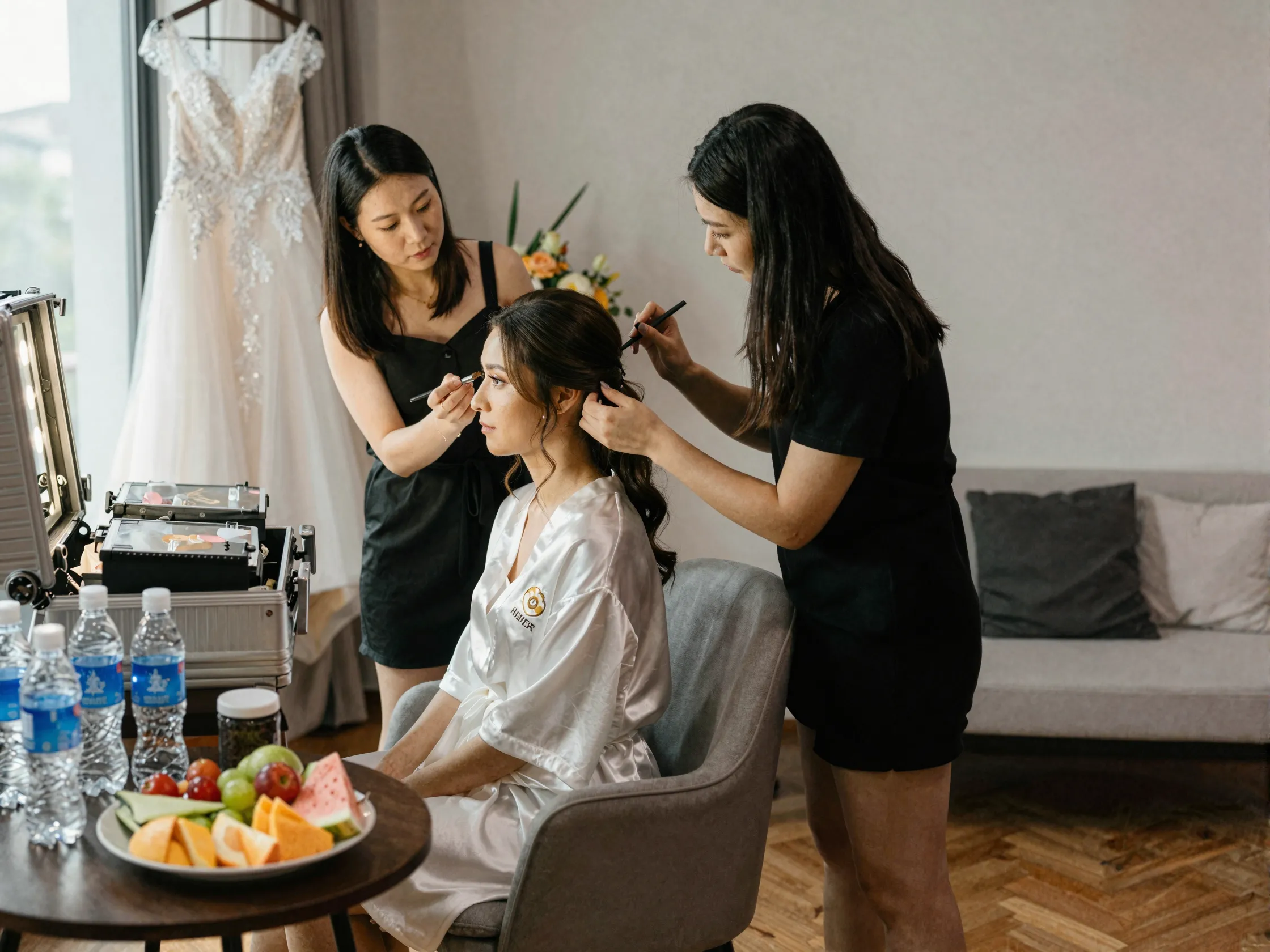
Recommended time: 3–4 hours before the ceremony
The day begins long before the first guest arrives. The getting-ready block is one of the most photographed and emotionally rich parts of the day — and one of the most commonly underestimated in terms of time.
What to include:
- Hair and makeup for the bride and wedding party (stagger start times)
- Groom’s prep: dressing, details shots, groomsmen portraits
- First look (optional, but highly recommended for timeline efficiency)
- Snack and hydration station for the entire wedding party [1]
🔑 Pro tip: Build in at least 30 extra minutes beyond what your hair and makeup artist estimates. Running behind during prep creates a domino effect that can delay your entire day.
Sample morning timeline:
| Time | Activity |
|---|---|
| 7:00 AM | First hair/makeup appointment begins |
| 9:30 AM | Bride’s hair and makeup starts |
| 11:00 AM | Dress on, detail shots |
| 11:30 AM | First look (if planned) |
| 12:00 PM | Wedding party portraits |
Communicate clearly with your hair and makeup team about the exact order of services and when you need to be camera-ready [1].
2. Pre-Ceremony Transportation and Arrival
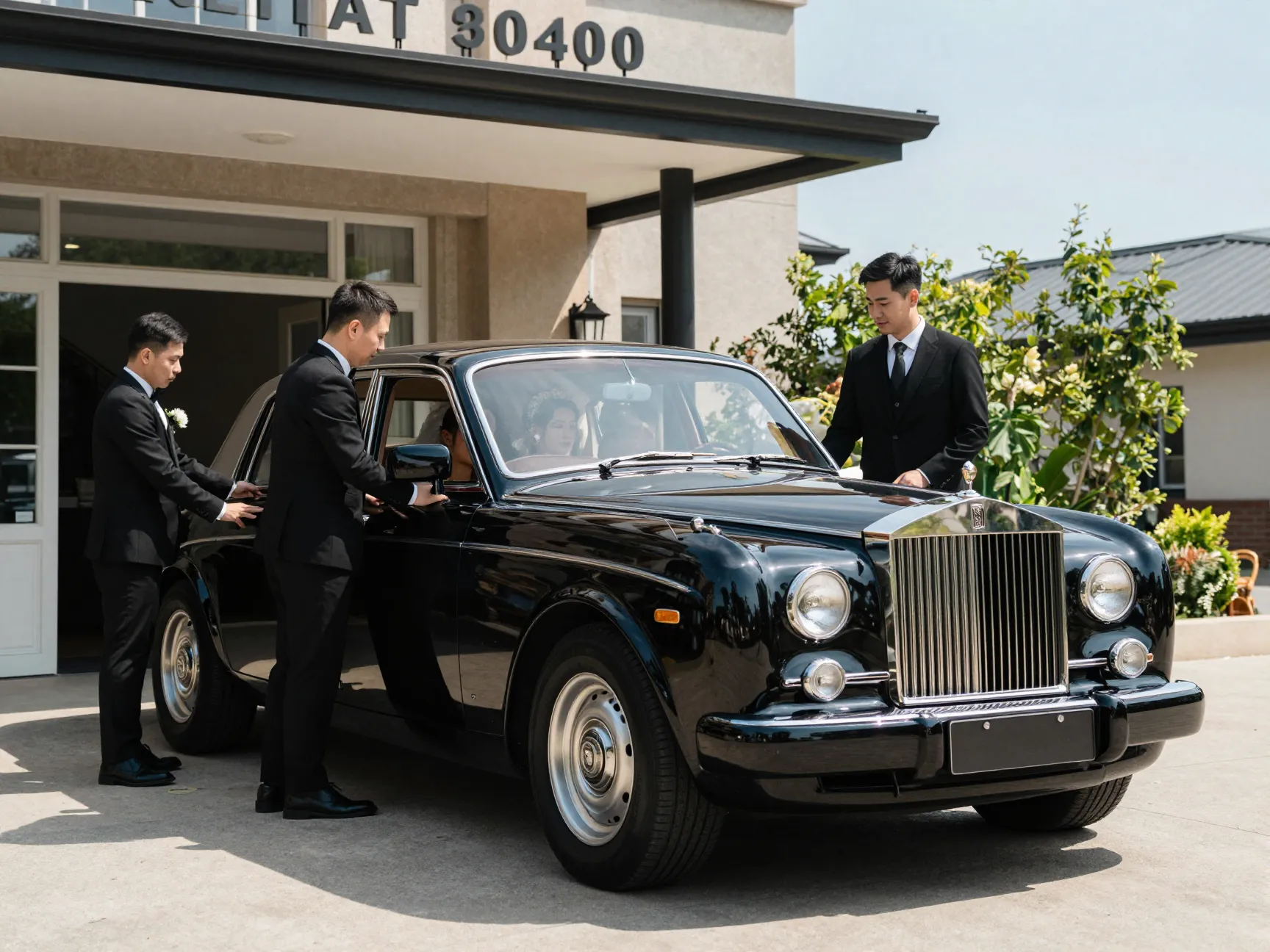
Recommended time: 45–60 minutes before ceremony start
Transportation is one of the most overlooked elements of a smooth wedding day. Whether you’re moving between a hotel, church, and venue — or simply getting the wedding party from the bridal suite to the ceremony space — logistics matter [1].
Key considerations:
- Confirm vehicle arrival times with your transportation vendor the day before
- Allow extra travel time for traffic, especially for weekend events
- Designate a point person (coordinator or MOH) to manage group movement
- Ensure guests have clear directions and parking instructions in advance
For destination or resort weddings, providing a digital mini-guide with transport schedules, venue maps, and local tips is a thoughtful touch that reduces guest confusion [2].
💬 “Guests who feel lost or rushed arrive at your ceremony stressed. Guests who arrive easily arrive happy.”
3. The Ceremony
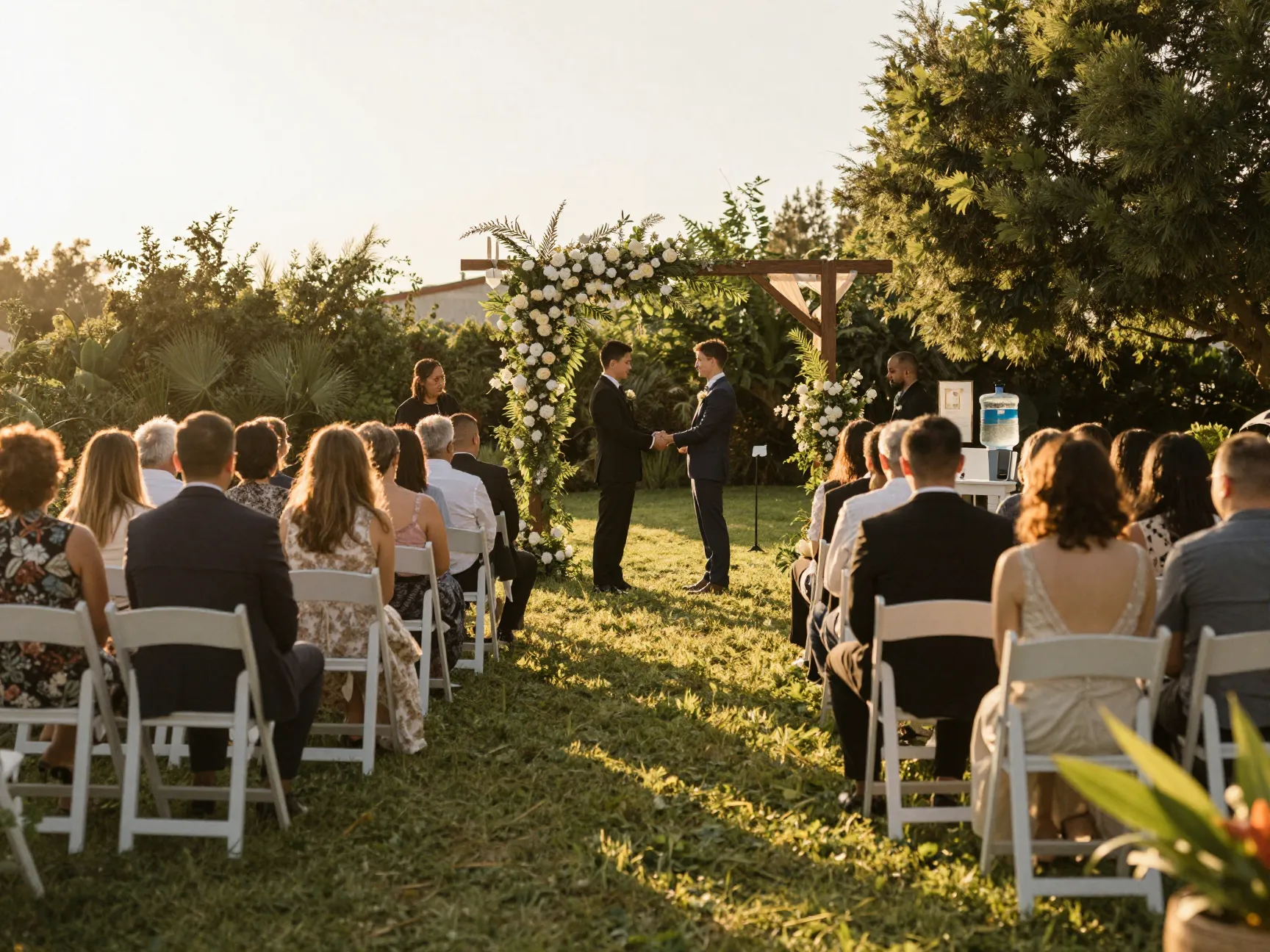
Recommended time: 20–45 minutes (depending on style)
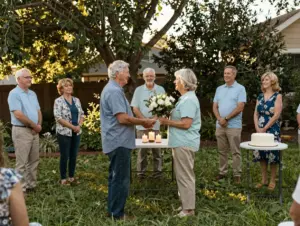
The ceremony is the heart of the day. Every other element exists to frame this moment. Timing here depends heavily on your ceremony type — civil, religious, or custom — but the principles of smooth execution are universal.
Optimize ceremony timing for:
- Natural light: Late afternoon ceremonies (4–5 PM) offer the most flattering light for photography, while morning ceremonies (10–11 AM) are gaining popularity for brunch-style receptions [3].
- Guest comfort: For outdoor ceremonies, plan for shade, hydration stations, and fans or heaters depending on the season [1].
- Sunset awareness: If you want golden hour portraits, your ceremony must end with enough time to reach your portrait location before the light fades.
Ceremony timing tips:
- Add a 10-minute buffer before the processional to account for late guests
- Brief your officiant on time expectations
- Assign ushers to seat guests efficiently
- Have a backup plan for weather if you’re outdoors
4. Post-Ceremony Portraits
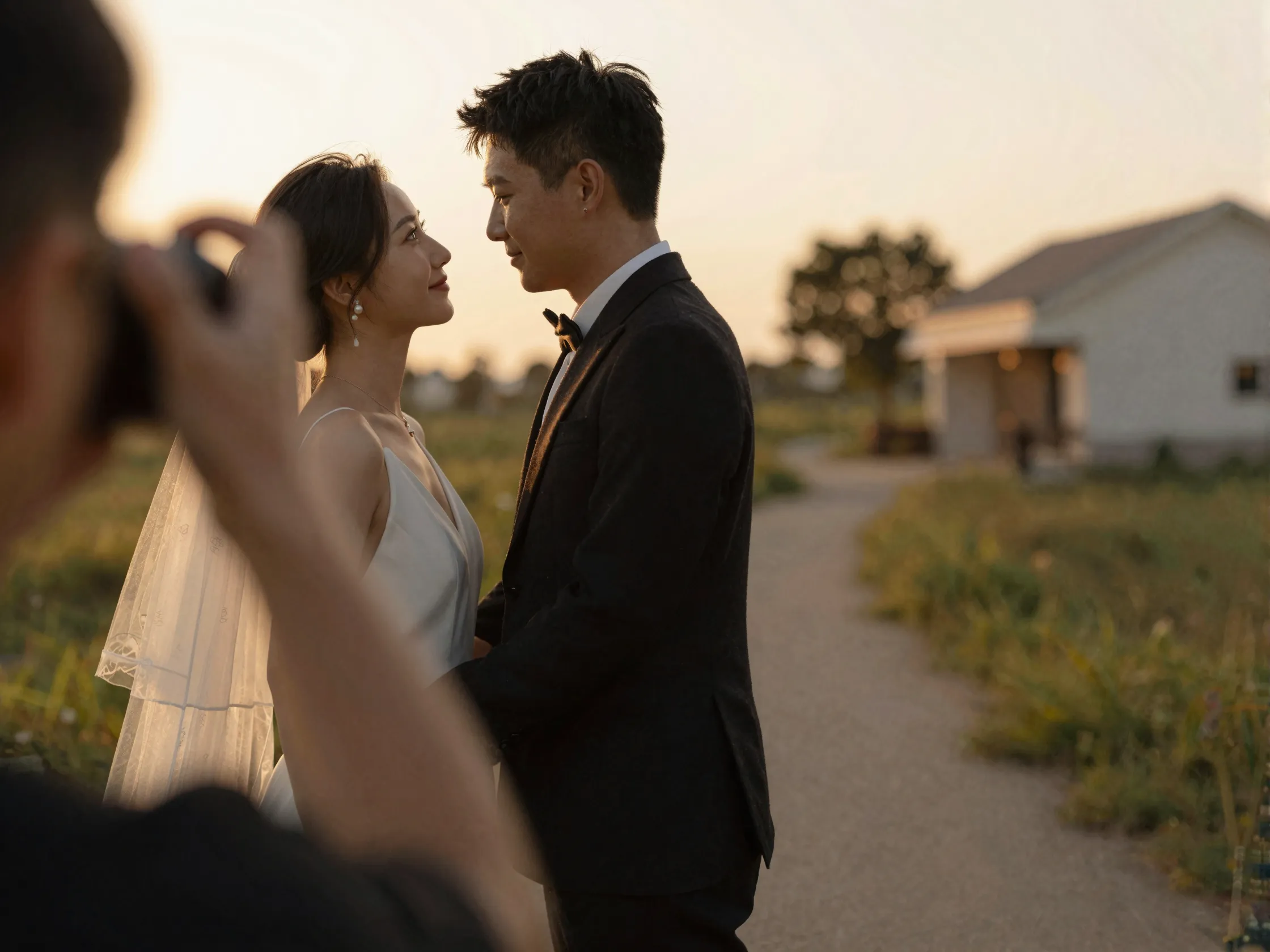
Recommended time: 45–90 minutes after the ceremony
This is where many wedding timelines fall apart. Portrait sessions run long when there’s no structure, and couples end up missing their own cocktail hour.
The solution: Pre-plan every shot list with your photographer and finalize it at least 2–3 months before the wedding [4].
Prioritize portraits in this order:
- Couple portraits (golden hour if possible)
- Immediate family formals
- Extended family groupings
- Full wedding party
- Individual wedding party portraits
Time-saving strategies:
- Do a first look before the ceremony to complete couple portraits early
- Assign a family member to gather people for group shots
- Limit formal family combinations to the most important groupings
- Use cocktail hour to complete remaining portraits while guests are entertained
🔑 Key insight: Couples who do a first look typically save 30–45 minutes during post-ceremony portrait time.
5. Cocktail Hour
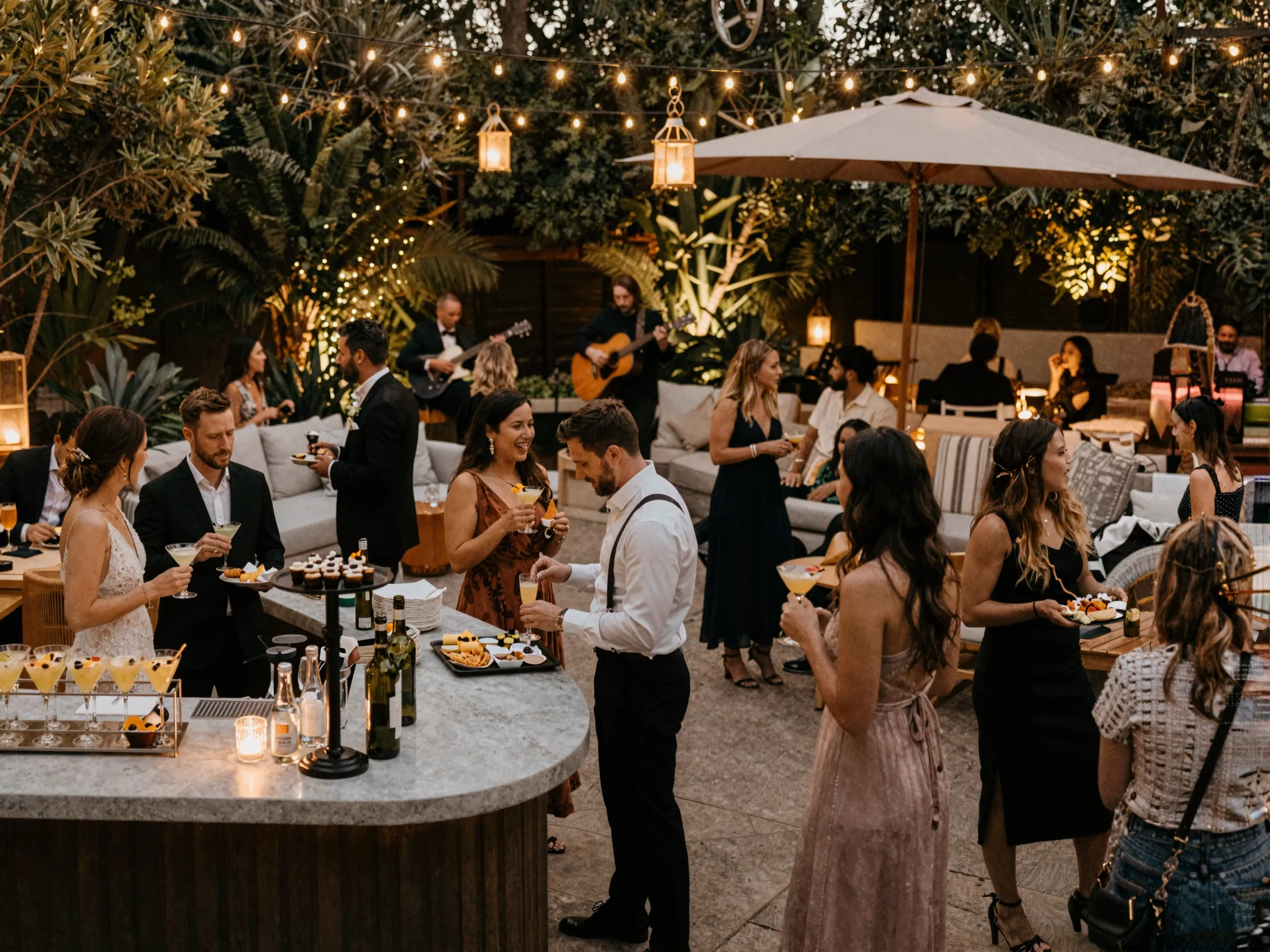
Recommended time: 60–75 minutes
Cocktail hour is one of the most joyful, organic parts of a wedding day — and one of the few moments that should feel unscheduled [2]. It’s the time when guests reconnect, the couple catches their breath, and the energy builds toward the reception.
Make it memorable:
- 🍹 Offer bespoke cocktails and tray-passed hors d’oeuvres that reflect your personality as a couple [7]
- 🎵 Set the tone with a live musician or curated playlist
- 📸 Set up an interactive element (photo booth, lawn games, live artist)
- 🌿 Design the space with intentional lighting to create a warm, welcoming atmosphere [7]
Don’t skip this: Even if you’re eager to get to the reception, cocktail hour gives your vendors time to flip the ceremony space, your caterer time to finalize dinner service, and your guests time to connect naturally [2].
Couple’s checklist for cocktail hour:
- Eat something (seriously — you’ll thank yourself later)
- Greet as many guests as possible
- Complete any remaining portraits
- Take 10 minutes alone together to breathe
6. Reception Grand Entrance and Dinner
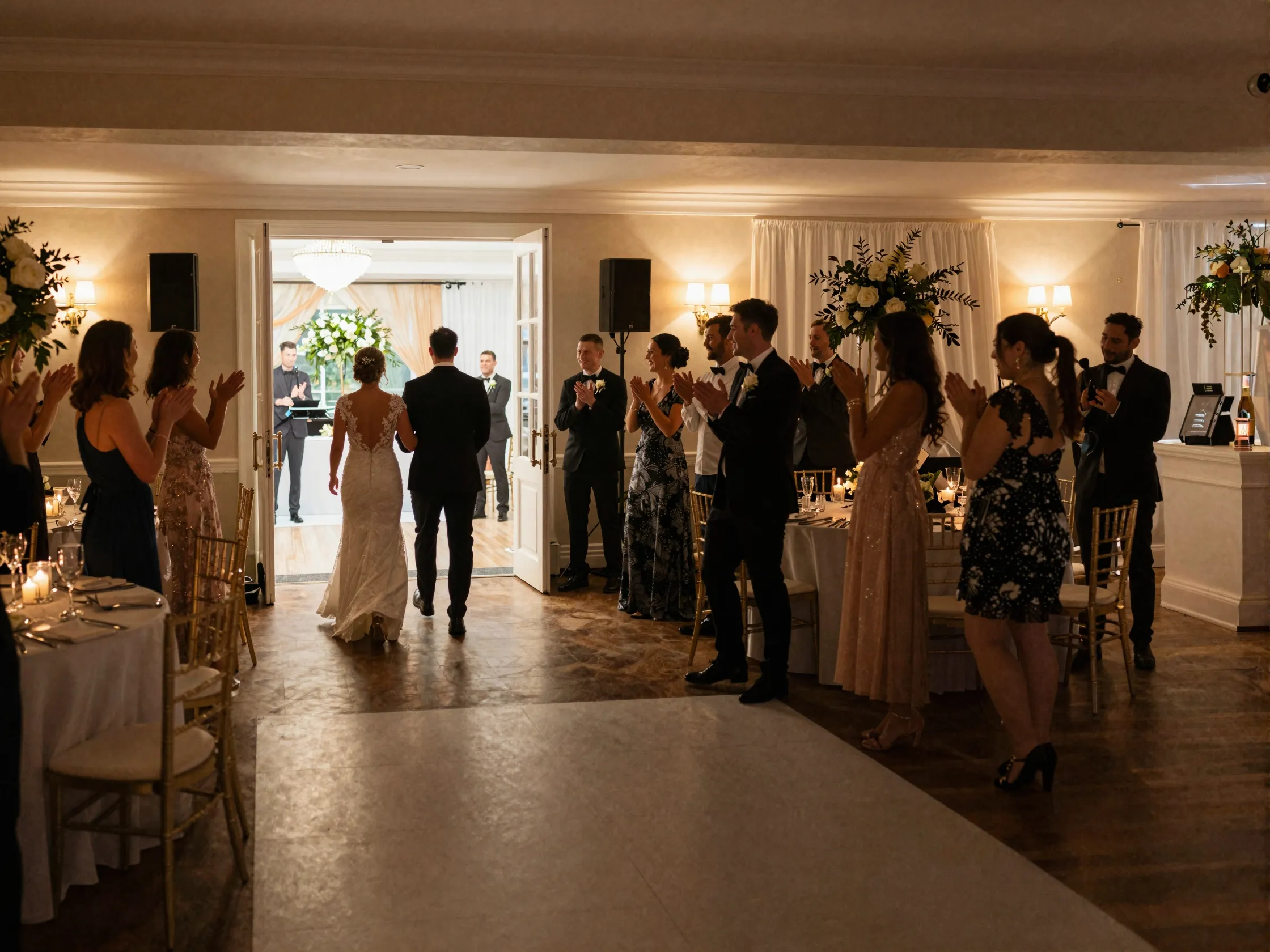
Recommended time: 2.5–3.5 hours
The reception is the longest block of your day and requires the most detailed scheduling. Work closely with your caterer, DJ or band, and coordinator to map out every element.
Standard reception flow:
| Event | Duration |
|---|---|
| Grand entrance | 5–10 minutes |
| First dance | 3–5 minutes |
| Welcome toasts | 10–15 minutes |
| Dinner service begins | 60–90 minutes |
| Parent dances | 5–10 minutes |
| Additional toasts | 10–15 minutes |
| Cake cutting | 10 minutes |
| Open dancing begins | Remaining time |
Food and beverage tips:
- Make dining an experience, not just a meal — interactive food stations, chef-attended carving stations, and dessert displays all elevate the moment [7]
- Time toasts carefully: no more than 3–4 speakers to keep energy high
- Serve dinner promptly — hungry guests lose energy fast
💬 “The best receptions feel like a great dinner party where everyone happens to be dressed beautifully and the music is perfect.”
Lighting matters here: Use warm, cinematic tones during dinner and shift to more dynamic, energetic lighting as dancing begins [7]. This subtle transition signals a mood shift that gets guests on their feet.
7. Dancing, Traditions, and Late-Night Moments
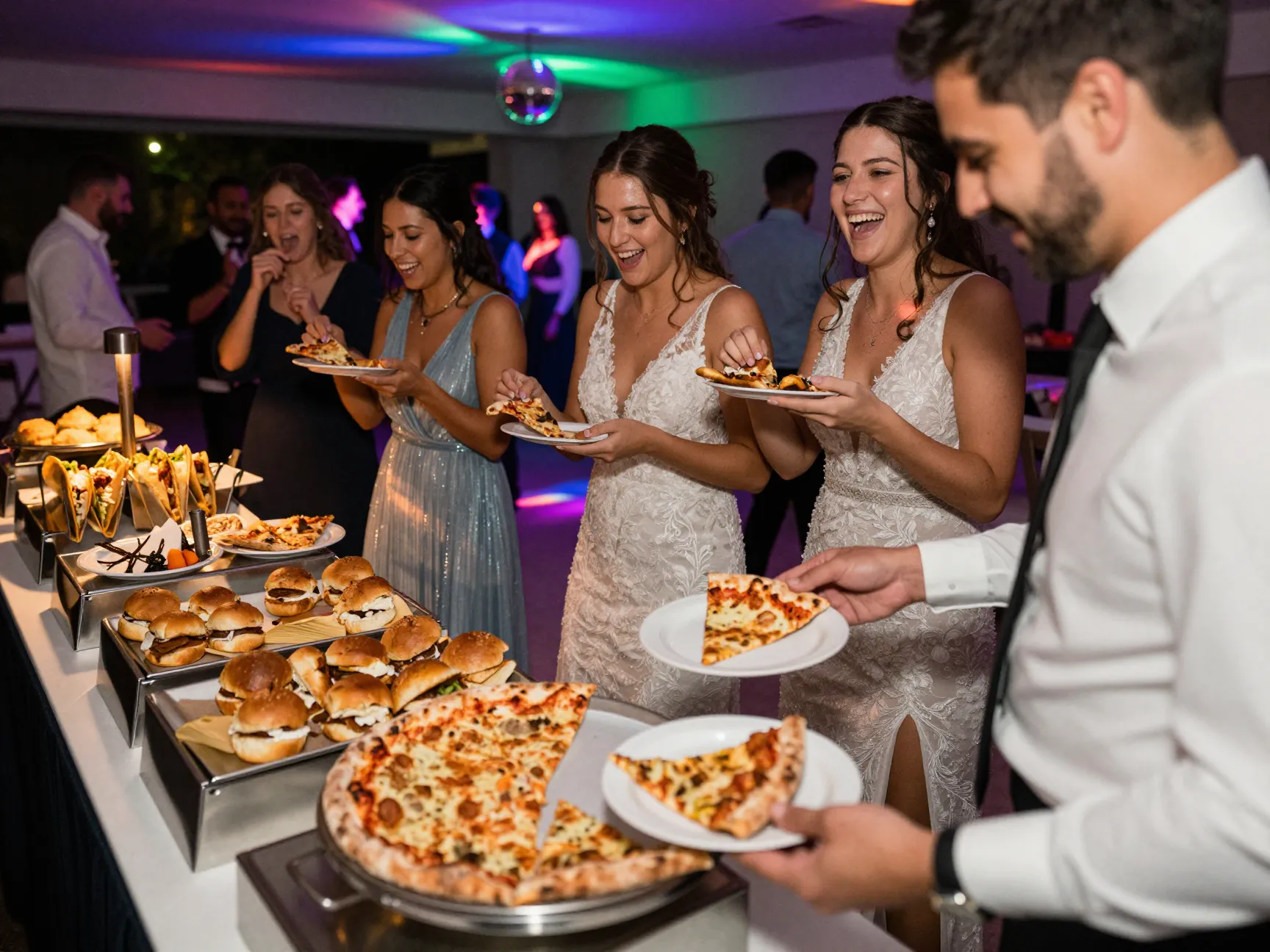
Recommended time: 1.5–2.5 hours
This is where the party lives. Once dinner wraps and open dancing begins, your job is simple: be present and have fun. But a few structural moments keep the energy moving.
Key moments to schedule:
- 🎂 Bouquet and garter toss (if desired) — time these during a natural break in dancing
- 🎤 Surprise performances or special songs
- 🍕 Late-night snack station — a fan favorite that re-energizes guests and extends the party [1]
- 📸 Final couple portraits (often the most romantic shots of the night)
Late-night snack ideas:
- Mini sliders or grilled cheese
- Pizza by the slice
- Tacos or street food station
- Dessert bar with donuts and cookies
🔑 Trend alert: In 2026, late-night bites have become a signature moment in receptions — couples are using them as a final “wow” element that guests talk about for years [7].
End the night intentionally: Plan a grand exit — sparklers, flower petals, ribbon wands — and schedule it 30 minutes before the venue curfew to give yourself buffer time [1].
8. Post-Wedding Wind-Down and Weekend Itinerary
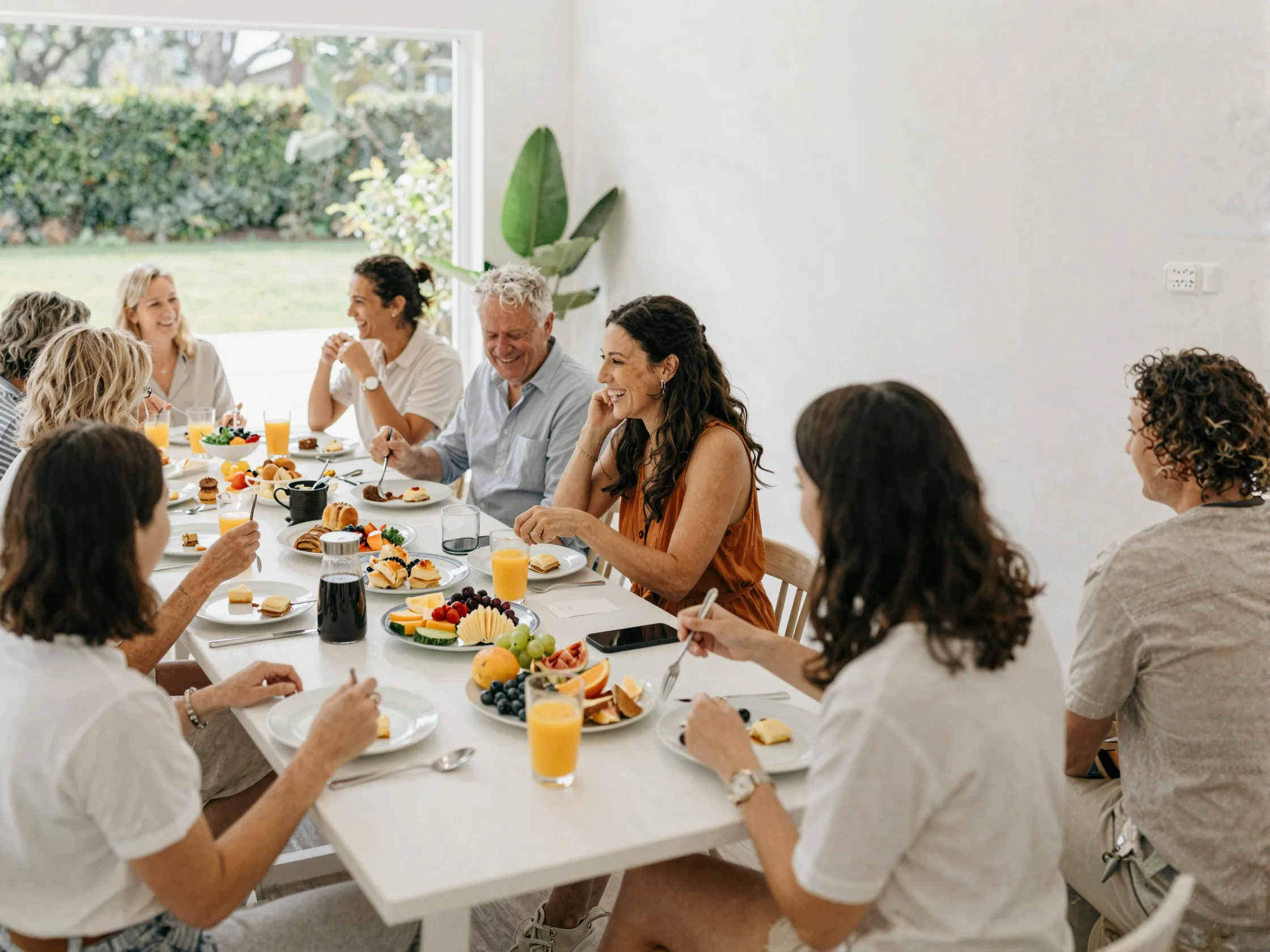
Recommended time: Day-after and beyond
The eighth point in a truly perfect wedding day itinerary extends beyond the wedding itself. In 2026, the most memorable celebrations are multi-day experiences that give couples and guests meaningful time together [3].
Consider adding:
- 🥂 Welcome dinner the night before (rehearsal dinner or casual gathering)
- ☀️ Farewell brunch the morning after — low-key, joyful, and deeply appreciated by out-of-town guests
- 🗺️ Digital mini-guide with local restaurant recommendations, transportation tips, and activity suggestions [2]
- 💌 Handwritten notes in guest hotel rooms for a personal touch [2]
Why this matters:
Many couples report that the farewell brunch is their favorite memory of the entire wedding weekend — the pressure is off, everyone is relaxed, and the love is still in the air.
💬 “The wedding day is the main event. But the weekend is the full story.”
Even for local couples without destination guests, a structured weekend itinerary creates a sense of occasion that elevates the entire experience [3].
Building Buffer Times Into Your 8-Point Itinerary
One of the most important — and most ignored — elements of a smooth wedding day is buffer time [1]. Every transition in your schedule should have a cushion built in.
Recommended buffers:
| Transition | Suggested Buffer |
|---|---|
| Getting ready → Transportation | 20–30 minutes |
| Transportation → Ceremony | 15–20 minutes |
| Ceremony → Portraits | 10 minutes |
| Portraits → Cocktail hour | 15 minutes |
| Cocktail hour → Reception | 10–15 minutes |
| Reception → Grand exit | 30 minutes |
These buffers don’t mean your day runs long — they mean your day runs right. When everything goes smoothly, buffer time becomes bonus time for extra portraits, a quiet moment together, or simply soaking it all in [1].
Vendor Communication: The Secret Ingredient
Even the most detailed timeline fails without clear communication. Every vendor — photographer, caterer, florist, DJ, transportation — needs a copy of your timeline at least two weeks before the wedding [1].
Best practices:
- Share a master timeline document (Google Doc or PDF) with all vendors
- Include vendor contact information so they can coordinate directly
- Designate a day-of coordinator (professional or trusted friend) as the single point of contact
- Schedule a final vendor check-in call one week before the wedding [4]
🔑 Remember: Your photographer’s timeline and your caterer’s timeline must align. If they don’t, dinner gets delayed or portraits get rushed.
Quick Reference: Your 8-Point Wedding Day Timeline at a Glance
| Point | Block | Key Focus |
|---|---|---|
| 1 | Getting Ready | Prep, portraits, snacks |
| 2 | Transportation & Arrival | Logistics, guest flow |
| 3 | Ceremony | Timing, comfort, light |
| 4 | Post-Ceremony Portraits | Shot list, efficiency |
| 5 | Cocktail Hour | Guest connection, food |
| 6 | Reception & Dinner | Flow, food, speeches |
| 7 | Dancing & Late Night | Energy, traditions, exit |
| 8 | Post-Wedding Weekend | Brunch, guides, memories |
Conclusion
A truly seamless wedding day doesn’t happen by accident. It’s built — carefully, intentionally, and with plenty of buffer time. By following this 8-Point Itinerary for a Wedding Day That Flows Perfectly, you give yourself the greatest gift a couple can have on their wedding day: the freedom to be fully present.
Your actionable next steps:
- Start your timeline now — even if your wedding is 12+ months away, a rough framework helps every vendor conversation.
- Book your coordinator early — a professional planner is the best investment you can make in a smooth day [1].
- Share this itinerary framework with your photographer and discuss how it aligns with their shooting schedule [4].
- Plan your weekend — add a welcome dinner and farewell brunch to your calendar and watch the experience expand [3].
- Build in buffer time at every transition — it’s the single most effective change you can make to any timeline [1].
Your wedding day is one of the most important days of your life. Plan it like it is.
References
[1] 2026 Wedding Planning Guide – https://www.sielloweddingsandevents.com/post/2026-wedding-planning-guide
[2] 26 Tips Weddings 2026 Socal Guide – https://www.onestoryweddings.com/wedding-planning-guides/26-tips-weddings-2026-socal-guide
[3] Planner Secrets 2026 Wedding Trends You Should Not Miss – https://www.theeventbay.com/wedding-blog/planner-secrets-2026-wedding-trends-you-should-not-miss
[4] The Ultimate 2026 Wedding Planning Timeline Checklist – https://sarahvanheckephotography.com/2025/08/29/the-ultimate-2026-wedding-planning-timeline-checklist/
[7] Planning With Purpose An Experts Top Tips For 2026 Weddings – https://readlola.com/2026/01/planning-with-purpose-an-experts-top-tips-for-2026-weddings/