9 Essential Details to Include on Your Wedding Invitations Details Card
Imagine your guests opening a beautifully designed envelope, only to spend the next hour texting you questions like “Where exactly is the reception?” or “What should I wear?” — right before your big day. 😬 That’s a scenario every couple wants to avoid, and it’s exactly why the wedding details card exists. When you nail the 9 essential details to include on your wedding invitations details card, you give your guests everything they need to show up confident, prepared, and ready to celebrate.
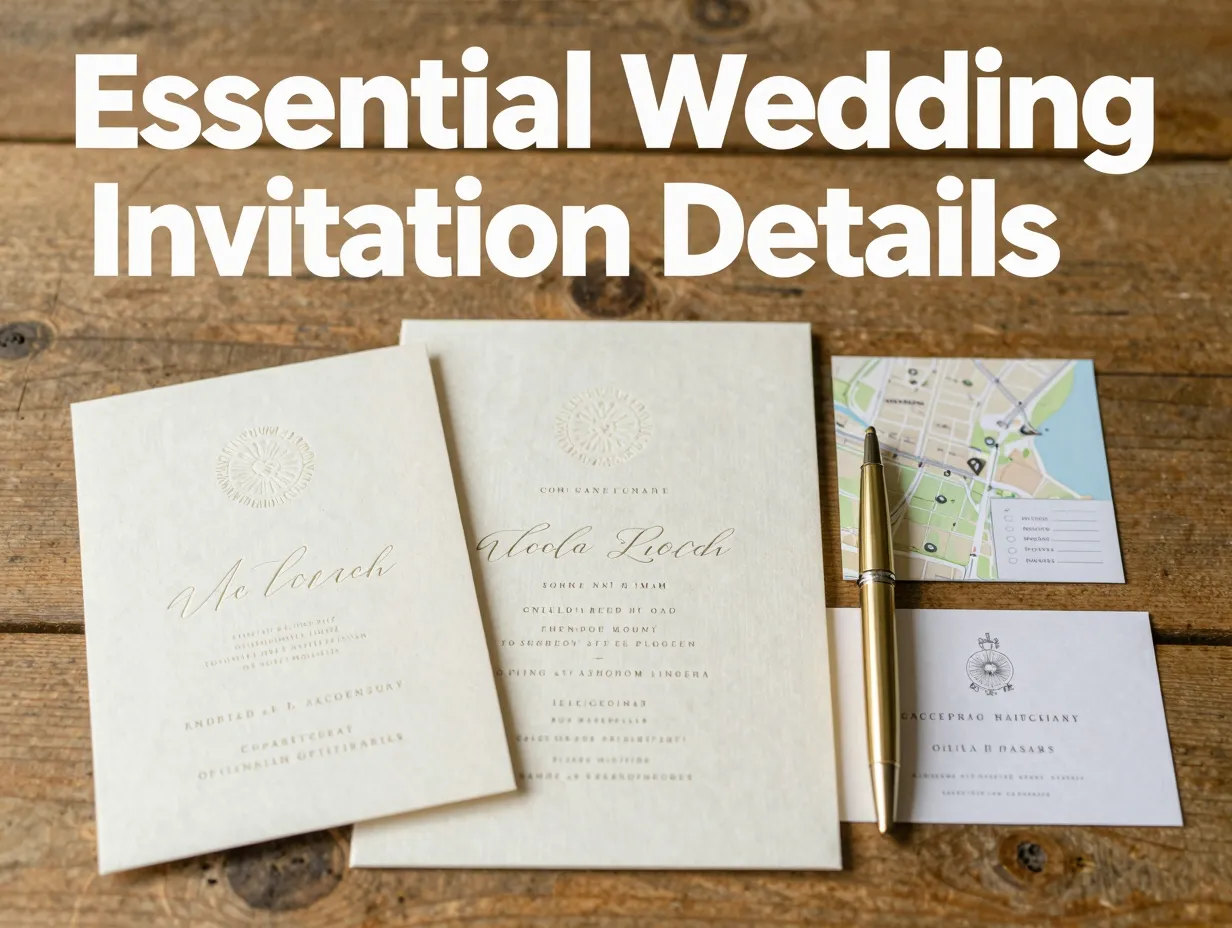
In 2026, couples are investing more thought than ever into their invitation suites. The details card — sometimes called an enclosure card or information card — is a small insert that travels alongside your main invitation. It handles all the logistical information that simply doesn’t fit on the formal invite itself. Getting it right can mean the difference between a smooth, stress-free wedding day and a flood of last-minute phone calls.
In this guide, I’ll walk you through every essential element your details card should include, with practical wording tips, formatting advice, and expert-backed guidance to make your stationery suite as polished as your wedding day itself.
Key Takeaways
- 📋 A wedding details card is a separate insert in your invitation suite designed to hold logistical information your main invite can’t accommodate.
- 🏨 Always include hotel room block details and transportation options for out-of-town guests.
- 📍 If your ceremony and reception are at different venues, both addresses must appear on the details card.
- 💻 Your wedding website URL and social media hashtag are modern must-haves that help guests find real-time updates.
- 🎩 A clear dress code prevents confusion and ensures your photos look exactly as you envisioned.
Why Your Wedding Details Card Matters More Than You Think
Before diving into the 9 essential details to include on your wedding invitations details card, it’s worth understanding why this small piece of paper carries so much weight.
Your main invitation is a formal document. It sets the tone, announces the event, and conveys your style. But it simply cannot — and should not — be cluttered with parking instructions, shuttle schedules, and hotel booking codes. That’s where the details card steps in [1].
“Think of the details card as your guests’ personal travel guide to your wedding day.”
A well-crafted details card reduces guest anxiety, cuts down on repetitive questions to you and your wedding planner, and ensures everyone arrives at the right place at the right time. According to stationery experts, couples who include a thorough details card report fewer logistical hiccups on the day itself [3].
The 9 Essential Details to Include on Your Wedding Invitations Details Card
Here is a complete breakdown of every element your details card needs. Whether you’re hosting an intimate backyard gathering or a multi-day destination celebration, these nine items form the foundation of a guest-friendly invitation suite.
1. Reception Location and Timing
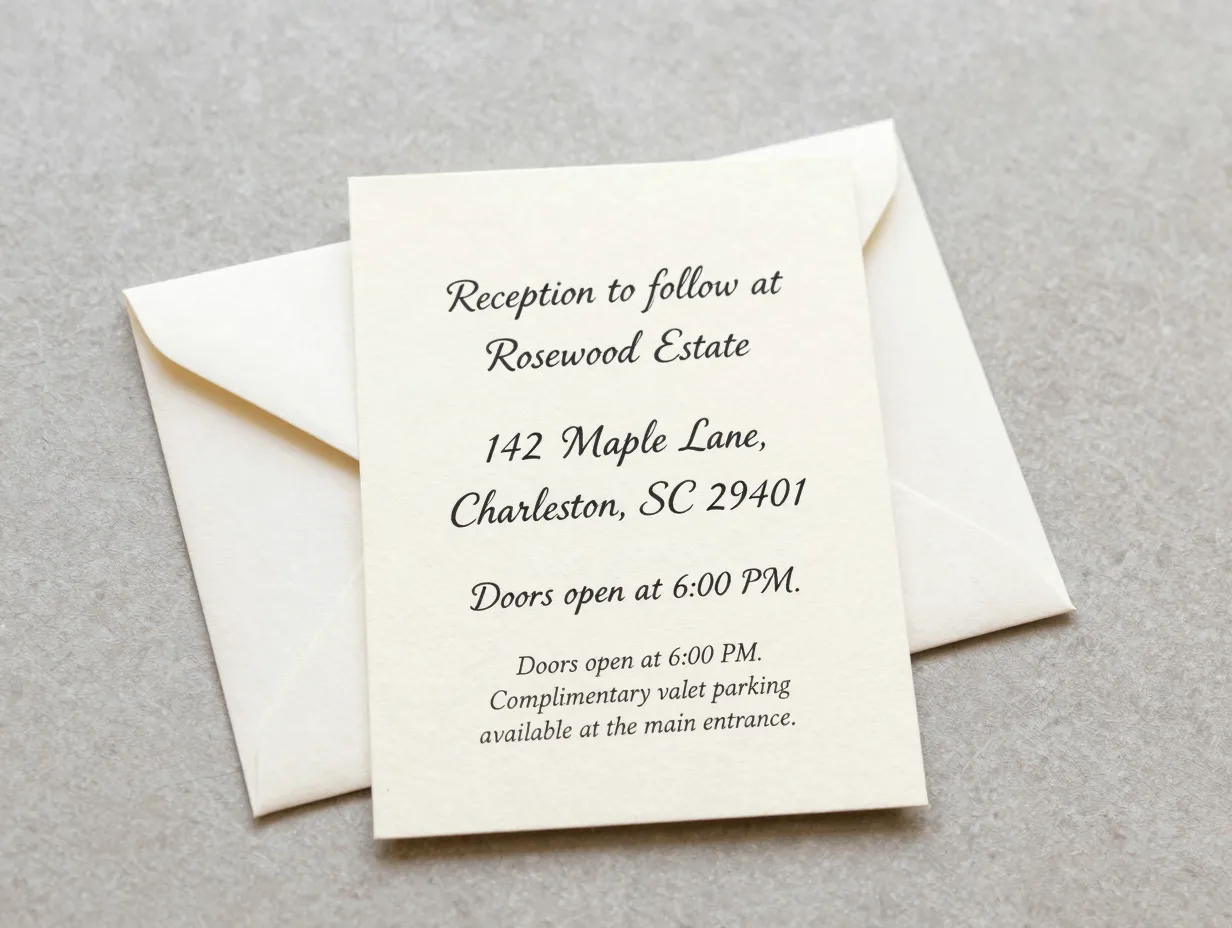
If your ceremony and reception take place at different venues — which is common for church weddings, outdoor ceremonies, or destination events — your details card must include the full reception venue address, the start time, and any relevant entrance instructions [2].
What to include:
- Full venue name and street address
- City, state, and ZIP code
- Reception start time (and approximate end time if known)
- Gate or entrance details (e.g., “Enter through the garden gate on Oak Street”)
- Parking availability and any parking fees
Example wording:
“Reception to follow at Rosewood Estate, 142 Maple Lane, Charleston, SC 29401. Doors open at 6:00 PM. Complimentary valet parking available at the main entrance.”
Even if your ceremony and reception are at the same venue, confirming the reception start time on the details card helps guests plan their evening [4].
2. Directions and Map Information
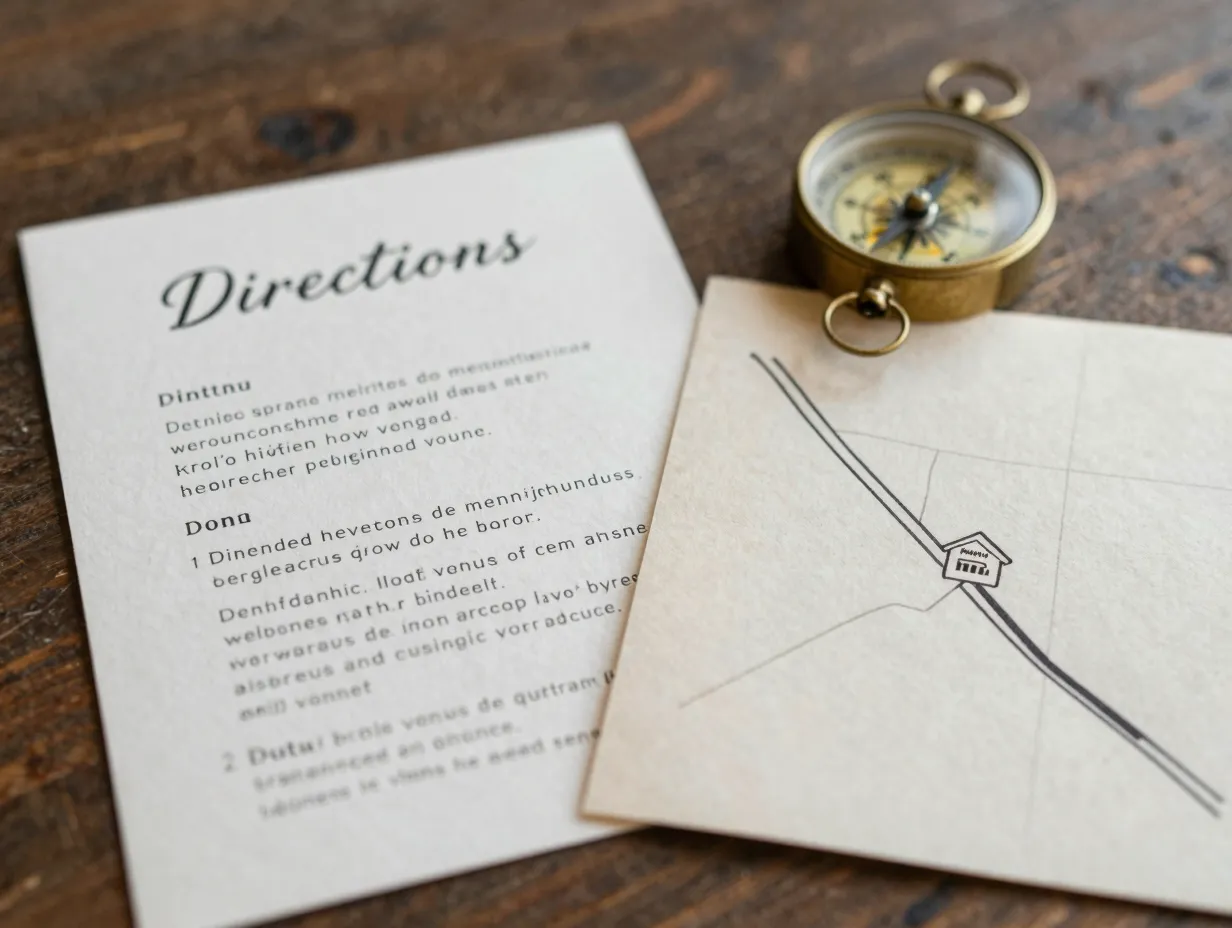
In the age of GPS, you might wonder if printed directions are still necessary. The answer is yes — especially for venues in rural areas, private estates, or locations where cell service is unreliable [4].
Why this still matters in 2026:
| Scenario | Why Directions Help |
|---|---|
| Rural or remote venue | GPS often gives incorrect routes |
| Private estate | Not always listed on mapping apps |
| Multi-building venue | Guests need to find the right building |
| International destination | Foreign guests may lack data plans |
Include a simple written route from the nearest major highway or landmark, and reference your wedding website for a downloadable map [5]. Keep the wording clear and concise — this isn’t the place for a novel.
3. Guest Accommodations and Room Block Information
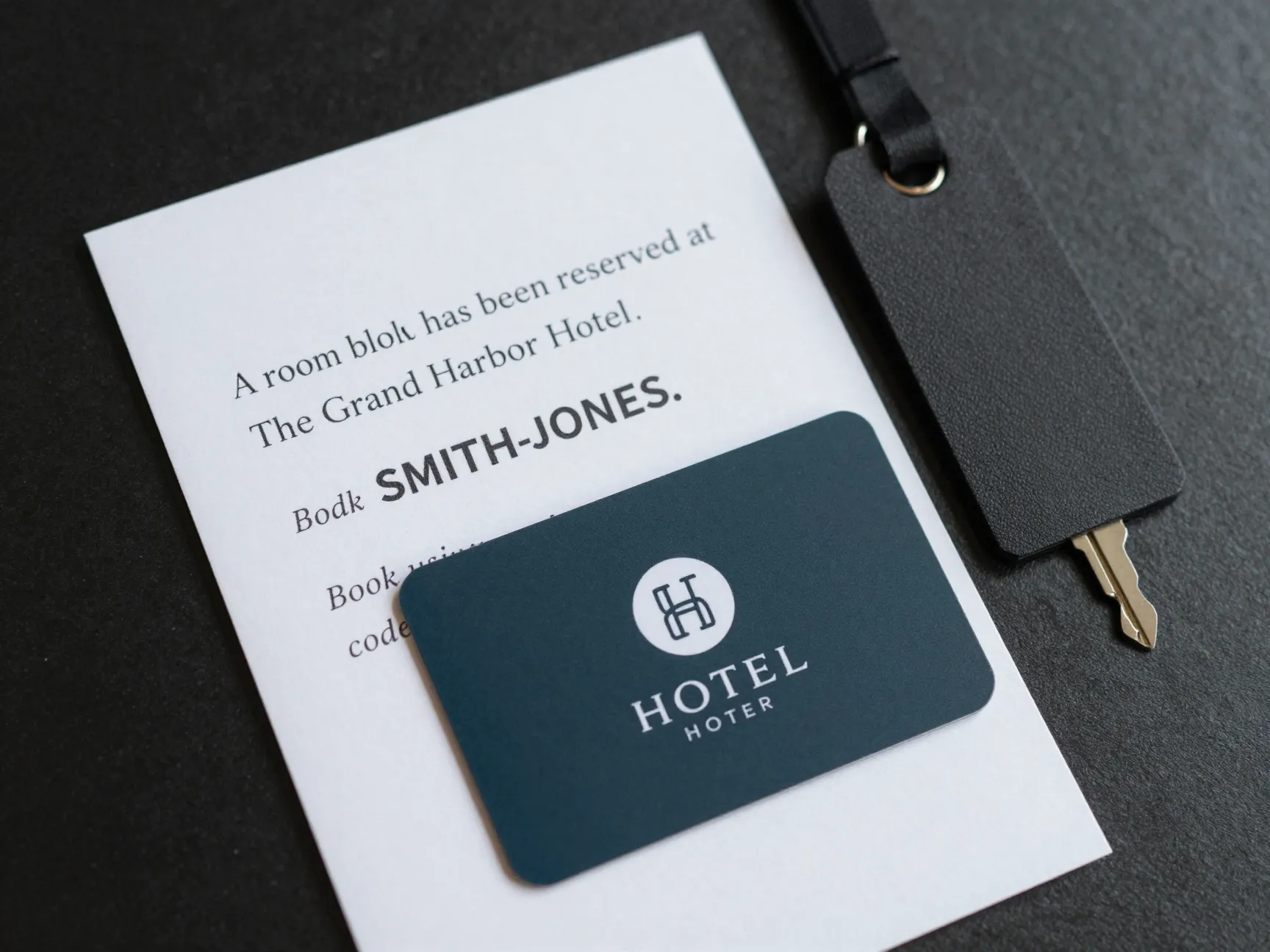
Out-of-town guests are counting on you to point them toward a comfortable place to stay. One of the most appreciated details you can include is a hotel room block — a reserved block of rooms at a negotiated rate specifically for your wedding guests [1].
What to include on the details card:
- Hotel name and full address
- Phone number or booking URL
- Your wedding room block name or code
- Booking deadline (room blocks typically expire 4–6 weeks before the wedding)
- Distance from the venue
- Recommended airports for traveling guests [1][2]
Example wording:
“A room block has been reserved at The Grand Harbor Hotel, 500 Harbor Blvd, Savannah, GA. Book by August 1, 2026 using code SMITH-JONES. Savannah/Hilton Head International Airport (SAV) is the closest airport, approximately 20 minutes away.”
If you have multiple hotel options at different price points, list two or three and direct guests to your wedding website for full details [1].
4. Transportation and Shuttle Information

Providing transportation — especially shuttle service between hotels and the venue — is a guest experience upgrade that also promotes safety when alcohol is being served. If you’re offering a shuttle, your details card needs to spell out the logistics clearly [3][2].
Shuttle details to include:
- Pick-up location (hotel name and address)
- Drop-off location (venue name)
- Departure times (both to the venue and returning)
- Whether the shuttle is complimentary or ticketed
- Contact number for transportation questions
Example wording:
“Complimentary shuttle service will depart from The Grand Harbor Hotel lobby at 4:30 PM and 5:00 PM. Return shuttles will run at 10:30 PM, 11:30 PM, and midnight.”
If you’re not providing transportation but want to suggest options, include the name of a local rideshare service or taxi company that operates in the area [2].
5. Dress Code Requirements
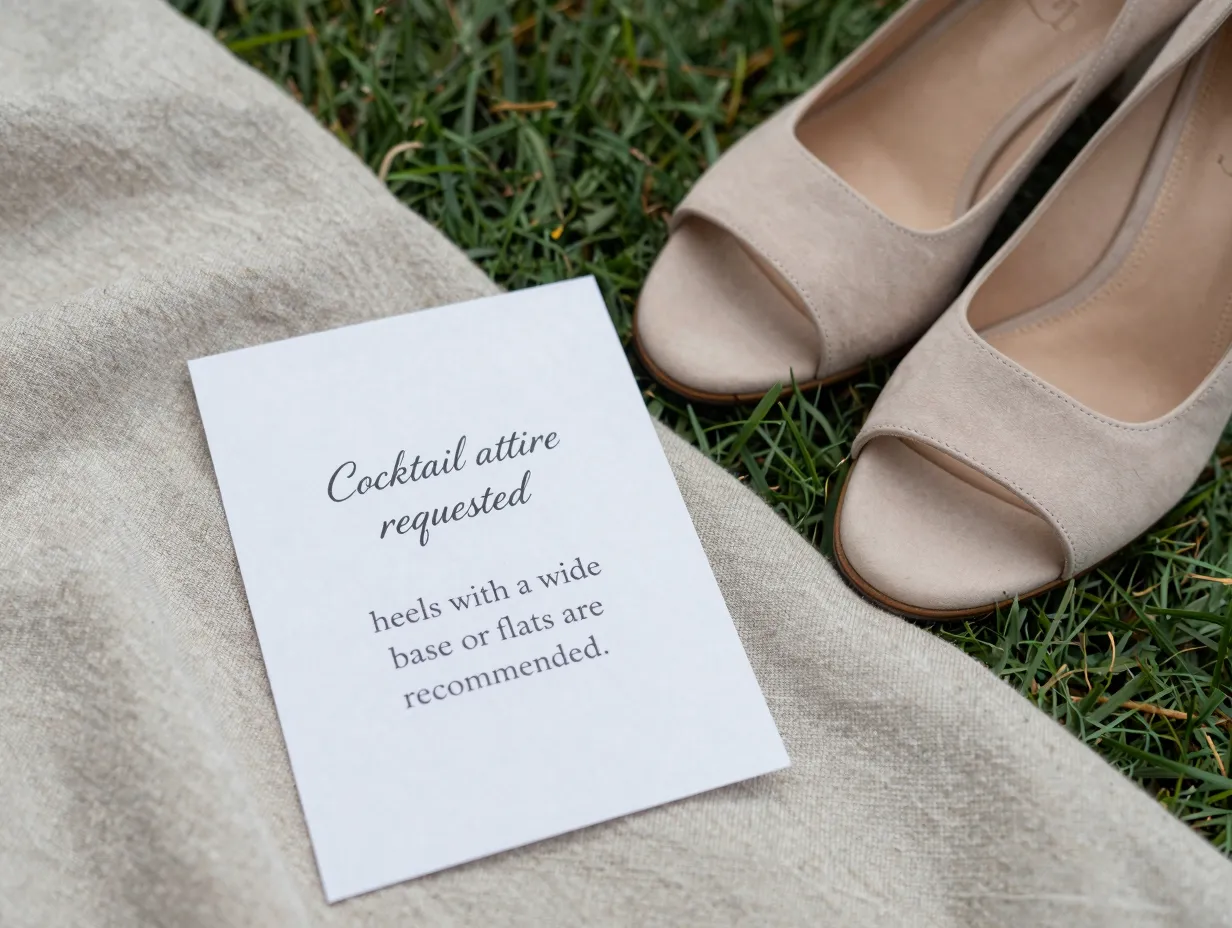
Nothing creates more pre-wedding anxiety for guests than uncertainty about what to wear. A clearly stated dress code is one of the most practical — and most appreciated — details you can include [2][3].
Common dress code terms and what they mean:
| Dress Code | What Guests Should Wear |
|---|---|
| Black Tie | Tuxedos / Floor-length gowns |
| Black Tie Optional | Tuxedos or dark suits / Formal dresses |
| Cocktail Attire | Suits / Knee-length or midi dresses |
| Garden Party | Smart casual, floral prints welcome |
| Beach Formal | Linen suits / Flowy dresses, flat shoes |
| Casual | Smart casual, comfortable footwear |
If your wedding has a specific color palette or theme, you can gently suggest that guests avoid certain colors (like white or ivory) or encourage them to embrace a color theme [3].
Example wording:
“Cocktail attire requested. We kindly ask that guests avoid wearing white or ivory. The reception will be held outdoors on grass — heels with a wide base or flats are recommended.”
6. Complete Day-of Itinerary

Giving guests a clear timeline of the day’s events helps them plan travel, childcare, and personal schedules accordingly [3][4]. You don’t need to share every behind-the-scenes detail — just the guest-facing highlights.
Typical itinerary elements to include:
- Ceremony start time and expected duration
- Cocktail hour location and timing
- Reception start time
- Dinner service time (if relevant)
- Last dance or approximate end time
Example wording:
“4:00 PM — Ceremony begins (please be seated by 3:45 PM)
5:00 PM — Cocktail hour on the terrace
6:30 PM — Reception doors open
11:00 PM — Last dance and send-off”
“A day-of timeline removes guesswork and helps guests feel included in the flow of your celebration.”
This is especially helpful for guests traveling from out of town who need to coordinate flights or childcare around a specific end time [4].
7. Wedding Website and Social Media Hashtag
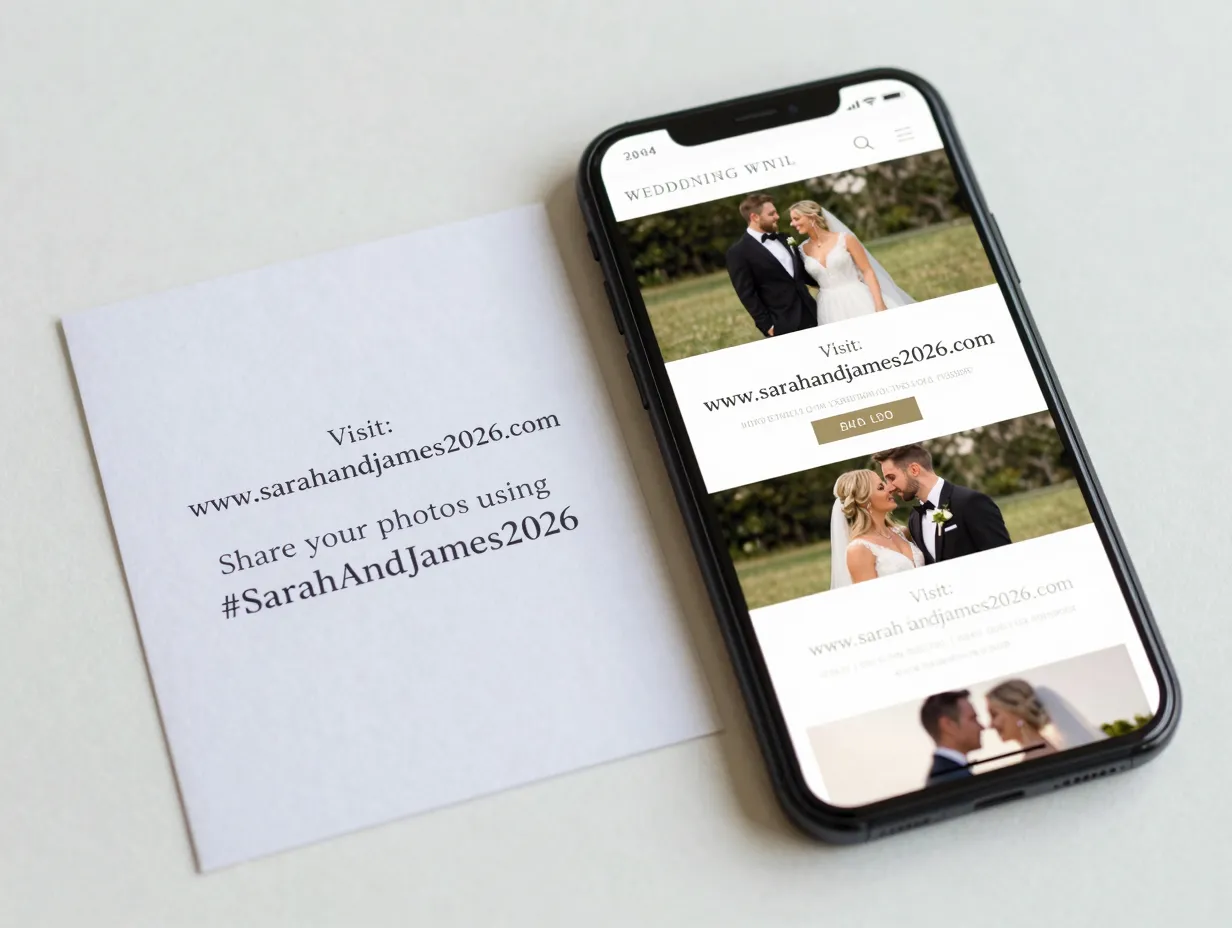
In 2026, a wedding website is practically non-negotiable. It serves as a living document where guests can find updated information, RSVP, view your love story, and access registry details [2][5].
What to include on the details card:
- Your full wedding website URL (keep it short and memorable)
- Your wedding hashtag for social media posts
- A brief note about what guests will find on the site
Example wording:
“For full details, accommodations, and registry information, visit: www.sarahandjames2026.com
Share your photos using our hashtag: #SarahAndJames2026″
Pro tips for your wedding website:
- Choose a URL that’s easy to type and remember
- Make sure the site is mobile-friendly — most guests will check it on their phones
- Keep it updated as plans evolve [2]
Your hashtag also serves a practical purpose beyond social media — it creates a crowd-sourced photo album of your day that you can revisit for years to come 📸.
8. Gift Registry Information
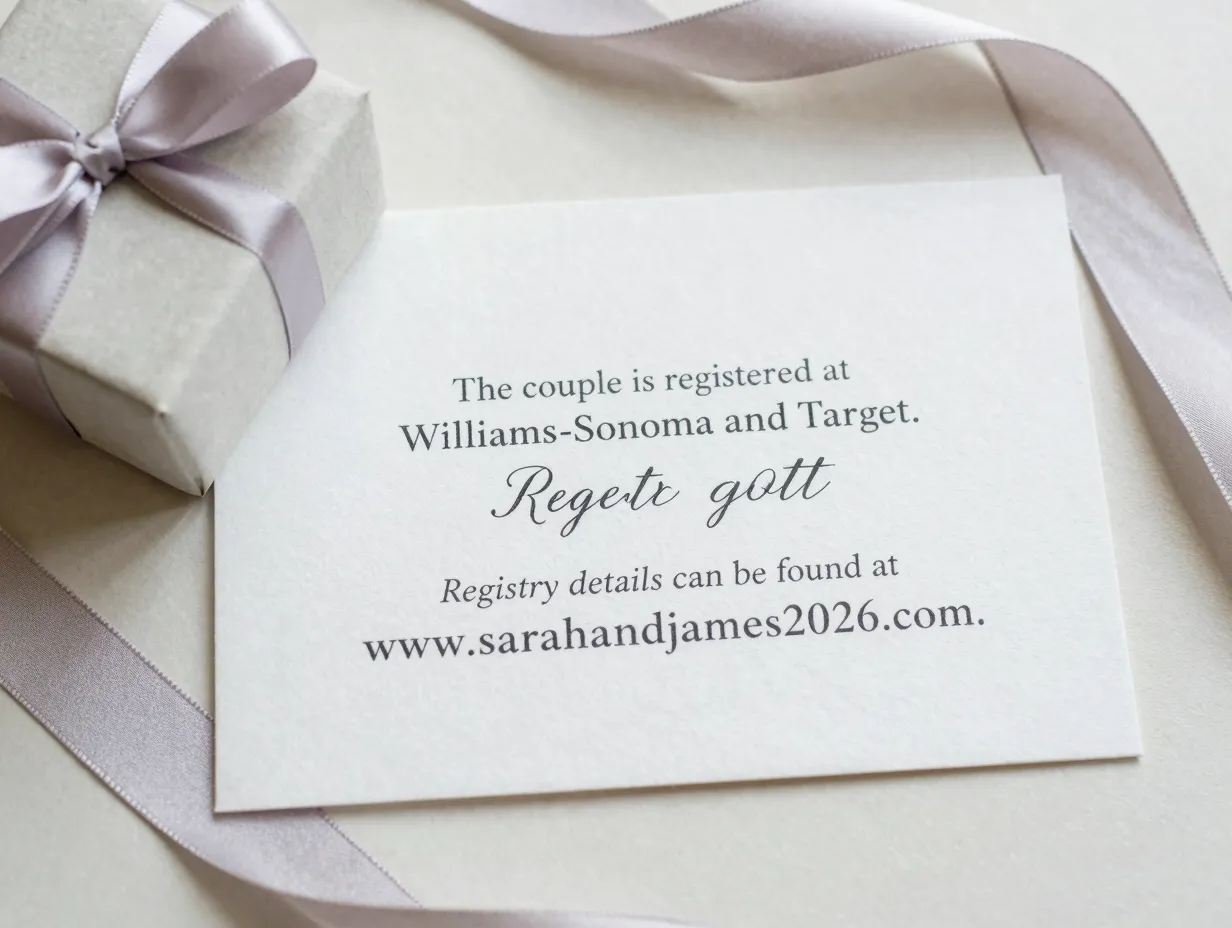
There’s a long-standing etiquette debate about whether to include registry information in the invitation suite. The modern consensus — supported by leading stationery brands and wedding planners — is that including a brief, tasteful reference to your registry on the details card (not the main invitation) is perfectly acceptable and genuinely helpful for guests [5].
How to handle registry details gracefully:
- Never list specific items or prices
- Direct guests to your wedding website for full registry details
- If you have multiple registries, list the store names only
- For cash funds or honeymoon registries, a gentle note is appropriate
Example wording:
“The couple is registered at Williams-Sonoma and Target. Registry details can be found at www.sarahandjames2026.com.”
If you prefer a cash gift or honeymoon fund, try:
“In lieu of gifts, the couple welcomes contributions to their honeymoon fund at www.sarahandjames2026.com/honeymoon.”
Keeping this section brief and directing guests to your website keeps the details card clean while still giving guests the guidance they’re looking for [5].
9. Wedding Weekend Events for Multi-Day Celebrations

If your wedding spans multiple days — which is increasingly common for destination weddings, multi-cultural celebrations, and weekend-long events — your details card should outline all the additional events guests are invited to attend [3].
For each event, include:
- Event name (e.g., Welcome Dinner, Morning-After Brunch)
- Venue name and address
- Date and start time
- Dress code (if different from the wedding)
- Whether an RSVP is required
- Any relevant notes (e.g., “Outdoor event — please dress accordingly”)
Example wording:
“Welcome Party: Friday, September 12, 2026 at 7:00 PM
The Rooftop at The Grand Harbor Hotel
Cocktail attire | RSVP requested by August 15
Morning Brunch: Sunday, September 14, 2026 at 10:00 AM
Sunrise Café, 22 Bay Street | Casual attire | No RSVP needed”
Not all guests will be invited to every event, so it’s important to be clear about who is included. You can either send separate event-specific inserts to relevant guests or use your wedding website to manage invitations and RSVPs for secondary events [3].
Formatting Tips for a Polished Details Card
Now that you know the 9 essential details to include on your wedding invitations details card, let’s talk about how to present them beautifully.
Design best practices:
- Match your invitation suite — use the same fonts, colors, and paper stock for a cohesive look
- Use clear headings for each section (e.g., “Accommodations,” “Transportation,” “Dress Code”)
- Keep it scannable — guests should be able to find information at a glance
- Standard size — most details cards are 4.25″ x 5.5″ (A2) or 5″ x 7″ (A7) to fit standard envelopes
- Paper weight — use at least 80 lb cardstock for a premium feel
- Consider both sides — if you have a lot of information, using the back of the card is perfectly acceptable
What NOT to include:
- ❌ Dietary restriction requests (use the RSVP card instead)
- ❌ Seating assignments (handled at the venue)
- ❌ Detailed vendor information
- ❌ Personal messages or lengthy love stories (save that for the wedding program)
Quick Reference: Details Card Checklist ✅
Use this checklist before sending your invitations to the printer:
- ☐ Reception venue address and start time
- ☐ Directions or map reference
- ☐ Hotel room block details and booking code
- ☐ Shuttle schedule and pick-up/drop-off locations
- ☐ Dress code clearly stated
- ☐ Day-of timeline with key times
- ☐ Wedding website URL
- ☐ Wedding hashtag
- ☐ Registry information (brief reference only)
- ☐ Weekend event details (if applicable)
Conclusion: Your Details Card Is Your Guests’ Best Friend
A thoughtfully crafted details card is one of the most practical gifts you can give your wedding guests. When you include the 9 essential details on your wedding invitations details card — from reception logistics and hotel accommodations to your dress code and wedding website — you’re setting the stage for a seamless, joyful celebration.
Your actionable next steps:
- Audit your current details card draft against the nine-point checklist above.
- Visit your wedding website and make sure all the information on your details card is reflected there too.
- Proofread every address, URL, and time — even a single typo can send guests to the wrong location.
- Send your details card to a trusted friend who knows nothing about your wedding and ask if they could navigate the day using only that card.
- Order a proof copy from your stationer before printing the full run.
Remember: your details card doesn’t need to be exhaustive — it needs to be accurate, clear, and complete. When in doubt, direct guests to your wedding website for anything that doesn’t fit on the card itself. Your guests will thank you for it, and so will your future self on the morning of your wedding day. 💍
References
[1] Wedding Details Card Wording – https://www.theknot.com/content/wedding-details-card-wording
[2] Must Include Details For Wedding Invites – https://designsbysarahmeyer.com/2025/02/10/must-include-details-for-wedding-invites/
[3] Detail Cards – https://www.minted.com/wedding-ideas/detail-cards
[4] What To Include On A Wedding Details Card – https://www.zola.com/expert-advice/what-to-include-on-a-wedding-details-card
[5] Wedding Information Cards – https://www.papersource.com/collections/wedding-information-cards