Waterfall Bouquet Wedding Inspiration: 6 Designs for a Grand Affair
Picture this: the bride walks down the aisle, and all eyes are drawn not just to her radiant smile, but to the breathtaking cascade of flowers flowing from her hands like a floral waterfall. Waterfall bouquets have become the ultimate statement piece for brides seeking drama, elegance, and unforgettable visual impact on their special day. This stunning bridal trend transforms traditional round bouquets into flowing masterpieces that create movement, grace, and pure romance.
Disclosure: This post contains affiliate links. As an Amazon Associate, we earn from qualifying purchases, and at no extra cost to you.
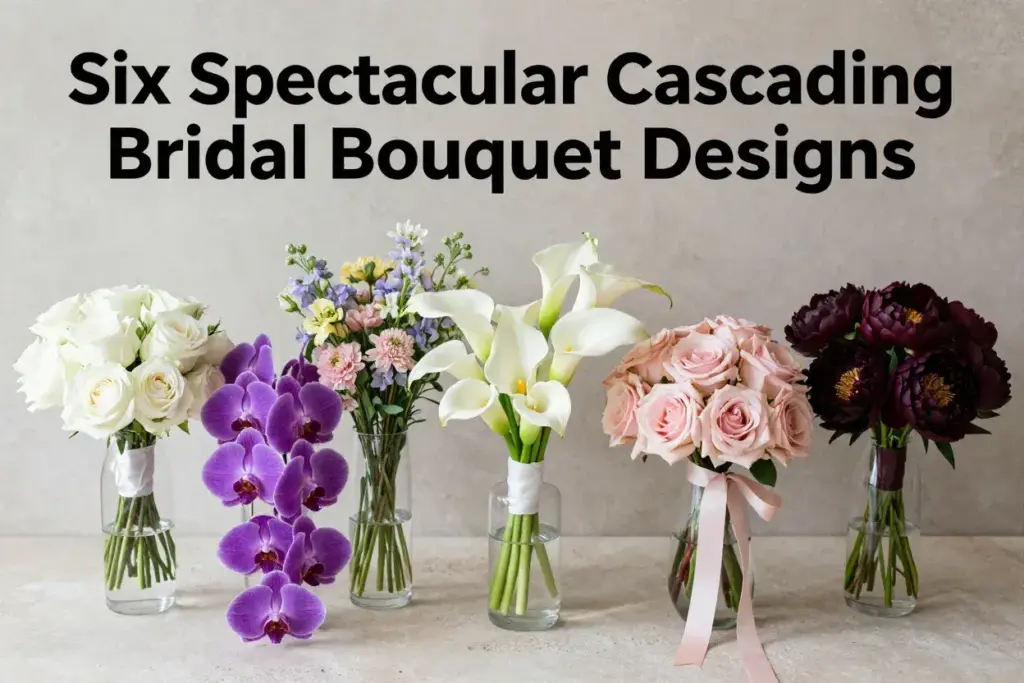
Whether planning an intimate garden ceremony or a grand ballroom celebration, waterfall bouquet wedding inspiration offers endless possibilities to elevate the entire wedding aesthetic. These cascading floral arrangements serve as living art pieces that photograph beautifully and create lasting memories for couples who want their wedding flowers to make a bold statement.
Key Takeaways
- Waterfall bouquets create dramatic visual impact through their cascading design that flows naturally downward, making them perfect for formal and grand wedding celebrations
- Six distinct design styles offer versatility for different wedding themes, from classic white roses to bohemian wildflower arrangements
- Professional florist consultation ensures proper construction and flower selection for cascading bouquets that maintain their shape throughout the wedding day
- Photography considerations are crucial since waterfall bouquets require specific positioning and angles to showcase their flowing silhouette effectively
- Budget planning should account for the additional flowers and construction time required for these elaborate cascading designs
Understanding the Waterfall Bouquet Trend
The waterfall bouquet represents a departure from traditional compact floral arrangements, embracing instead a flowing, cascading silhouette that creates natural movement and elegance. This style originated from classical European wedding traditions where brides carried elaborate trailing arrangements as symbols of abundance and prosperity [1].
Modern waterfall bouquets typically feature a structured top section that gradually transitions into flowing stems, ribbons, or trailing elements. The design creates a natural teardrop or cascade shape that complements the bride’s gown while adding dramatic visual interest to wedding photography.
Key Design Elements
Structural Foundation: The bouquet begins with a solid base of primary flowers arranged in a traditional round or oval shape. This foundation provides stability and serves as the focal point from which the cascade flows.
Cascading Elements: Trailing components include long-stemmed flowers, flowing ribbons, greenery vines, or delicate filler flowers that create the waterfall effect. These elements should complement the main bouquet while maintaining visual cohesion.
Proportional Balance: Successful waterfall bouquets maintain proper proportions between the structured top and flowing bottom sections. The cascade typically extends 12-18 inches below the main bouquet for optimal visual impact.
1. Classic White Rose Waterfall Bouquet
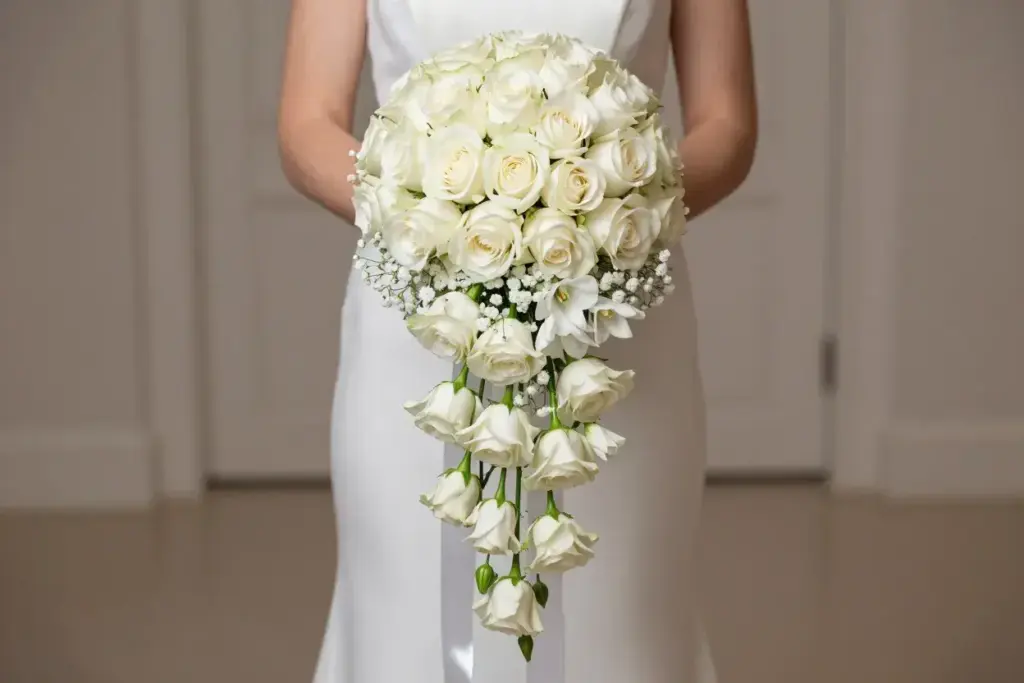
The classic white rose waterfall bouquet embodies timeless elegance and sophistication, making it perfect for traditional church ceremonies and formal wedding venues. This design features pristine white roses arranged in a structured dome with cascading white rose buds and delicate baby’s breath creating the flowing effect.
Design Specifications
The foundation consists of 24-30 premium white roses in various stages of bloom, from tight buds to fully opened flowers. Garden roses or David Austin roses work exceptionally well due to their full, romantic appearance and sturdy stems that support the cascading structure.
Cascading elements include:
- 15-20 white rose buds on extended stems
- Delicate sprigs of baby’s breath
- White satin ribbon streamers
- Small white stephanotis flowers for added texture
Styling Considerations
This classic design pairs beautifully with traditional wedding gowns featuring lace details, cathedral trains, or vintage-inspired silhouettes. The all-white palette ensures the bouquet complements any dress style without competing for attention.
Venue compatibility includes grand ballrooms, historic churches, country clubs, and elegant garden settings. The sophisticated color scheme photographs beautifully in both indoor and outdoor lighting conditions.
Construction Tips
Professional florists recommend using floral foam or wire techniques to secure the cascading elements properly. The roses should be conditioned 24 hours before the wedding to ensure maximum freshness and longevity throughout the celebration.
2. Tropical Orchid Cascade Design
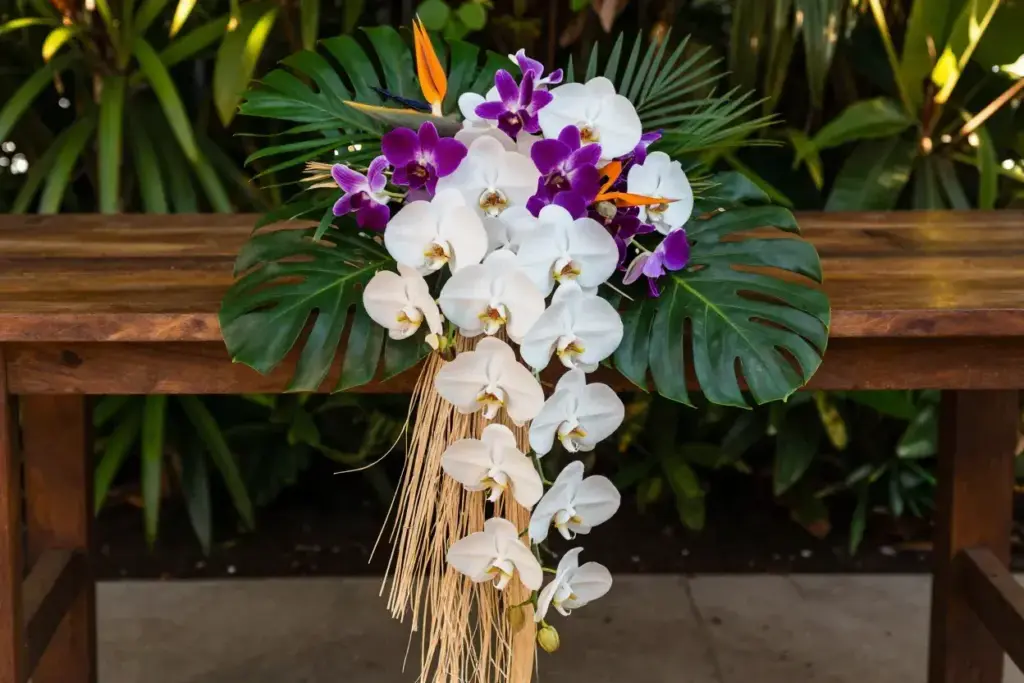
For brides seeking exotic elegance, the tropical orchid cascade design offers stunning visual drama with its flowing orchid stems and vibrant color palette. This waterfall bouquet wedding inspiration draws from destination wedding aesthetics and brings tropical paradise to any venue.
Flower Selection
Dendrobium orchids serve as the primary cascading element, with their naturally long stems creating graceful flowing lines. White, purple, or pink varieties offer different mood options while maintaining the bouquet’s sophisticated appearance.
The structured foundation features:
- 12-15 large phalaenopsis orchids
- Tropical greenery like monstera leaves or palm fronds
- Accent flowers such as bird of paradise or anthurium
- Natural raffia or silk ribbon wrapping
Color Palette Options
Classic white and green combinations work beautifully for beach weddings and garden ceremonies, while purple and white orchids create regal elegance suitable for evening celebrations.
Pink and coral variations complement sunset ceremonies and romantic outdoor settings. The key lies in maintaining color harmony throughout the cascading elements while allowing the orchids’ natural beauty to shine.
Seasonal Considerations
Orchids offer year-round availability and excellent durability, making them practical choices for any wedding season. Their natural resilience ensures the bouquet maintains its beauty throughout long photography sessions and ceremony proceedings.
3. Bohemian Wildflower Waterfall
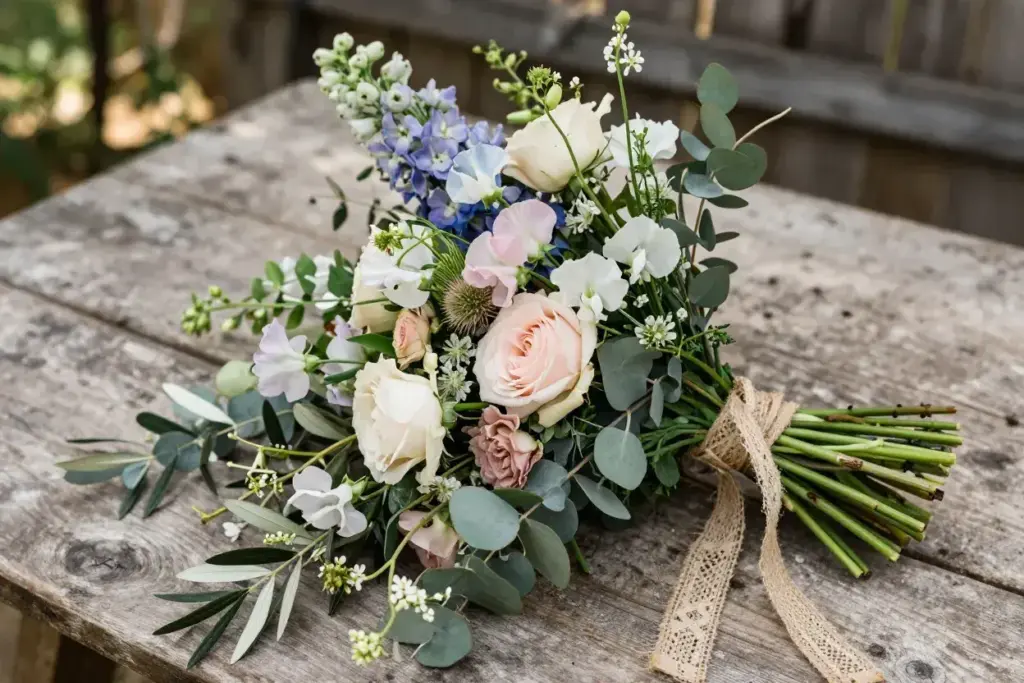
The bohemian wildflower waterfall embraces natural, organic beauty with its loose, unstructured appearance and diverse flower varieties. This design perfectly captures the free-spirited essence of boho wedding themes while maintaining the dramatic impact of cascading arrangements.
Flower Combinations
This style incorporates seasonal wildflowers and garden varieties to create an authentic, just-picked appearance. Spring combinations might include:
- Delphiniums for height and color
- Sweet peas for fragrance and trailing elements
- Wild roses in soft pink or cream tones
- Eucalyptus and olive branches for greenery
- Trailing ivy or jasmine vines
Textural Elements
Varied textures define successful bohemian waterfall bouquets. Combining smooth petals with spiky elements, glossy leaves with matte finishes, and different flower sizes creates visual interest and natural appeal.
Ribbon choices include burlap, lace, or natural hemp materials that complement the organic aesthetic. Loose, flowing ties rather than tight wrapping maintain the relaxed, natural appearance.
Venue Pairing
Bohemian waterfall bouquets shine in outdoor settings such as rustic barns, vineyard ceremonies, beach weddings, or garden parties. The natural, unstructured design harmonizes beautifully with organic venue elements and outdoor lighting.
4. Modern Minimalist Cascade
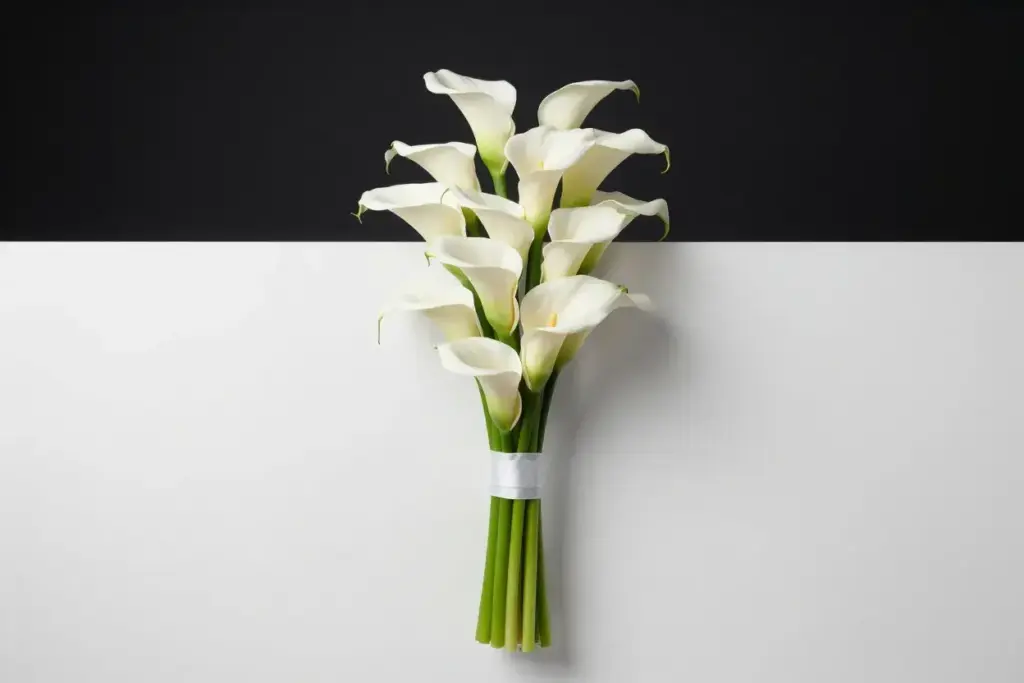
For contemporary brides who appreciate clean lines and sophisticated simplicity, the modern minimalist cascade offers understated elegance with maximum visual impact. This design focuses on architectural shapes and limited color palettes to create stunning waterfall effects.
Design Philosophy
Less is more guides this approach, with carefully selected flowers arranged in geometric patterns that emphasize form over abundance. The cascade flows in clean lines rather than organic curves, creating modern sophistication.
Primary elements include:
- 15-20 identical flowers in a single variety
- Monochromatic color scheme
- Structured, geometric arrangement
- Minimal greenery for accent only
- Sleek ribbon or wire wrapping
Flower Choices
Calla lilies work exceptionally well for minimalist cascades due to their architectural shape and natural elegance. White or cream varieties create classic sophistication, while deep purple or burgundy options add dramatic flair.
Roses arranged in precise patterns offer another minimalist option, particularly when using a single color and bloom size throughout the design. The repetition creates visual rhythm while maintaining simplicity.
Contemporary Venue Settings
Modern minimalist cascades complement urban venues, contemporary art galleries, rooftop celebrations, and sleek hotel ballrooms. The clean aesthetic photographs beautifully against architectural backgrounds and modern decor elements.
5. Vintage-Inspired Mixed Bloom Arrangement
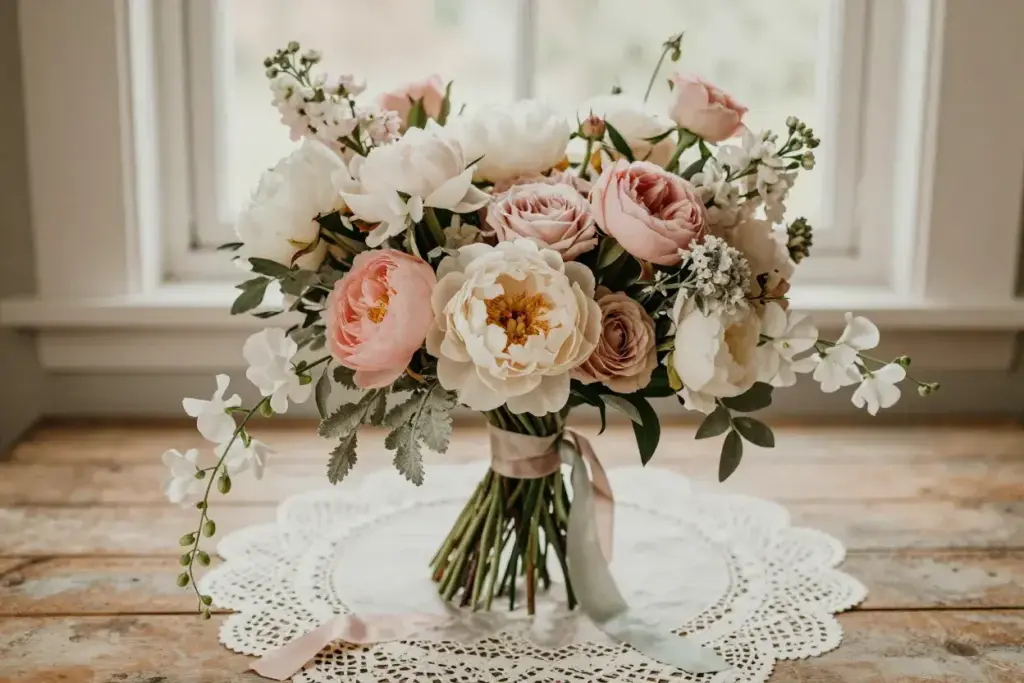
The vintage-inspired mixed bloom waterfall captures old-world romance through carefully curated flower combinations that evoke garden party elegance and timeless sophistication. This design draws inspiration from English country gardens and Victorian-era botanical arrangements.
Historical Flower Varieties
Heritage roses form the foundation, particularly varieties like David Austin roses that offer full, romantic blooms reminiscent of antique gardens. Complementary flowers include:
- Peonies for lush, romantic texture
- Stock for vertical elements and fragrance
- Dusty miller for silvery foliage accents
- Trailing jasmine or sweet pea vines
- Vintage-style ribbon in muted tones
Color Palette Development
Soft, muted tones characterize vintage-inspired arrangements. Blush pink, cream, dusty rose, and sage green create romantic harmony that photographs beautifully in natural light settings.
Antique brass or copper accents through ribbon choices or small decorative elements enhance the vintage aesthetic without overwhelming the natural beauty of the flowers.
Styling Applications
This waterfall bouquet wedding inspiration works beautifully for heritage venues, garden parties, afternoon tea celebrations, and intimate ceremonies. The romantic styling complements vintage wedding gowns and classic photography styles.
6. Dramatic Dark and Moody Design
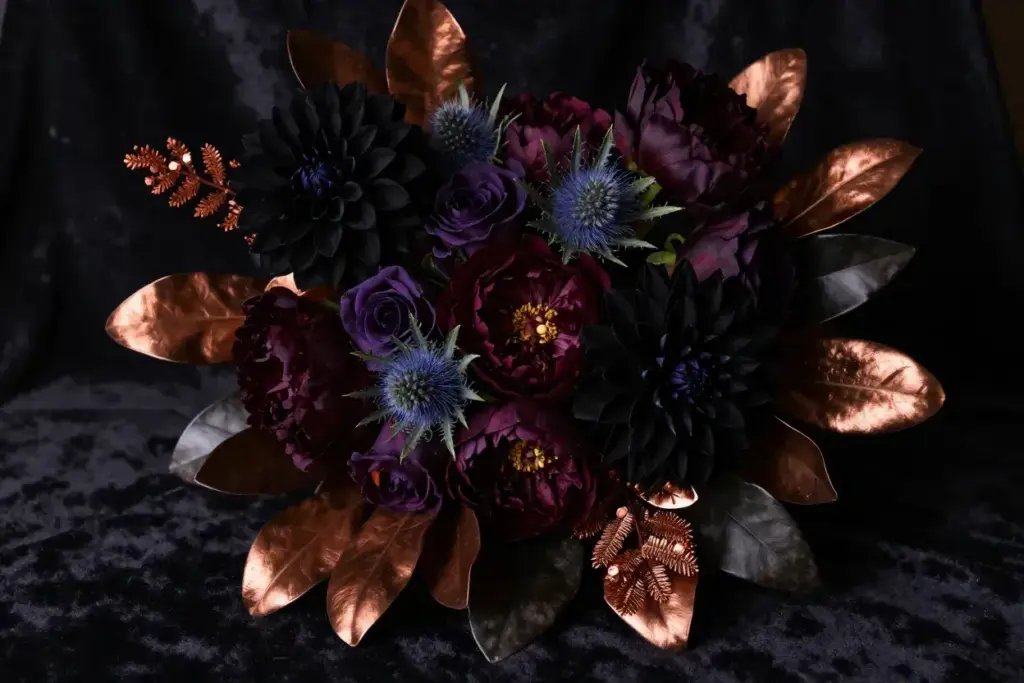
For evening celebrations and non-traditional wedding aesthetics, the dramatic dark and moody waterfall bouquet creates striking visual impact through rich, deep colors and unexpected flower combinations.
Bold Color Schemes
Deep burgundy, plum, and navy flowers create sophisticated drama perfect for fall and winter weddings. Black dahlias, dark purple roses, and burgundy peonies provide rich foundation colors.
Metallic accents through copper-toned foliage, gold ribbon details, or bronze spray-painted elements add luxury and visual interest to the dark palette.
Flower Selection Strategy
Texture variety becomes crucial in dark arrangements to prevent visual flatness. Combining:
- Smooth rose petals with spiky thistle
- Glossy magnolia leaves with matte dusty miller
- Delicate trailing elements with bold focal flowers
- Varied bloom sizes for visual rhythm
Lighting Considerations
Dark waterfall bouquets require careful lighting planning to showcase their beauty effectively. Professional photographers should use additional lighting or reflectors to capture the rich colors and textural details properly.
Venue lighting should complement rather than compete with the dramatic bouquet colors. Warm, ambient lighting enhances the rich tones while harsh fluorescent lighting can diminish their impact.
Professional Construction and Care Tips
Creating successful waterfall bouquet wedding inspiration requires professional expertise and careful planning to ensure the arrangements maintain their beauty throughout the wedding day.
Structural Engineering
Proper support systems are essential for cascading designs. Professional florists use specialized techniques including:
- Wire reinforcement for trailing elements
- Floral foam bases for hydration
- Secure binding methods for stability
- Weight distribution considerations
- Backup flower preparation
Timeline Planning
Construction timing affects bouquet longevity and appearance. Most waterfall bouquets should be assembled 24-48 hours before the wedding to allow proper conditioning while maintaining peak freshness.
Delivery and storage require climate-controlled environments and careful handling to prevent damage to delicate cascading elements.
Maintenance During Events
Hydration stations at wedding venues allow for touch-ups and refreshing throughout long photography sessions. Professional florists often provide emergency repair kits for unexpected damage.
Handling instructions for bridal parties ensure proper carrying techniques that maintain the bouquet’s shape and prevent damage to trailing elements.
Photography and Styling Considerations
Waterfall bouquets require specific photography techniques and styling approaches to showcase their dramatic silhouettes effectively.
Camera Angles and Positioning
Side angles best capture the cascading flow, while straight-on shots may flatten the dimensional effect. Professional wedding photographers should plan specific poses that highlight the waterfall design.
Movement shots during walking or dancing create beautiful images that emphasize the bouquet’s flowing nature and natural grace.
Bridal Pose Recommendations
Arm positioning affects how waterfall bouquets appear in photographs. Holding the bouquet slightly away from the body allows the cascade to flow freely and creates better visual separation.
Walking poses should account for the bouquet’s length to prevent tripping while maintaining elegant presentation throughout the ceremony processional.
Venue Background Selection
Clean, uncluttered backgrounds allow waterfall bouquets to stand out as focal points. Busy patterns or competing visual elements can diminish the bouquet’s dramatic impact.
Natural settings like gardens, beaches, or architectural elements provide complementary backdrops that enhance rather than compete with the floral design.
Budget Planning and Cost Considerations
Waterfall bouquet wedding inspiration typically requires larger budgets due to increased flower quantities and specialized construction techniques.
Pricing Factors
Flower selection significantly impacts costs, with exotic varieties like orchids commanding premium prices compared to seasonal local flowers. Construction complexity adds labor costs due to the specialized techniques required for proper cascading support.
Seasonal availability affects pricing, with out-of-season flowers requiring special ordering and potentially higher costs.
Cost-Saving Strategies
Seasonal flower choices can reduce expenses while maintaining beautiful results. Working with florists to identify locally available alternatives often provides significant savings without compromising design quality.
Simplified cascading elements using ribbons or greenery instead of expensive trailing flowers can achieve similar visual impact at lower costs.
Investment Value
Professional photography becomes even more important with dramatic waterfall bouquets, as these investments create lasting memories that justify the additional floral expenses.
Heirloom preservation through professional flower pressing or freeze-drying allows couples to maintain keepsakes from their special waterfall bouquet designs.
Seasonal Adaptations and Flower Availability
Understanding seasonal flower availability helps couples plan their waterfall bouquet wedding inspiration while managing costs and ensuring optimal flower quality.
Spring Options
Tulips, daffodils, and cherry blossoms create beautiful spring cascades with their naturally flowing forms. Peonies and lilacs add romantic fragrance and soft colors perfect for garden ceremonies.
Fresh greenery abundance in spring provides cost-effective cascading elements that complement any flower variety while adding natural movement.
Summer Selections
Hydrangeas and delphiniums offer dramatic height and color saturation ideal for summer waterfall bouquets. Trailing nasturtiums and sweet peas provide natural cascading elements with beautiful fragrance.
Heat-resistant varieties become important for outdoor summer ceremonies, with flowers like roses and chrysanthemums maintaining their appearance in warm conditions.
Fall and Winter Considerations
Dahlias and chrysanthemums provide rich colors and full blooms perfect for autumn waterfall designs. Evergreen elements add texture and longevity to winter arrangements.
Preserved elements like dried flowers or artificial trailing components can supplement fresh flowers during seasons with limited availability.
Conclusion
Waterfall bouquet wedding inspiration offers couples the opportunity to create truly memorable floral statements that elevate their entire wedding aesthetic. From classic white rose cascades to dramatic dark and moody designs, these six distinct styles provide options for every wedding theme and personal preference.
The key to successful waterfall bouquet implementation lies in professional planning, proper construction techniques, and careful consideration of photography requirements. Working with experienced florists ensures these elaborate designs maintain their beauty throughout the wedding celebration while creating stunning visual impact.
Budget planning and seasonal considerations play crucial roles in achieving desired results without compromising quality or breaking financial constraints. By understanding the various design options and their requirements, couples can make informed decisions that align with their vision and practical needs.
Whether choosing bohemian wildflower cascades for outdoor garden ceremonies or sophisticated minimalist designs for contemporary venues, waterfall bouquets transform traditional wedding flowers into artistic masterpieces that create lasting memories and breathtaking photographs.
Take the next step by consulting with professional florists who specialize in cascading designs, reviewing portfolio examples that match your wedding style, and scheduling tastings to see flower options in person. Start planning early to ensure availability of preferred flowers and adequate time for proper construction of these elaborate floral artworks.
References
[1] Wedding Flower History and Traditions, American Society of Florists, 2025