
9 Game-Changing Wedding Planning Tips to Save Time & Money
Planning a wedding can feel like running a marathon in high heels — exciting, exhausting, and surprisingly expensive. The average couple today spends tens of thousands of dollars and hundreds of hours trying to pull off their dream day, often without a clear roadmap. But here’s the good news: the smartest couples in 2026 are using a new set of strategies to cut costs, reduce stress, and reclaim their time. In this guide, I’ll walk you through 9 game-changing wedding planning tips to save time & money — backed by real data and designed for real couples who want results without the burnout.
Disclosure: This post contains affiliate links. As an Amazon Associate, we earn from qualifying purchases, and at no extra cost to you.
Key Takeaways 📝
- AI tools are now used by over half of all couples for planning tasks — and they’re mostly free.
- Timing is everything: Off-peak dates and seasons can slash venue and vendor costs by 20–30%.
- Cash registries and credit card points are two underused financial tools that directly reduce what you pay out of pocket.
- Family funding is more common than ever — 69% of supported couples have both families contributing.
- Saving before you’re engaged is the single most powerful financial move you can make for your wedding.
Why These 9 Game-Changing Wedding Planning Tips to Save Time & Money Actually Work
Before we dive in, let’s be clear: these aren’t vague suggestions like “cut the guest list” or “skip the flowers.” These are data-backed, actionable strategies that real couples are using right now in 2026. According to the Zola 2026 First Look Report [1], couples are getting smarter about every dollar they spend and every hour they invest. The tips below reflect that shift — and they can work for you too, whether you’re just engaged or already deep in the planning process.
The 9 Tips: A Quick Overview
| # | Tip | Primary Benefit |
|---|---|---|
| 1 | Use AI for logistical planning | Save hours every week |
| 2 | Use AI for vendor communication & etiquette | Faster, stress-free outreach |
| 3 | Build your budget with AI tools | Smarter spending decisions |
| 4 | Start saving before you get engaged | Reduce financial stress |
| 5 | Leverage credit card points strategically | Lower net wedding costs |
| 6 | Add cash funds to your registry | Offset out-of-pocket expenses |
| 7 | Involve both families in funding | Distribute costs fairly |
| 8 | Choose an off-peak wedding day | Save 20–30% on venue & vendors |
| 9 | Plan during off-season months | Better availability & pricing |
9 Game-Changing Wedding Planning Tips to Save Time & Money (Full Breakdown)
1. Use AI for Logistical Planning
💡 “54% of couples now use AI tools to manage timelines, to-do lists, and vendor tasks — a 150% increase in just one year.” [1]
One of the most powerful shifts in wedding planning right now is the rise of AI-powered planning tools. According to the Zola 2026 First Look Report [1], more than half of all engaged couples are now using AI to handle logistical tasks — and that number grew by 150% in a single year. That’s not a trend. That’s a revolution.
What can AI actually do for your wedding planning?
- Build and manage a detailed planning timeline
- Generate comprehensive to-do lists sorted by priority and deadline
- Suggest vendor categories you might have overlooked
- Help you compare options and make faster decisions
Tools like ChatGPT, Gemini, and wedding-specific AI assistants can handle tasks that used to take hours — often in minutes, and usually for free. If you’re not using AI yet, you’re leaving serious time on the table.
Pro tip: Start by asking an AI tool to generate a 12-month wedding planning timeline based on your specific date and budget. You’ll be amazed at how much structure it creates instantly.
2. Use AI for Vendor Communication and Etiquette Questions
Building on Tip 1, AI isn’t just useful for logistics — it’s a communication powerhouse that can save you hours of awkward back-and-forth.
The same Zola report [1] found that:
- 54% of couples use AI to answer etiquette questions (like who pays for what, or how to word a tricky invitation)
- 40% of couples use AI to draft emails to vendors
Think about how much time you normally spend crafting the perfect email to a caterer or florist. With AI, you describe what you need, and it writes a professional, polished message in seconds. You review, tweak, and send. Done.
Common uses for AI vendor communication:
- Initial inquiry emails to venues and vendors
- Negotiation follow-ups
- Cancellation or rescheduling requests
- Thank-you notes and post-wedding correspondence
- Etiquette questions about seating, dress codes, and more
This tip alone can save you 3–5 hours per week during peak planning months.
3. Build Your Budget With AI Tools
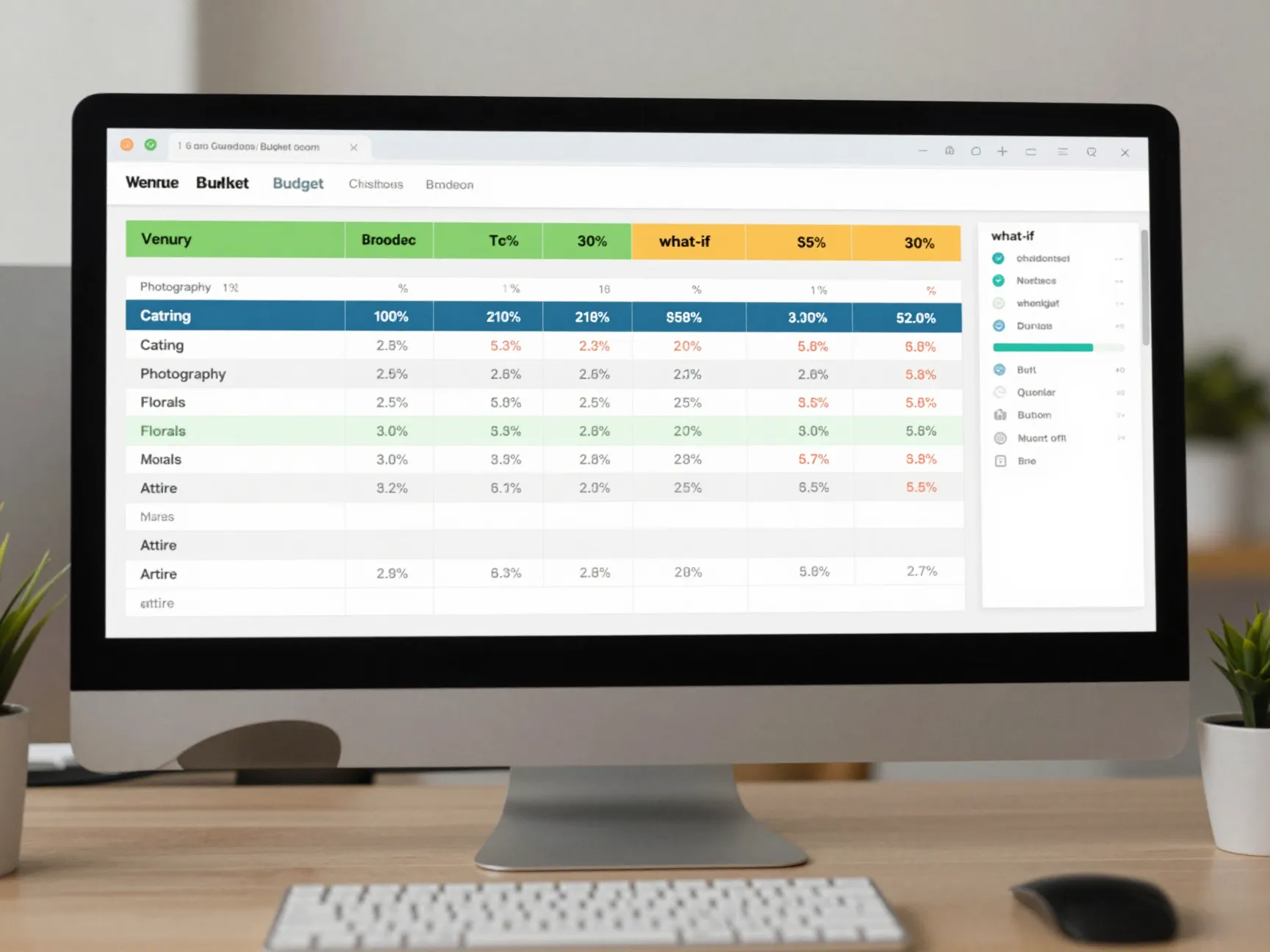
Money stress is the #1 cause of wedding planning anxiety. But 27% of couples in 2026 are now using AI to help create and organize their wedding budgets [1] — and those who do tend to make smarter spending decisions from day one.
Here’s why AI budgeting works so well:
- It helps you categorize every expense (venue, catering, photography, florals, attire, etc.)
- It can flag areas where you’re overspending relative to typical benchmarks
- It lets you run “what if” scenarios — like what happens if you cut the floral budget by 20% and redirect it to catering
- It keeps everything in one place, reducing the chance of surprise costs
Sample AI Budget Prompt to Try:
“I’m planning a wedding for 100 guests with a total budget of $25,000. Please create a detailed budget breakdown by category with recommended percentages and dollar amounts.”
You’ll get a structured starting point in seconds — something that used to require hours of spreadsheet work or a paid planner consultation.
4. Start Saving Before You Get Engaged

This tip is for the newly engaged and for anyone who might get engaged someday. According to Zola’s 2026 data [1], 51% of couples saved money for years before getting engaged — and it made a measurable difference in their planning experience.
🔑 The couples who saved early reported less financial stress, more realistic budgets, and fewer last-minute compromises.
Why pre-engagement saving is so powerful:
- You have more time to accumulate funds without pressure
- You can set a realistic budget ceiling before falling in love with venues you can’t afford
- You avoid high-interest debt that can follow you into your marriage
- You start your marriage with financial alignment as a couple
Even saving $200–$300 per month for two years before your engagement gives you a $5,000–$7,000 head start. That could cover your photographer, your florals, or a significant chunk of your catering bill.
5. Leverage Credit Card Points Strategically

Here’s a tip that not enough couples talk about: using credit card rewards to fund your wedding. In 2026, 32% of couples are strategically opening new credit cards and using points to offset wedding expenses [1].
This strategy works because wedding spending is high-volume — which makes it perfect for hitting sign-up bonus thresholds on rewards cards.
How to do this smartly:
| Strategy | How It Works | Potential Savings |
|---|---|---|
| Sign-up bonuses | Spend $X in first 3 months, earn 60,000–100,000 points | $600–$1,500+ in travel/cash |
| Category bonuses | Use cards with 3–5x points on dining, travel, or groceries | Accelerated earning on everyday spend |
| Pay vendors by card | Use cards where vendors accept them (check fees) | Earn points on large payments |
| Redeem for honeymoon | Transfer points to airline/hotel partners | Free or heavily discounted travel |
⚠️ Important: This strategy only works if you pay your balance in full every month. Carrying a balance with high interest rates will erase any rewards benefit quickly.
6. Add Cash Funds to Your Registry
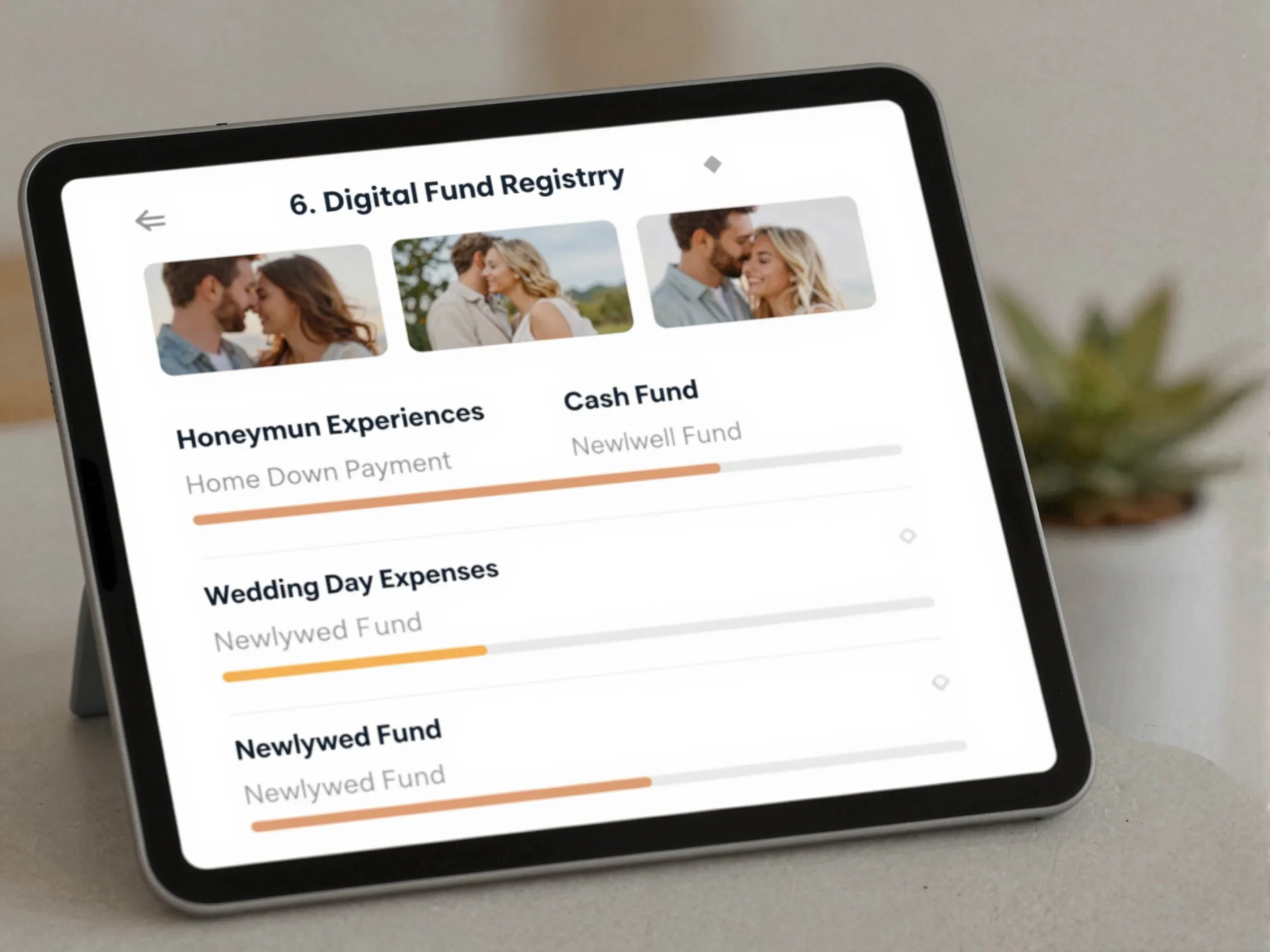
One of the most practical and underused money-saving strategies is the cash fund registry. In 2026, 27% of couples are adding cash fund options to their registries — up sharply from just 16% in 2025 [1]. That’s a massive jump, and it reflects a growing cultural acceptance of cash gifts.
What can you create cash funds for?
- Honeymoon experiences (flights, hotels, excursions)
- Down payment on a home
- Wedding day expenses (catering upgrades, bar tab, floral additions)
- Newlywed fund (furniture, appliances, home décor)
Platforms like Zola, Honeyfund, and The Knot all offer easy-to-set-up cash registry options that feel personal and purposeful — not just “give us money.”
💬 “Cash registries let your guests invest in your future, not just your kitchen drawer.”
By directing even a portion of your gift income toward wedding costs, you can meaningfully reduce what you pay out of pocket.
7. Involve Both Families in Funding

Wedding funding has traditionally fallen on one family — usually the bride’s. But in 2026, that model is changing fast. Among couples who receive financial support from family, 69% have both families contributing rather than one family carrying the entire burden [1].
This shift matters for several reasons:
- It distributes financial pressure more fairly across both sides
- It gives both families a sense of ownership and investment in the event
- It can significantly increase your total budget without increasing debt
- It reduces resentment that can come from one family feeling overburdened
How to have the money conversation with family:
- Have it early — ideally before you book anything
- Be specific about what you need (e.g., “Would you be able to contribute toward catering?”)
- Be gracious and flexible — any contribution helps
- Put agreements in writing to avoid misunderstandings later
This isn’t about pressuring anyone. It’s about opening a conversation that many families are already expecting to have.
8. Choose an Off-Peak Wedding Day
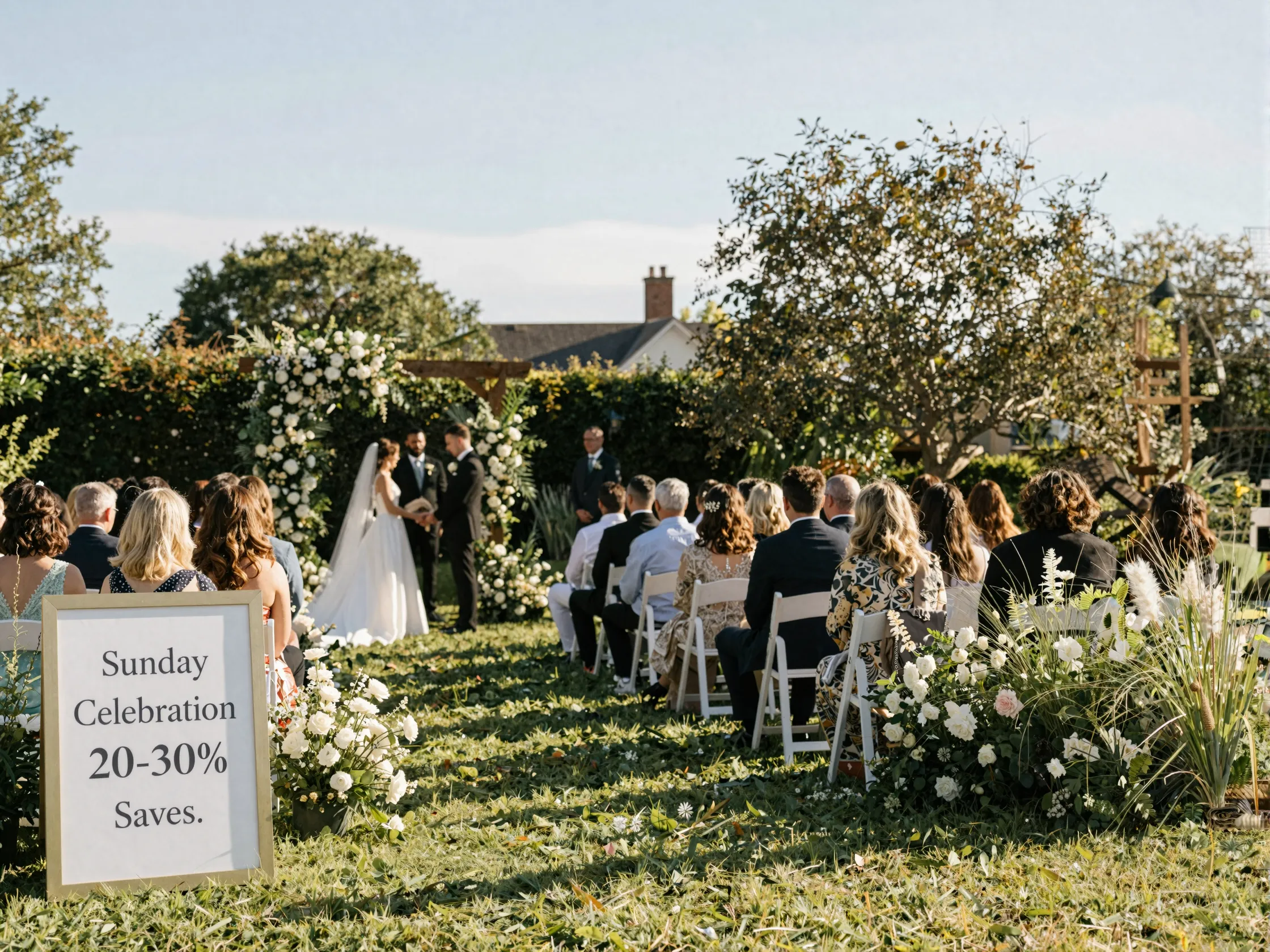
Here’s one of the most immediately impactful of our 9 game-changing wedding planning tips to save time & money: change your wedding day. Most couples default to Saturday weddings — but that’s also when venues and vendors charge their highest rates.
According to wedding industry data [2]:
- Sunday weddings typically cost 20–30% less than Saturday celebrations
- Friday evening weddings are increasingly popular in urban areas for the same cost-saving reason
- Vendors are often more available on non-Saturday dates, giving you more choice and negotiating power
Day-of-Week Cost Comparison:
| Wedding Day | Relative Cost | Vendor Availability | Guest Convenience |
|---|---|---|---|
| Saturday | Highest 💰💰💰 | Limited | Best |
| Friday Evening | Medium 💰💰 | Good | Moderate |
| Sunday | Lower 💰💰 | Good | Moderate |
| Weekday | Lowest 💰 | Excellent | Challenging |
A Sunday wedding with the same venue, same vendors, and same guest count as a Saturday wedding could save you $3,000–$8,000 or more depending on your market. That’s not a small number.
9. Plan During Off-Season Months

The final tip is about timing your entire wedding around the calendar — not just the day of the week. Wedding season peaks in the fall, with 41% of all weddings taking place in September, October, and November [2]. That demand drives prices up across the board.
By contrast, January, February, and March host only 2–5% of all weddings [2] — meaning venues and vendors are actively looking for bookings and far more willing to negotiate.
Benefits of an off-season wedding:
- ✅ Lower venue rental fees
- ✅ Better vendor availability (and sometimes lower rates)
- ✅ More flexibility in scheduling and planning timelines
- ✅ Unique seasonal aesthetics (think cozy winter weddings, Valentine’s-adjacent dates)
- ✅ Less competition for popular vendors
Potential trade-offs to consider:
- ❄️ Weather can be unpredictable in winter months
- 🌧️ Some outdoor venues may not be available
- ✈️ Travel may be harder for out-of-town guests
That said, for couples who are flexible on season, the savings can be substantial and real. Combine an off-season date with an off-peak day (Sunday in January, for example), and you could unlock some of the best pricing available in your market.
Putting It All Together: Your Action Plan
Now that you’ve seen all 9 game-changing wedding planning tips to save time & money, here’s how to prioritize them based on where you are in the planning process:
If you’re newly engaged (12+ months out):
- Start saving aggressively (Tip 4)
- Open a rewards credit card (Tip 5)
- Discuss family contributions early (Tip 7)
- Choose your date strategically (Tips 8 & 9)
If you’re mid-planning (6–12 months out):
- Set up your AI planning system (Tips 1, 2, 3)
- Create your cash fund registry (Tip 6)
- Use AI to draft all vendor communications (Tip 2)
If you’re in crunch mode (under 6 months):
- Use AI daily for task management (Tip 1)
- Lean on credit card rewards for remaining expenses (Tip 5)
- Maximize your cash registry promotion (Tip 6)
Common Wedding Planning Mistakes to Avoid
Even with the best tips, it’s easy to fall into traps. Here are the most common mistakes couples make — and how to sidestep them:
- Booking vendors without comparing at least 3 quotes — always get multiple bids
- Ignoring the contract fine print — especially cancellation and payment terms
- Underestimating hidden costs — tips, taxes, setup/breakdown fees, and overtime charges add up fast
- Waiting too long to book popular vendors — the best photographers and venues book 12–18 months out
- Letting social media set your expectations — Instagram weddings often have six-figure budgets
Conclusion: Your Dream Wedding Doesn’t Have to Break the Bank
The best weddings aren’t the most expensive ones — they’re the most intentional ones. By applying these 9 game-changing wedding planning tips to save time & money, you can create a beautiful, meaningful celebration while keeping your budget and your sanity intact.
Your next steps:
- This week: Sign up for a free AI planning tool and ask it to build your wedding timeline
- This month: Have the family funding conversation and open a rewards credit card
- Before booking anything: Evaluate off-peak dates and off-season months for your area
- When setting up your registry: Add at least one cash fund category
Remember: every dollar you save on your wedding is a dollar you can invest in your marriage, your home, or your future. Plan smart, use the tools available to you, and enjoy the process. You’ve got this. 💍
References
[1] The First Look Report 2026 – https://www.zola.com/expert-advice/the-first-look-report-2026
[2] Wedding Statistics – https://www.kandephotobooths.com/blog/wedding-statistics/
[3] Real Weddings Study – https://www.theknot.com/content/wedding-data-insights/real-weddings-study
[4] insideweddings – https://www.insideweddings.com/news/planning-design/trends-planning-tips-2026-weddings-beyond/55397/
[5] Wedding Trends 2026 – https://37framesphotographyblog.com/wedding-trends-2026/