9 Genius Wedding Planning on a Budget Hacks (That Look Expensive)
What if I told you that your dream wedding doesn’t have to cost $30,000 — or even close to it? Most couples I speak with assume that a beautiful, memorable wedding requires a massive budget. But the truth is, the most stunning weddings I’ve seen weren’t the most expensive ones. They were the most strategic ones. These 9 Genius Wedding Planning on a Budget Hacks (That Look Expensive) are exactly what savvy couples in 2026 are using to pull off jaw-dropping celebrations without the crippling debt that so often follows.
Disclosure: This post contains affiliate links. As an Amazon Associate, we earn from qualifying purchases, and at no extra cost to you.
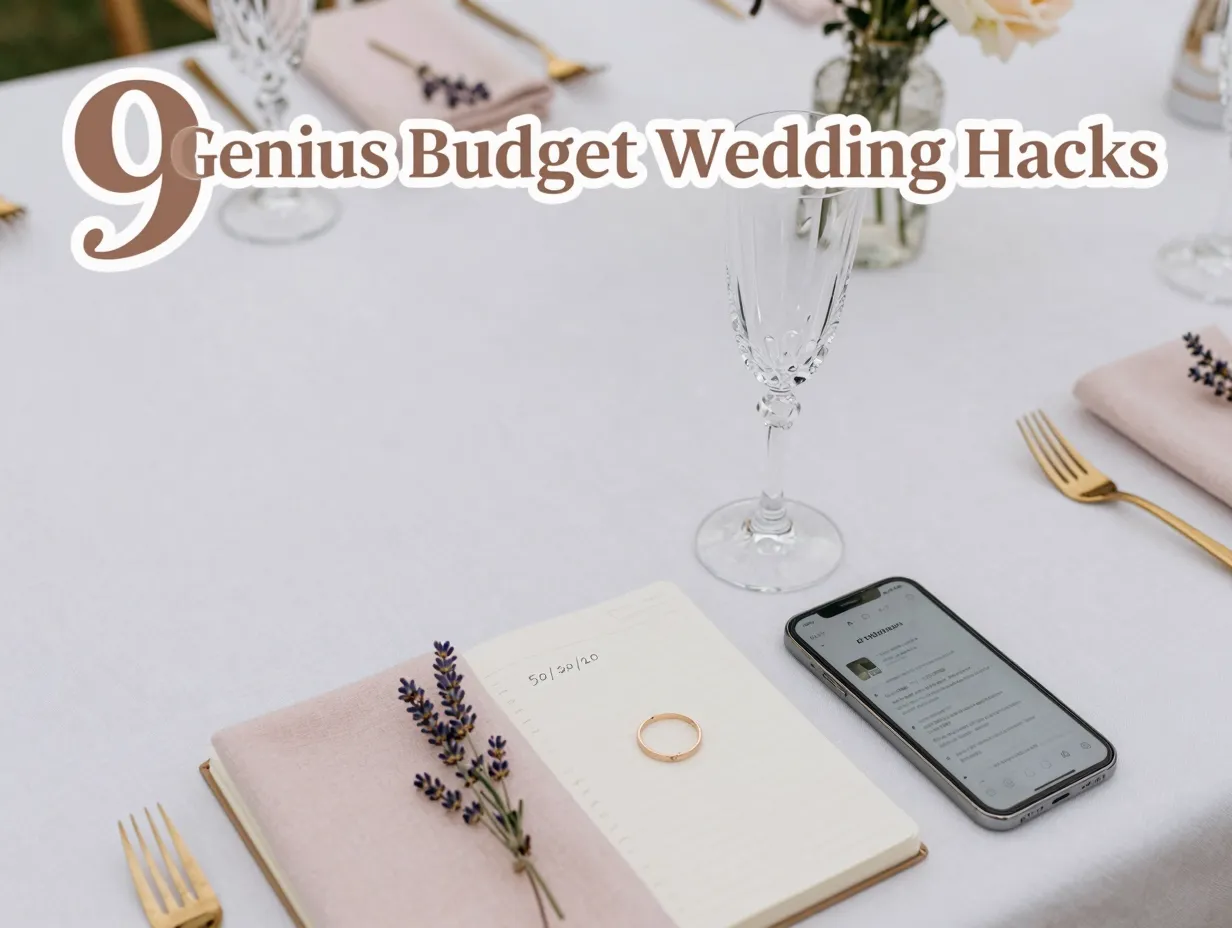
Whether you’re working with $8,000 or $20,000, the smart money moves in this guide will help you stretch every dollar while keeping the luxury look fully intact.
Key Takeaways
- 💡 The 50/30/20 budget rule is the single most effective framework for allocating your wedding funds without overspending on the wrong things.
- 💡 Micro weddings (under 50 guests) can cost as little as $5,000–$15,000 compared to $30,000+ for larger events — without sacrificing elegance.
- 💡 Off-peak dates and flexible venues can cut your venue costs by 10–20% with zero visible difference to your guests.
- 💡 Shopping multiple vendors and leveraging AI planning tools are 2026’s biggest budget-saving trends among real couples.
- 💡 Pre-owned bridal attire and DIY décor can dramatically reduce costs while still looking runway-worthy on your big day.
Why Budget Wedding Planning Matters More Than Ever in 2026
Wedding costs are not going down. The average U.S. wedding now runs well above $30,000, and inflation has pushed vendor pricing higher across virtually every category [1]. For many couples, that number feels completely out of reach — and honestly, it should feel that way, because it is out of reach for most household budgets.
But here’s the good news: the wedding industry in 2026 has never offered more creative, affordable alternatives. From AI-powered planning tools to the booming micro-wedding movement, couples today have more options than ever to create a genuinely beautiful event on a fraction of the traditional budget [4].
“The goal isn’t to spend less and get less. The goal is to spend less and look like you spent more.”
That’s the philosophy behind every one of these 9 genius wedding planning on a budget hacks. Let’s get into them.
The 9 Genius Wedding Planning on a Budget Hacks (That Look Expensive)
1. Apply the 50/30/20 Budget Rule From Day One

The single biggest mistake couples make is diving into vendor bookings before they have a budget framework. The 50/30/20 rule fixes that immediately [2].
Here’s how it works:
| Budget Category | Percentage | What It Covers |
|---|---|---|
| Essentials | 50% | Venue, catering, attire |
| Enhancements | 30% | Photography, décor, entertainment |
| Surprises | 20% | Tips, unexpected fees, last-minute costs |
If your total budget is $15,000, that means $7,500 for essentials, $4,500 for enhancements, and $3,000 held in reserve. This structure prevents the all-too-common scenario where couples blow 80% of their budget on the venue alone and then scramble to cover everything else.
Why it looks expensive: When you allocate properly, every category gets enough funding to look polished. Nothing looks underfunded or rushed.
2. Embrace the “Big Three” Strategy for Spending Priorities
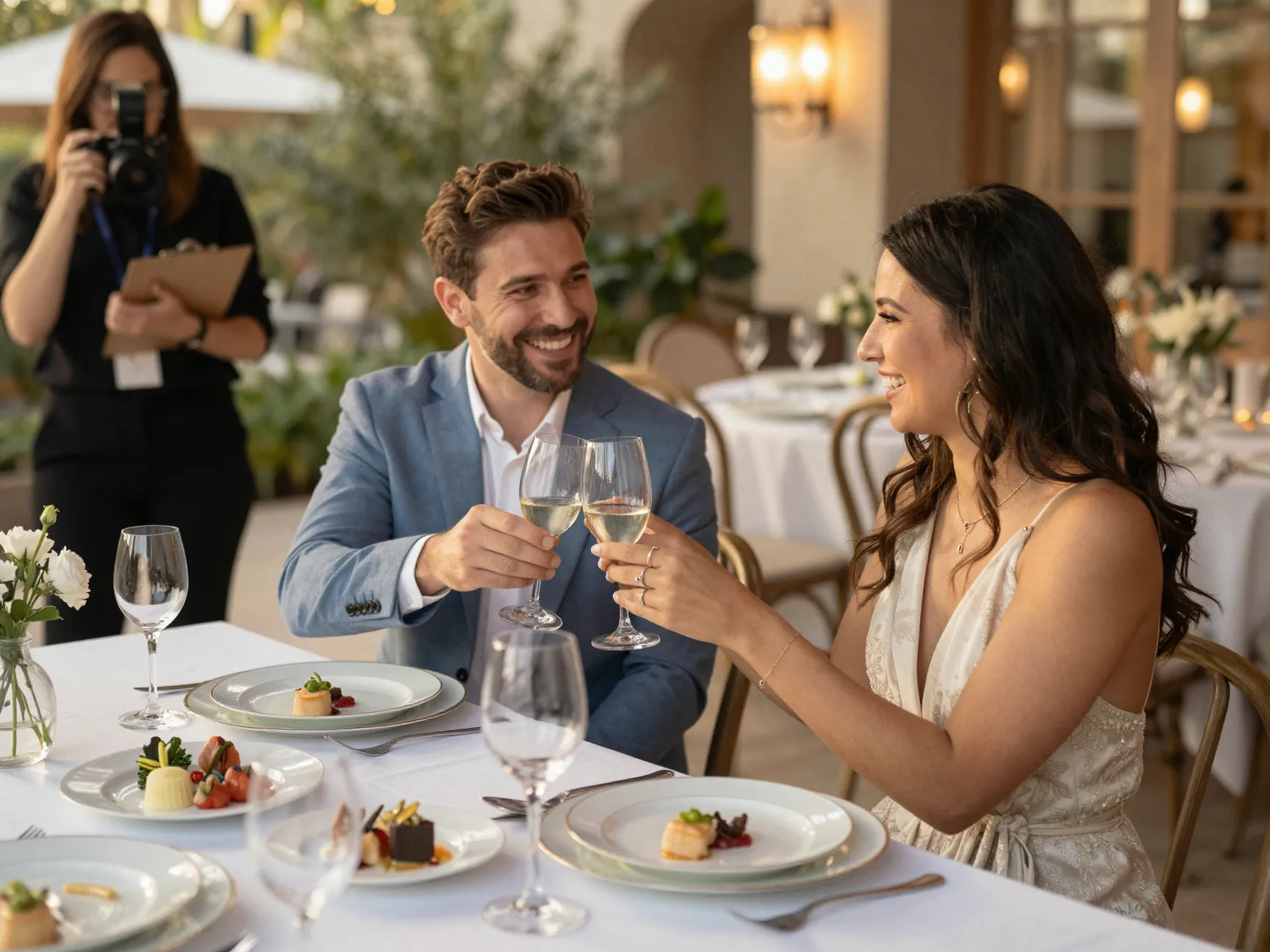
Not all wedding expenses are created equal. The “Big Three” strategy tells you exactly where to concentrate your spending for maximum impact [3]:
- Venue and Catering — 45–50% of total budget
- Wedding Planner — 10–15% of total budget
- Photography and Video — 10–12% of total budget
Everything else — flowers, invitations, favors, cake — is secondary. Why? Because guests remember the food, the atmosphere, and the photos. Nobody goes home raving about the napkin rings.
Pro tip: 🎯 Allocate generously to these three pillars and cut aggressively everywhere else. The result looks like a high-end wedding because the most visible elements are high quality.
3. Choose Off-Peak Wedding Dates Strategically
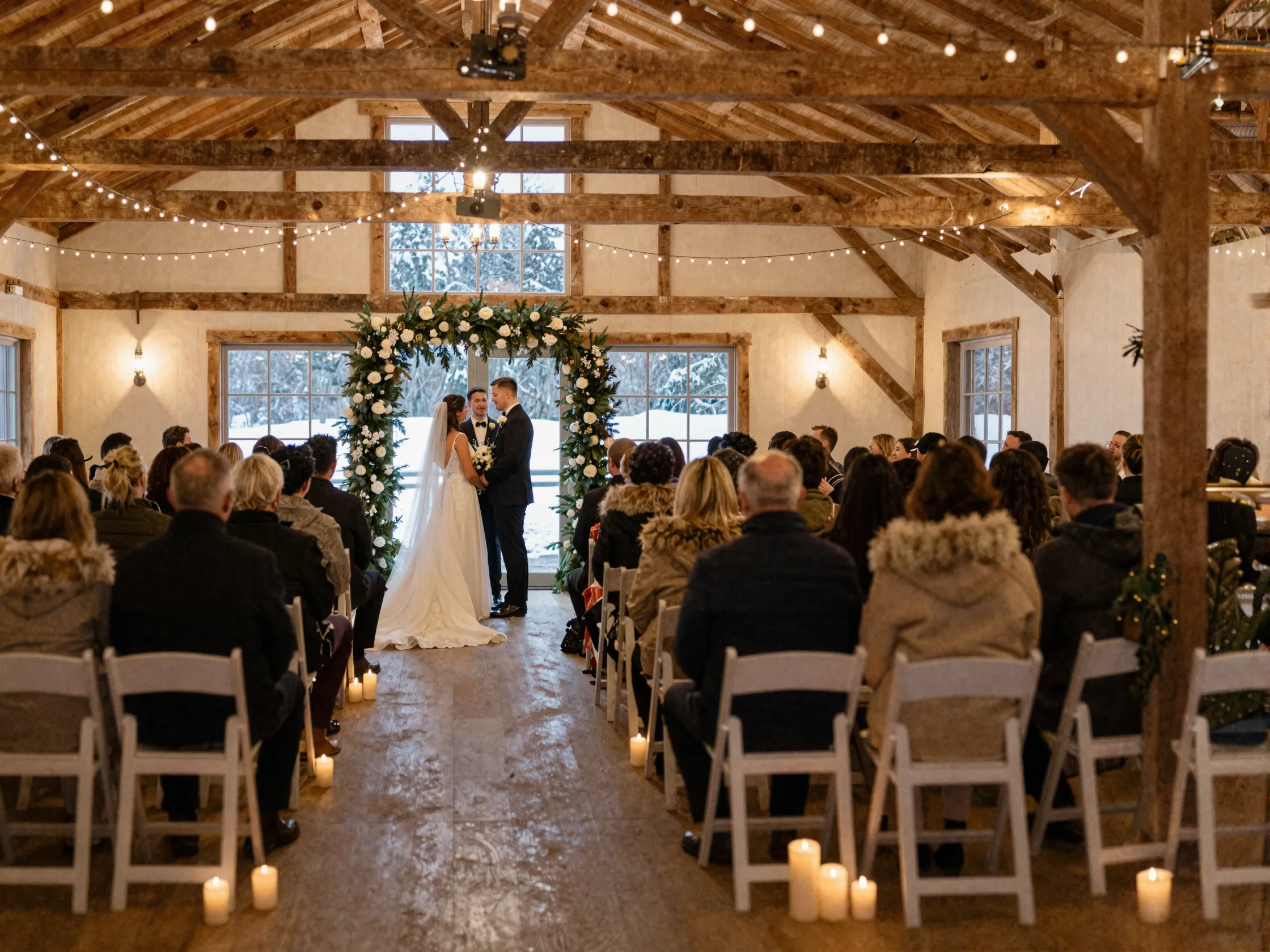
This is one of the most underused of all the 9 genius wedding planning on a budget hacks — and it’s completely invisible to your guests. Choosing a winter wedding, a Friday evening ceremony, or even a Sunday brunch celebration can reduce venue costs by 10–20% compared to peak Saturday bookings in spring and summer [1].
Off-peak options to consider:
- 🗓️ January through March (excluding Valentine’s Day weekend)
- 🗓️ Friday evening ceremonies
- 🗓️ Sunday afternoon or brunch receptions
- 🗓️ Holiday weekend Mondays (when venues discount to fill the calendar)
Many venues also offer reduced catering minimums on off-peak dates, which compounds your savings significantly. A venue that requires a $10,000 food and beverage minimum on a Saturday might drop that to $7,000 on a Friday — same beautiful space, same staff, 30% less cost.
Why it looks expensive: The venue itself doesn’t change. Your guests have no idea you paid less.
4. Leverage Micro Weddings for Maximum Elegance
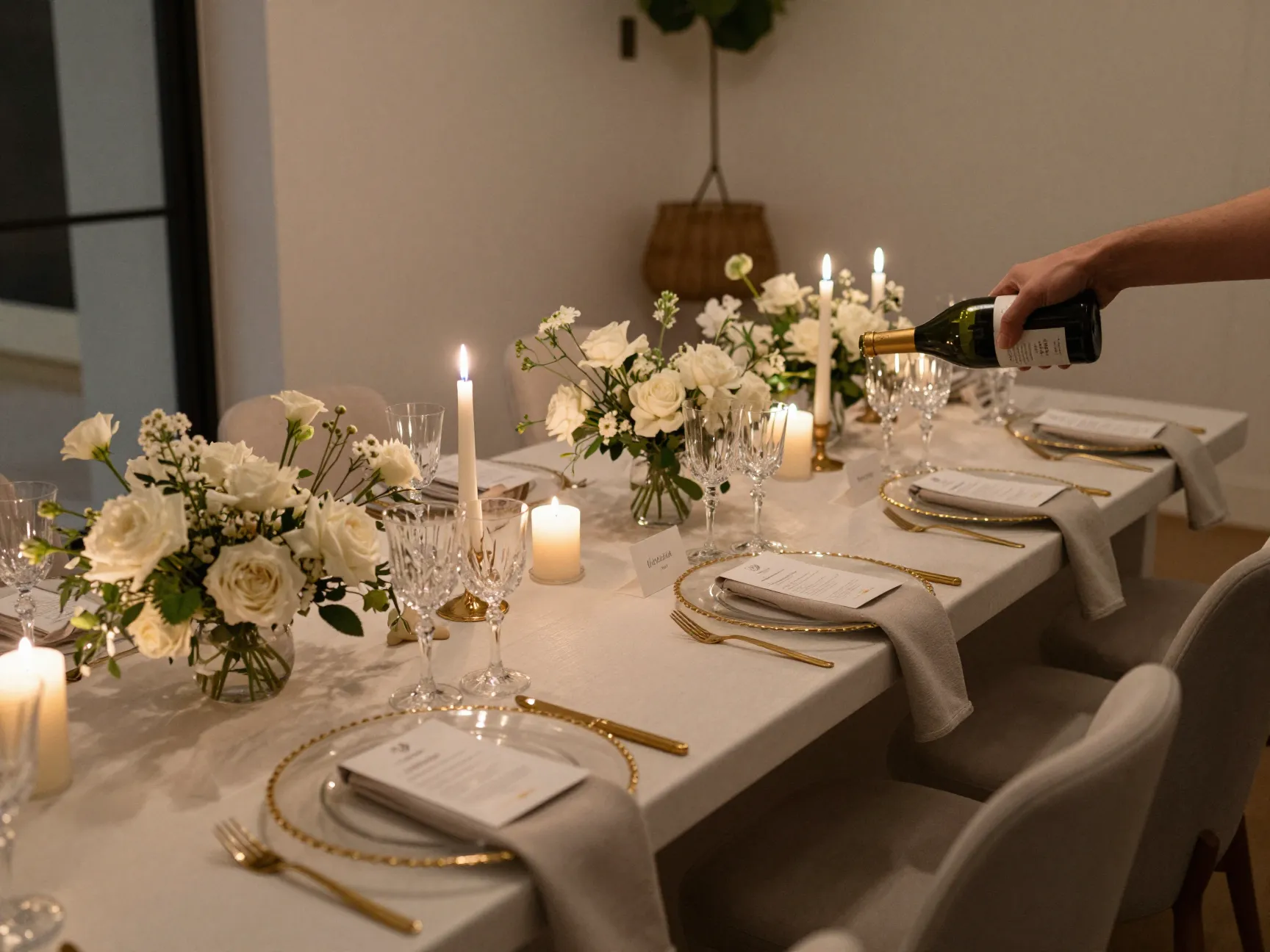
Here’s a mindset shift that changes everything: smaller doesn’t mean lesser. In fact, micro weddings — those with fewer than 50 guests — are increasingly recognized as more intimate, more personal, and more memorable than large-scale events [1].
The numbers make a compelling case:
- 🏷️ Micro wedding (under 50 guests): $5,000–$15,000
- 🏷️ Traditional wedding (100–150 guests): $30,000+
When you cut the guest list, you don’t just save on catering (though that’s huge, since catering is priced per person). You also save on:
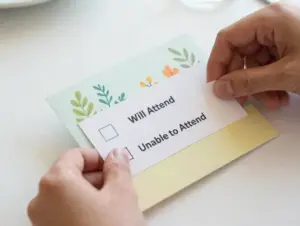
- Invitations and postage
- Venue size requirements
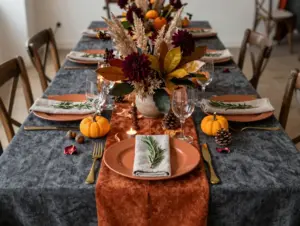
- Table settings and centerpieces
- Favors and welcome bags
- Staffing costs
With a smaller guest list, you can actually upgrade every detail — nicer plates, better wine, fresh flowers at every table, a premium photographer — and still come in well under a traditional wedding budget [1].
Why it looks expensive: Every single guest gets a luxurious experience because you’re not spreading your budget thin across 150 people.
5. Select Flexible Venues With Built-In Ambiance
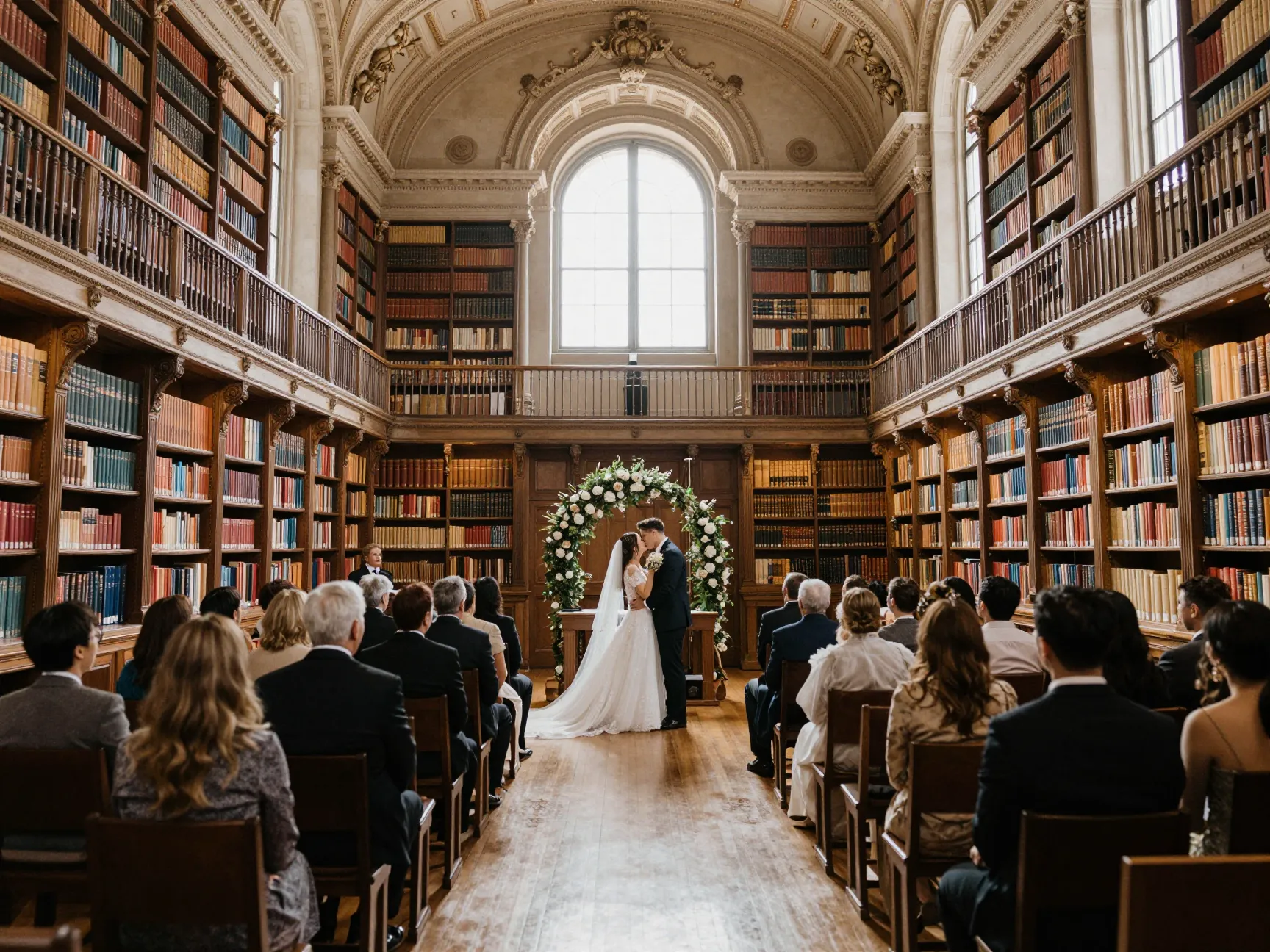
Venue décor costs can spiral out of control when you book a blank-slate space that needs to be transformed from scratch. The smarter move is choosing a venue that already looks beautiful — and then letting the architecture do the work for you [2].
High-ambiance, budget-friendly venue types:
- 🌿 Botanical gardens — natural beauty built in
- 🏛️ Historic libraries or museums — architectural drama at low cost
- 🍷 Wineries and vineyards — romantic setting, often competitive pricing
- 🏡 Private estates or Airbnb properties — unique, intimate, and often cheaper than traditional venues
- 🌊 State or national park pavilions — stunning backdrops at permit prices
When the venue is inherently beautiful, you spend far less on flowers, draping, and lighting to make it look special. A garden ceremony doesn’t need elaborate floral arches. A candlelit wine cave doesn’t need much decoration at all.
Why it looks expensive: Guests see a stunning setting and assume you paid a premium for it — even when you didn’t.
6. Buy Pre-Owned or Sample Bridal Attire
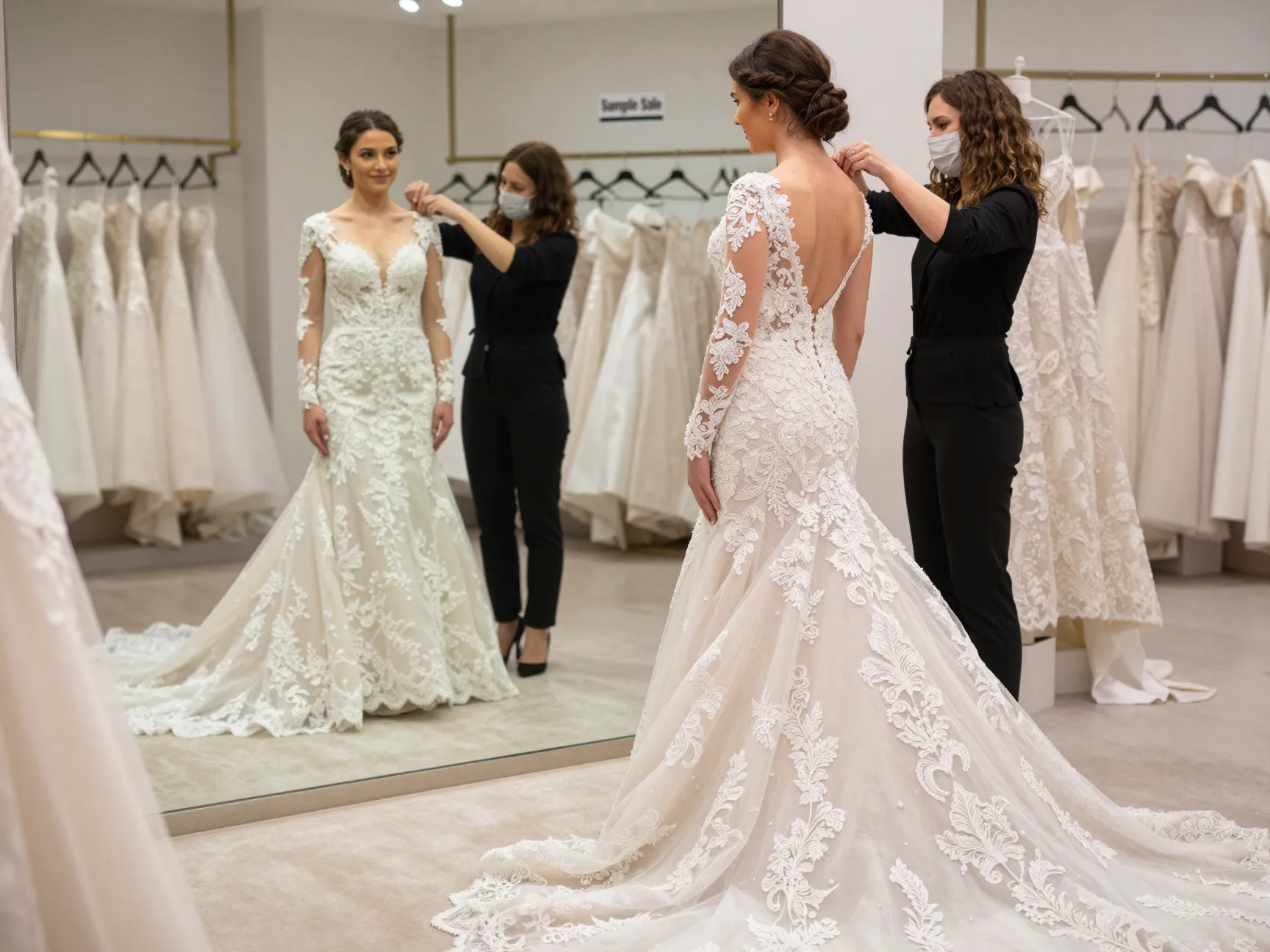
Bridal gowns are one of the most emotionally charged purchases in wedding planning — and one of the most aggressively marked up. A dress worn for a single day can cost $2,000 to $5,000 or more at retail. But the pre-owned and sample dress market offers the exact same gowns at 40–70% off [2].
Where to find pre-owned and sample dresses:
- StillWhite — dedicated bridal resale marketplace
- PreOwnedWeddingDresses.com — large inventory, all price points
- Bridal boutique sample sales — designer gowns at steep discounts
- Facebook Marketplace and local bridal groups — local finds, no shipping costs
- Consignment bridal shops — try before you buy
The same logic applies to bridesmaids, groomsmen, and even flower girl attire. Renting suits instead of buying them, or choosing bridesmaid dresses from non-bridal retailers like ASOS or Anthropologie, can cut attire costs by half.
Why it looks expensive: A beautifully fitted, high-quality gown looks exactly the same whether it cost $500 or $3,000. Alterations are the real secret — a well-tailored dress always looks luxurious.
7. Shop Multiple Vendors and Negotiate Aggressively
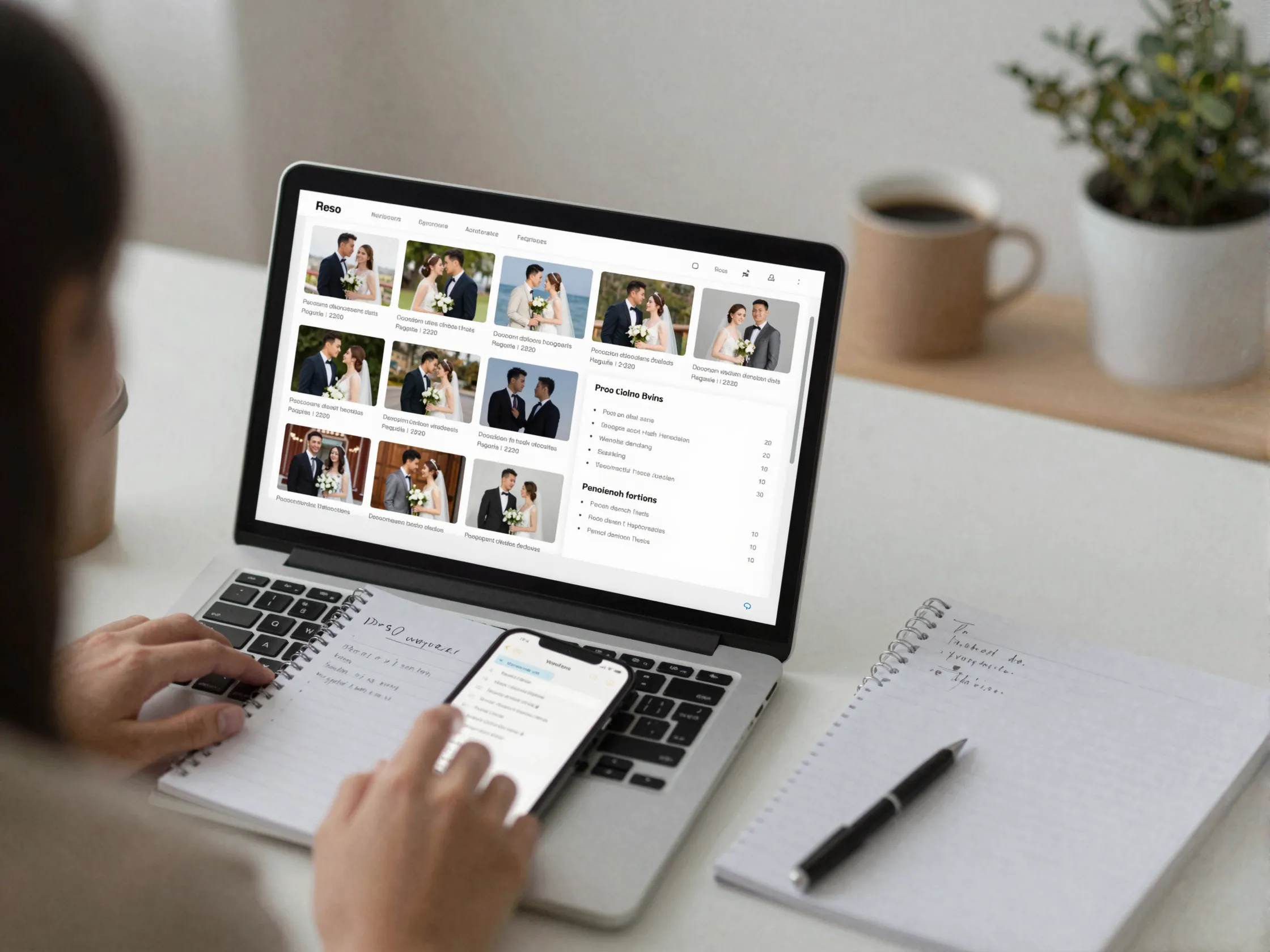
Here’s a data point that might surprise you: 37% of couples in 2026 contacted more vendors than they originally planned in order to find budget-friendly options that genuinely fit their needs [4]. That extra effort pays off enormously.
Most couples contact one or two vendors per category and book whoever seems best. Strategic couples contact five to seven vendors per category, compare packages carefully, and use competing quotes as negotiation leverage.
Vendor categories where shopping around saves the most:
| Vendor Type | Potential Savings from Shopping Around |
|---|---|
| Catering | 15–30% |
| Photography | 20–40% |
| Floral design | 25–50% |
| DJ or band | 20–35% |
| Officiant | 30–60% |
Negotiation tactics that work:
- Ask for a “custom package” rather than a pre-built one
- Offer to pay in full upfront in exchange for a discount
- Book during vendors’ slow season (January–March)
- Ask what they can add rather than what they can remove
Why it looks expensive: You get the same quality vendors — just at a price that fits your budget rather than their standard rate card.
8. Use Free and AI-Powered Wedding Planning Tools
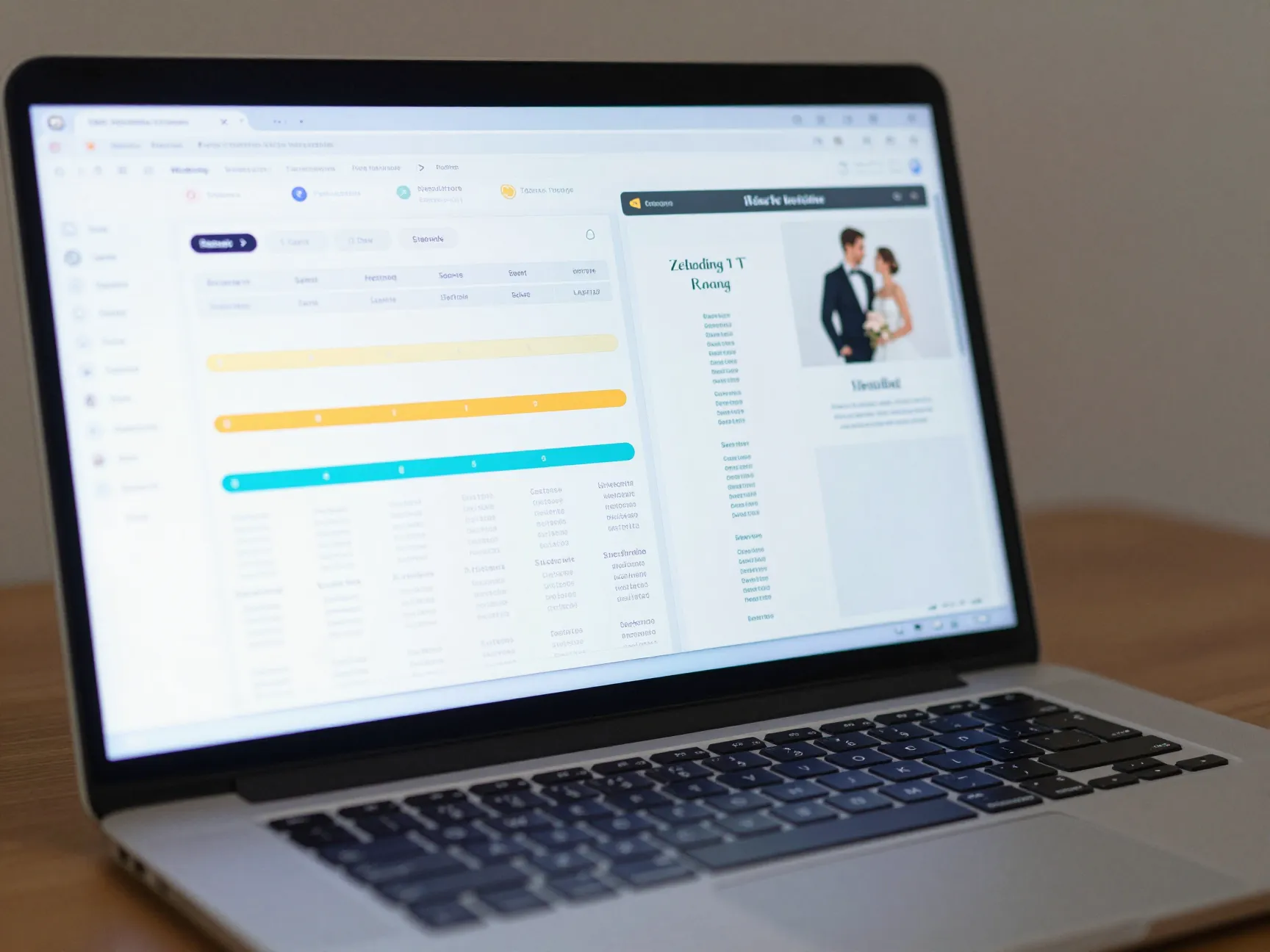
One of the most exciting developments in 2026 wedding planning is the explosion of digital and AI-powered tools that can replace or supplement expensive professional planners [4]. AI adoption among couples has doubled to 36% for tasks like timeline writing, vendor research, seating chart creation, and creative inspiration [4].
Free and low-cost tools worth using:
- 🤖 ChatGPT / Claude — timeline creation, email templates, budget spreadsheets, vendor questions
- 📋 Zola — free wedding website, registry, and planning checklist
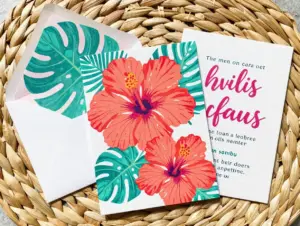
- 💌 Canva — professional-looking invitations, signage, and programs for almost nothing
- 📊 Google Sheets — custom budget tracker (free templates available)
- 📱 Loverly — wedding planning resources and budget hacks [2]
Using AI tools for timeline writing, vendor communication scripts, and creative brainstorming can reduce or eliminate the need for a full-service wedding planner — saving $3,000 to $8,000 or more [3].
Why it looks expensive: Professionally designed invitations, a polished wedding website, and a flawlessly timed ceremony all signal “high-end wedding” — even when the tools that created them were free.
9. DIY Strategically — Not Everything, Just the Right Things
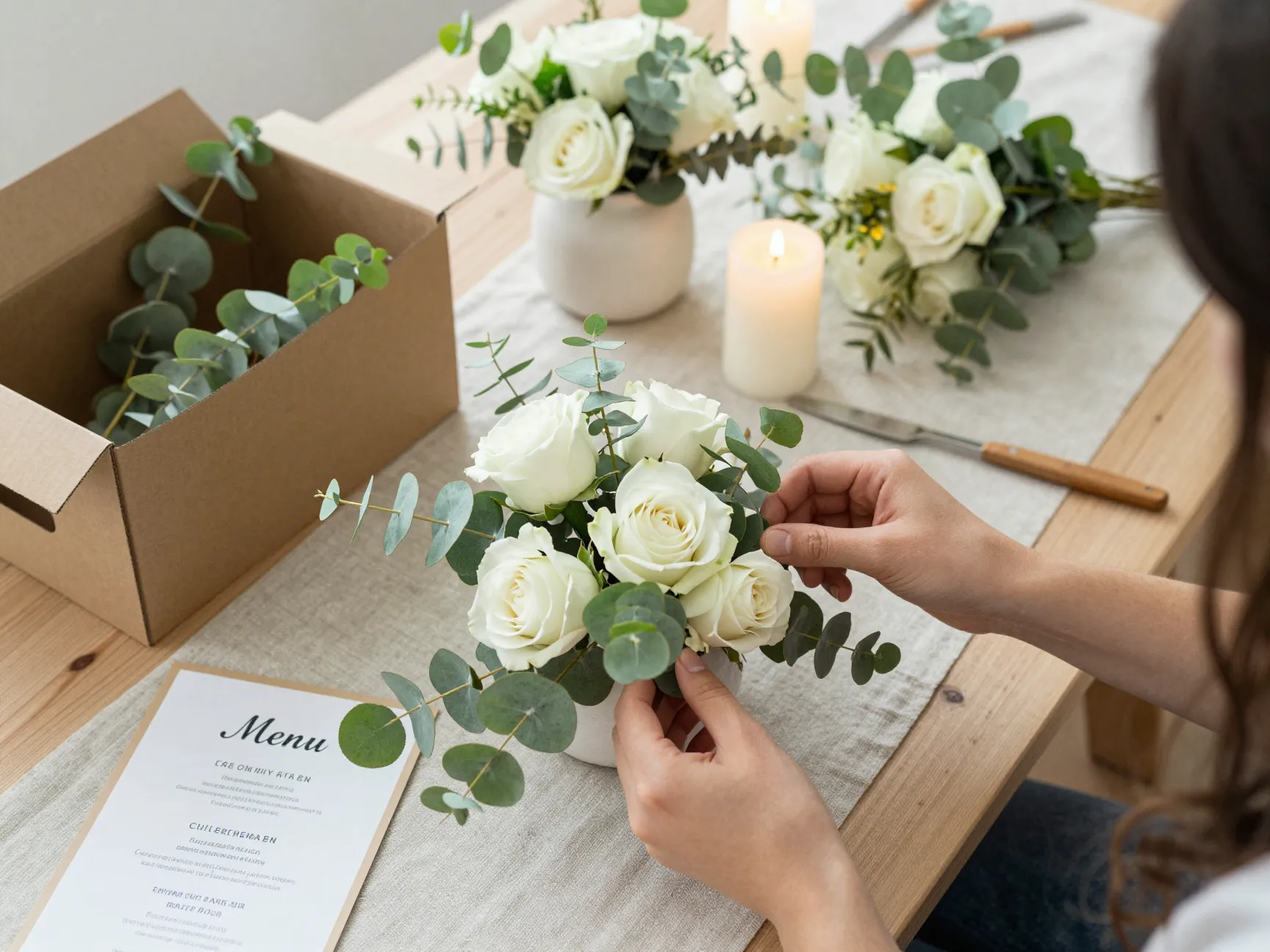
DIY gets a bad reputation because couples sometimes try to do everything themselves and end up exhausted and with mixed results. The smart approach is strategic DIY — choosing the projects where DIY looks just as good as professional work, and hiring out the things where it doesn’t.
Best candidates for DIY:
- ✅ Centerpieces using simple greenery, candles, and bulk flowers from a wholesaler
- ✅ Wedding signage (Canva + a local print shop = stunning results)
- ✅ Favors (homemade jams, seed packets, custom cookies)
- ✅ Ceremony programs and menus
- ✅ Photo booth setup with a ring light and free printable props
Leave these to the professionals:
- ❌ Wedding cake (structural issues can ruin the moment)
- ❌ Photography and video (no second chances)
- ❌ Hair and makeup (the photos last forever)
- ❌ Officiant services (legal and logistical complexity)
Buying flowers in bulk from a wholesale market or a service like Mayesh Wholesale and assembling simple arrangements yourself can save $1,000–$3,000 compared to full-service floral design — with results that look nearly identical in photos.
Why it looks expensive: Guests don’t know which elements were DIY and which were professionally done. They just see a cohesive, beautiful event.
Quick-Reference Budget Hack Summary
| # | Hack | Estimated Savings |
|---|---|---|
| 1 | 50/30/20 Budget Rule | Prevents overspending across all categories |
| 2 | Big Three Strategy | Focuses spend where guests notice most |
| 3 | Off-Peak Dates | 10–20% venue savings |
| 4 | Micro Wedding | $15,000–$25,000+ vs. traditional |
| 5 | Flexible Venue | $2,000–$8,000 in décor savings |
| 6 | Pre-Owned Attire | 40–70% off retail dress prices |
| 7 | Shop Multiple Vendors | 15–50% per vendor category |
| 8 | AI Planning Tools | $3,000–$8,000 in planner fees |
| 9 | Strategic DIY | $1,000–$5,000 in production costs |
Conclusion: Your Dream Wedding Is Closer Than You Think
These 9 genius wedding planning on a budget hacks that look expensive aren’t about cutting corners or settling for less. They’re about being smarter than the wedding industry expects you to be. Every single one of these strategies is being used by real couples in 2026 to create weddings that guests genuinely rave about — without the five-figure debt that follows so many newlyweds home.
Here are your actionable next steps:
- Set your total budget first — before you book a single vendor or visit a single venue.
- Apply the 50/30/20 rule to create your category allocations immediately.
- Decide on guest count before anything else — it determines almost every other cost.
- Choose your date strategically — check off-peak pricing before falling in love with a peak-season Saturday.
- Use AI tools from day one — they’ll save you time, money, and stress throughout the entire planning process.
- Shop at least 5 vendors per category — and negotiate using competing quotes.
Your wedding day should be one of the best days of your life — not the beginning of years of financial stress. With these hacks, you can have both the beautiful wedding and the financial peace of mind. Start planning smart today. 💍
References
[1] Average Wedding Cost 2026 – https://www.greatevent.com/average-wedding-cost-2026/
[2] Wedding Budget Hacks – https://loverly.com/planning/wedding-101/wedding-budget-hacks
[3] The Brutal Truth About Wedding Planning In 2026 A Budget Survival Guide – https://www.rinlongflower.com/blogs/news/the-brutal-truth-about-wedding-planning-in-2026-a-budget-survival-guide
[4] The Knot Worldwide Unveils 2026 Real Weddings Study – https://www.theknotww.com/press-releases/the-knot-worldwide-unveils-2026-real-weddings-study/