How Do I Plan a Wedding? 9 Simple Steps from Start to Finish
You just said yes — and now the real adventure begins. Wedding planning can feel like trying to solve a puzzle with a thousand pieces, no picture on the box, and a ticking clock. But here’s the truth: with the right roadmap, planning your wedding can actually be enjoyable. This guide answers the question every newly engaged couple asks — “How do I plan a wedding?” — by breaking the entire process into 9 simple steps from start to finish.
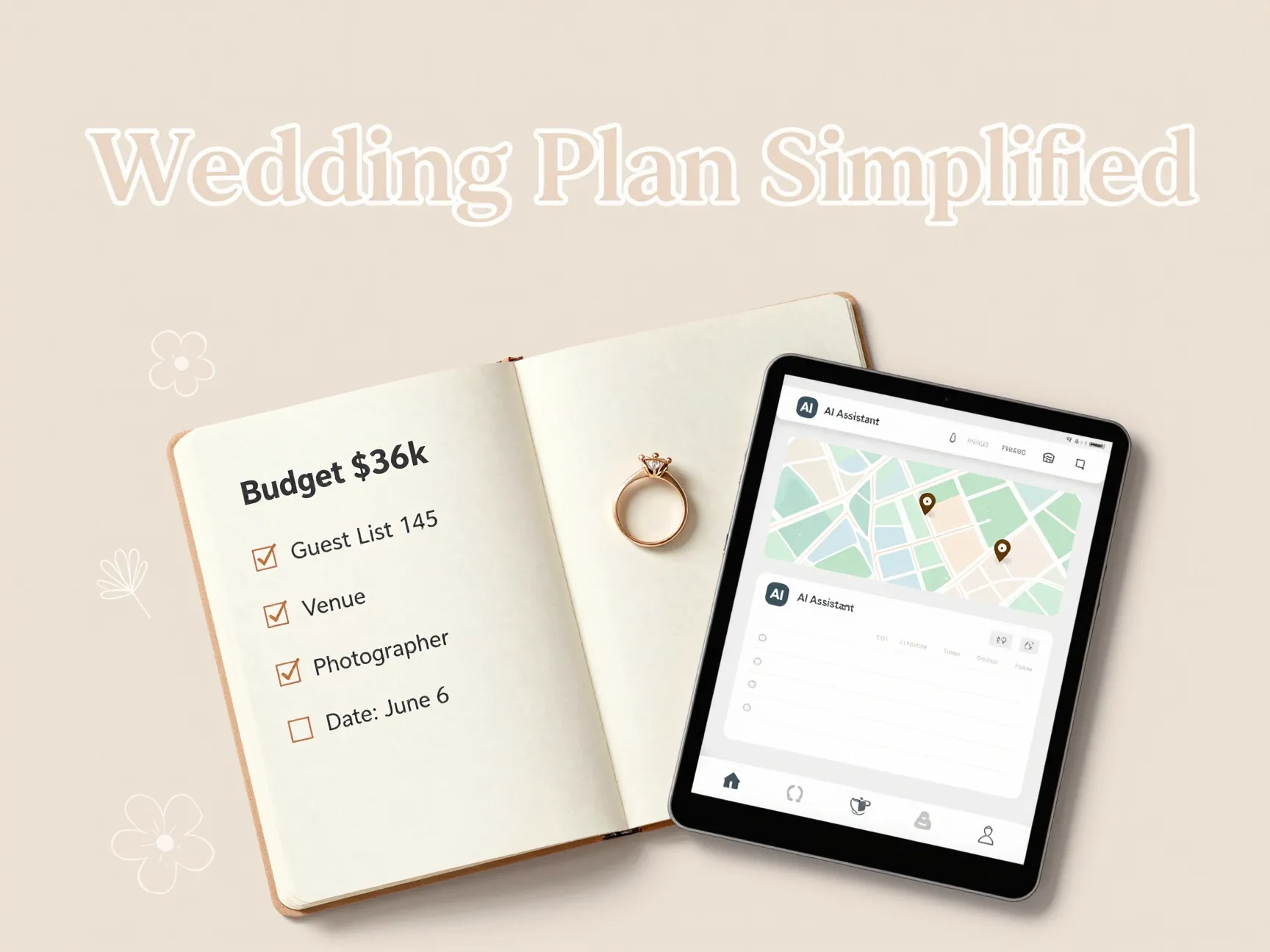
Whether you have 18 months (the average engagement length) [1] or just six, this step-by-step wedding planning guide will help you move from overwhelmed to organized, one decision at a time.
Key Takeaways 📌
- Set your budget first. The average wedding costs $36,000 in 2026, and 88% of couples contribute financially to their own wedding [2].
- Book your venue early. Venue selection is a top priority for 47% of couples, and popular dates fill up fast [1].
- Hire vendors strategically. Couples hire an average of 14 vendors — knowing who to book first saves time and money [1].
- Use technology to your advantage. 74% of couples create wedding websites, and 54% now use AI tools to help plan [2].
- Build a realistic timeline. Most planning milestones happen 6–18 months out, so knowing the order of steps matters enormously.
Why You Need a Clear Wedding Planning Process
Before diving into the steps, let’s be honest about what you’re up against. According to recent data, 84% of couples believe their 2026 wedding costs more than the same wedding would have two years ago, and 78% are worried about economic or tariff impacts on their budget [2]. On top of that, 60% of couples say managing their budget against social media inspiration is their #1 planning stressor [1].
The good news? A clear, structured process takes the chaos out of the equation. The 9 steps below are designed to guide you through how to plan a wedding in the most logical, stress-reducing order possible.
How Do I Plan a Wedding? 9 Simple Steps from Start to Finish
1. Set Your Budget Before Anything Else 💰

The very first thing you need to do — before booking a venue, before browsing Pinterest, before anything — is establish your wedding budget.
In 2026, the average wedding costs $36,000, with most couples spending between $20,000 and $40,000 [2]. That’s a wide range, and where you land depends on your guest count, location, and priorities.
Here’s a simple budget breakdown to get you started:
| Category | Estimated % of Budget |
|---|---|
| Venue & catering | 35–40% |
| Photography & video | 10–12% |
| Music & entertainment | 5–8% |
| Floral & décor | 8–10% |
| Attire & beauty | 8–10% |
| Stationery & favors | 2–3% |
| Wedding planner | ~4% |
| Miscellaneous/buffer | 5–8% |
Key considerations when setting your budget:
- Determine who is contributing. Today, 88% of couples contribute financially to their own wedding — 29% fully self-funded, 59% partially funded [2].
- Build in a 10–15% buffer for unexpected costs.
- Decide your non-negotiables early (e.g., photography, food quality) so you know where to splurge and where to save.
💬 “Knowing your number before you fall in love with a venue is the single most important thing you can do.” — A common piece of advice from wedding planners everywhere.
2. Build Your Guest List (It Drives Everything)
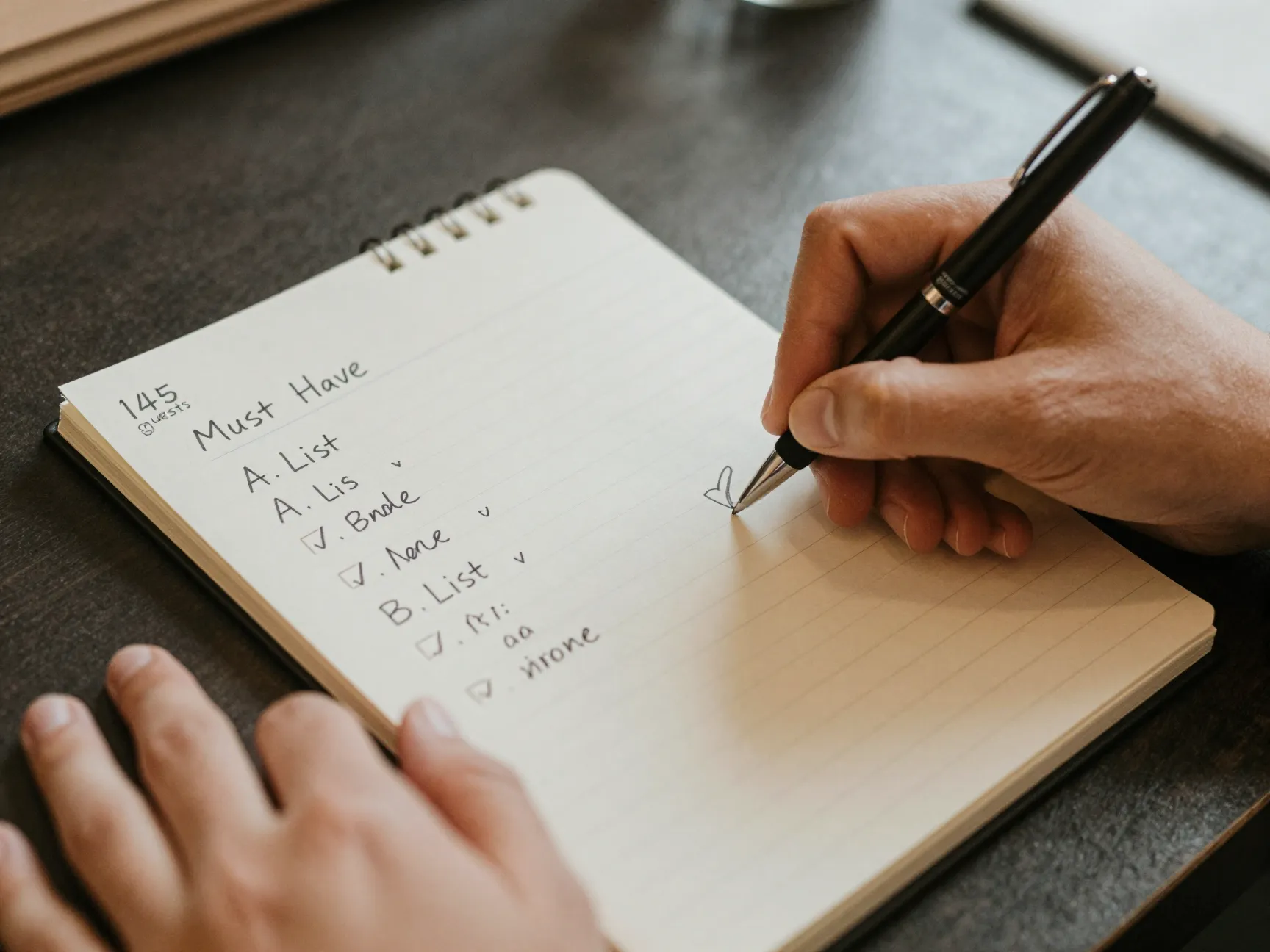
Your guest list is more powerful than most couples realize. It directly impacts your venue size, catering costs, invitation budget, and overall feel of the day.
The average wedding in 2026 has 145 guests [1]. But that number should be your number, not the industry average.
Tips for building your guest list:
- Start with your “must-have” list — immediate family and closest friends.
- Create an “A list” (definite invites) and a “B list” (invite if A-list declines).
- Have an honest conversation with both families early to manage expectations.
- Remember: every additional guest adds roughly $150–$250 per person to your total cost.
Also worth noting: 37% of couples are now hosting at least one additional event like a welcome party or day-after brunch, and 18% are planning full 2–3 day wedding weekends [2]. If that appeals to you, factor those guests into your extended planning too.
3. Choose Your Wedding Date and Season 📅
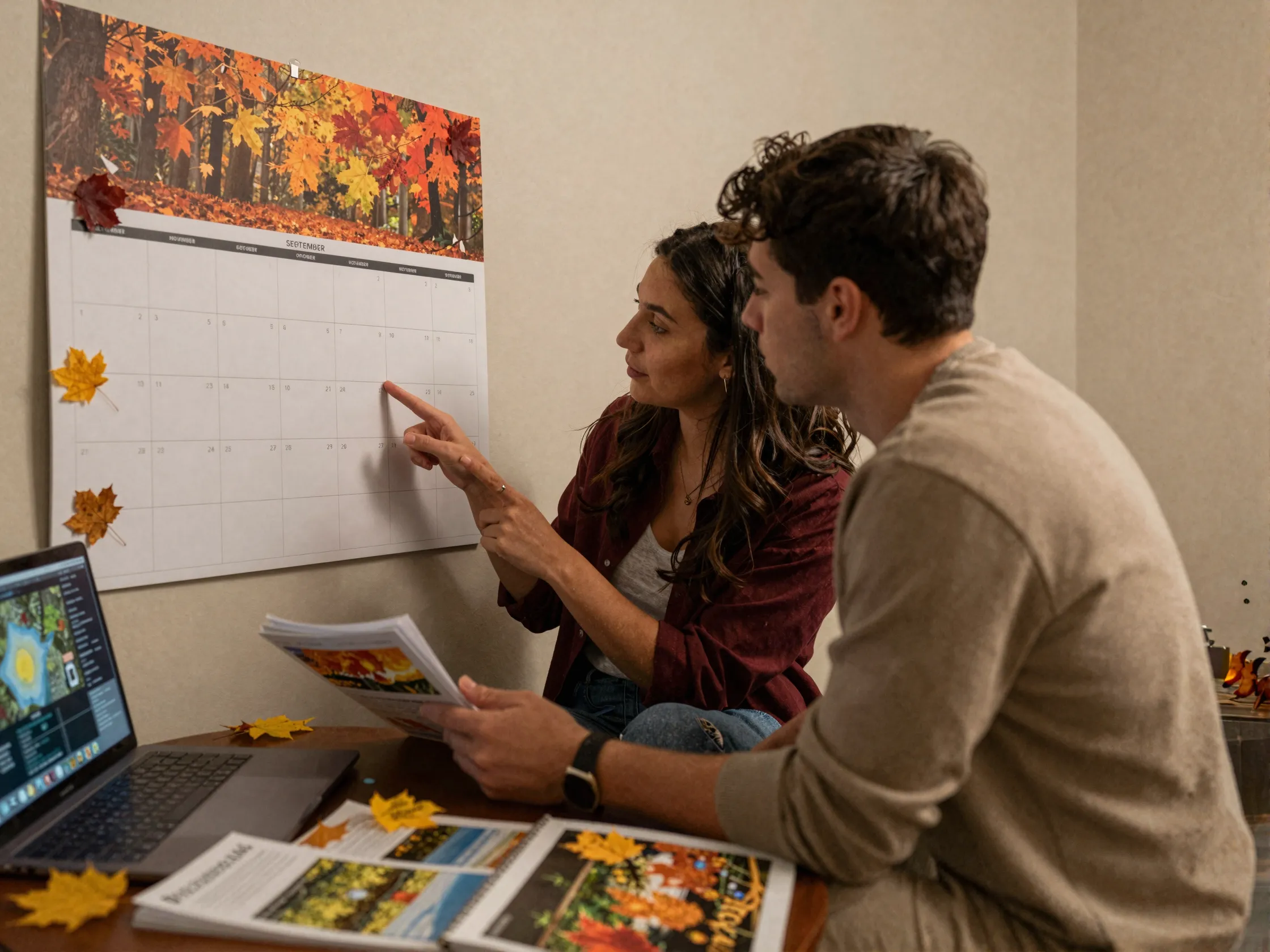
Once you have a rough guest count and budget, it’s time to pick a date. Your date will shape everything from vendor availability to travel costs for out-of-town guests.
Popular wedding dates fill up fast. In 2026, the most popular wedding date is June 6 (06/06/2026) [1]. Seasonality also matters:
- 41% of weddings occur between September and November 🍂
- Only 9% of weddings take place between December and February ❄️
Factors to consider when choosing your date:
- Venue availability (book your venue first, then set the date — or vice versa)
- Season and weather preferences
- Major holidays or conflicts for key guests
- Budget — off-peak dates (winter, weekdays) can save thousands
- Personal significance — anniversaries, meaningful numbers
4. Find and Book Your Venue 🏛️
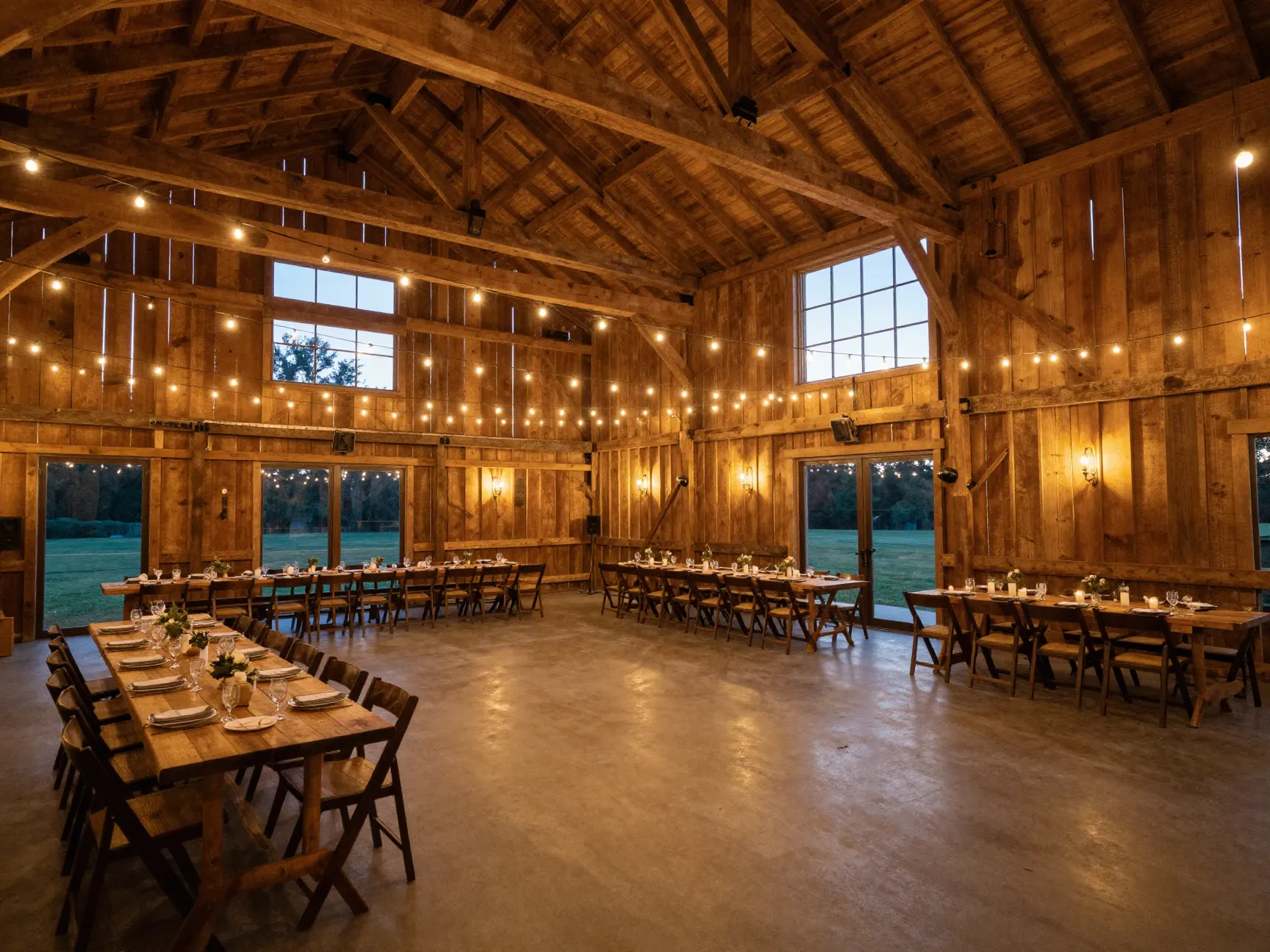
Your venue is arguably your most important vendor decision. It sets the tone, limits your guest count, and determines which other vendors you can use.
Venue selection is a priority for 47% of couples [1], and for good reason — popular venues book 12–18 months in advance.
Questions to ask every venue:
- What is the maximum capacity?
- Is catering in-house or can we bring outside vendors?
- What is included in the rental fee?
- Are there noise restrictions or curfews?
- What is the rain/backup plan for outdoor spaces?
- What dates are available?
Types of venues to consider:
| Venue Type | Best For |
|---|---|
| Hotel ballroom | Large, formal weddings |
| Barn or farm | Rustic, outdoor feel |
| Restaurant | Intimate gatherings |
| Museum or gallery | Unique, artistic couples |
| Backyard | Budget-conscious, personal |
| Destination venue | Adventure-loving couples |
Once you’ve toured 3–5 venues and found “the one,” get your contract reviewed carefully before signing. Pay close attention to cancellation policies and payment schedules.
5. Hire Your Core Vendors Early 📸
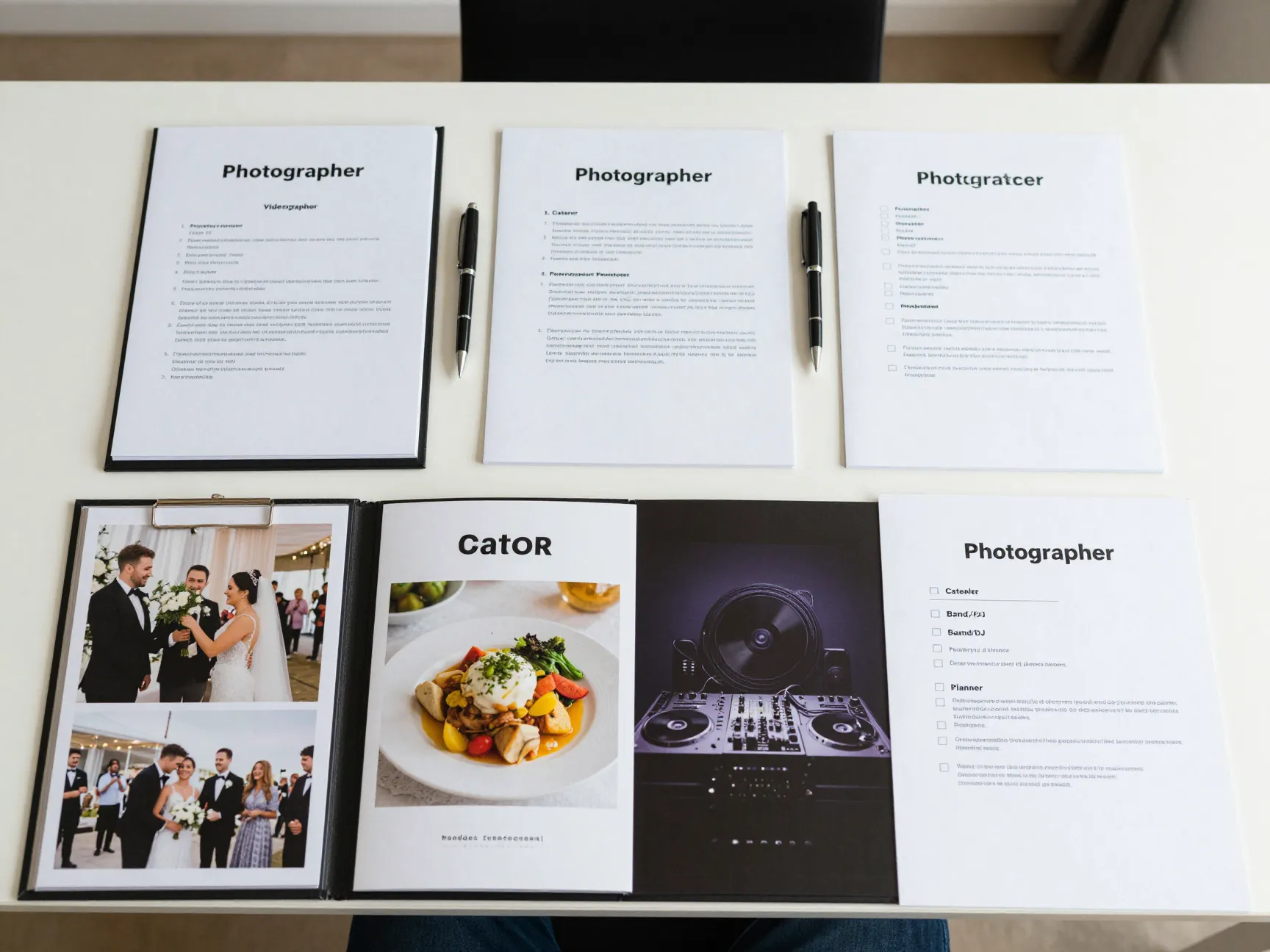
After your venue is locked in, it’s time to start building your vendor team. Couples hire an average of 14 vendors for their wedding [1], so knowing who to prioritize is essential.
Book these vendors first (12+ months out):
- Photographer — 57% of couples prioritize spending here [1]. Great photographers book up fast.
- Videographer — Often works alongside the photographer; many are booked as a package.
- Caterer — If not provided by your venue.
- Band or DJ — The best entertainment books out a year or more in advance.
- Wedding planner or coordinator — If you’re using one (more on this below).
Book these vendors next (6–9 months out):
- Florist — couples typically book their florist about 5.7 months before the wedding [1]
- Hair and makeup artist
- Officiant
- Transportation
Book these vendors last (3–6 months out):
- Cake/dessert vendor
- Photo booth rental
- Favors and specialty items
💡 Pro Tip: Always check reviews, ask for references, and meet vendors in person or via video call before signing. Chemistry matters as much as portfolio quality.
6. Decide Whether to Hire a Wedding Planner 🗂️

This step often gets skipped — and it shouldn’t. A wedding planner can be a game-changer, especially for couples with demanding careers or complex logistics.
Wedding planner costs in 2026:
- Full-service planner: approximately 4% of your total budget [1]
- Month-of coordinator: average $2,200 [1]
- Destination wedding planner: average $2,400 [1]
Even if a full planner isn’t in the budget, a month-of coordinator is worth every penny. They manage your timeline, coordinate vendors, and handle day-of logistics so you can actually enjoy your wedding.
Signs you should hire a planner:
- Your venue doesn’t provide a day-of coordinator
- You’re planning a destination wedding
- You have a large or complex guest list
- You’re hosting multiple events over a wedding weekend
- You simply don’t have the time to manage 14+ vendors
7. Design Your Wedding Aesthetic and Send Invitations ✉️
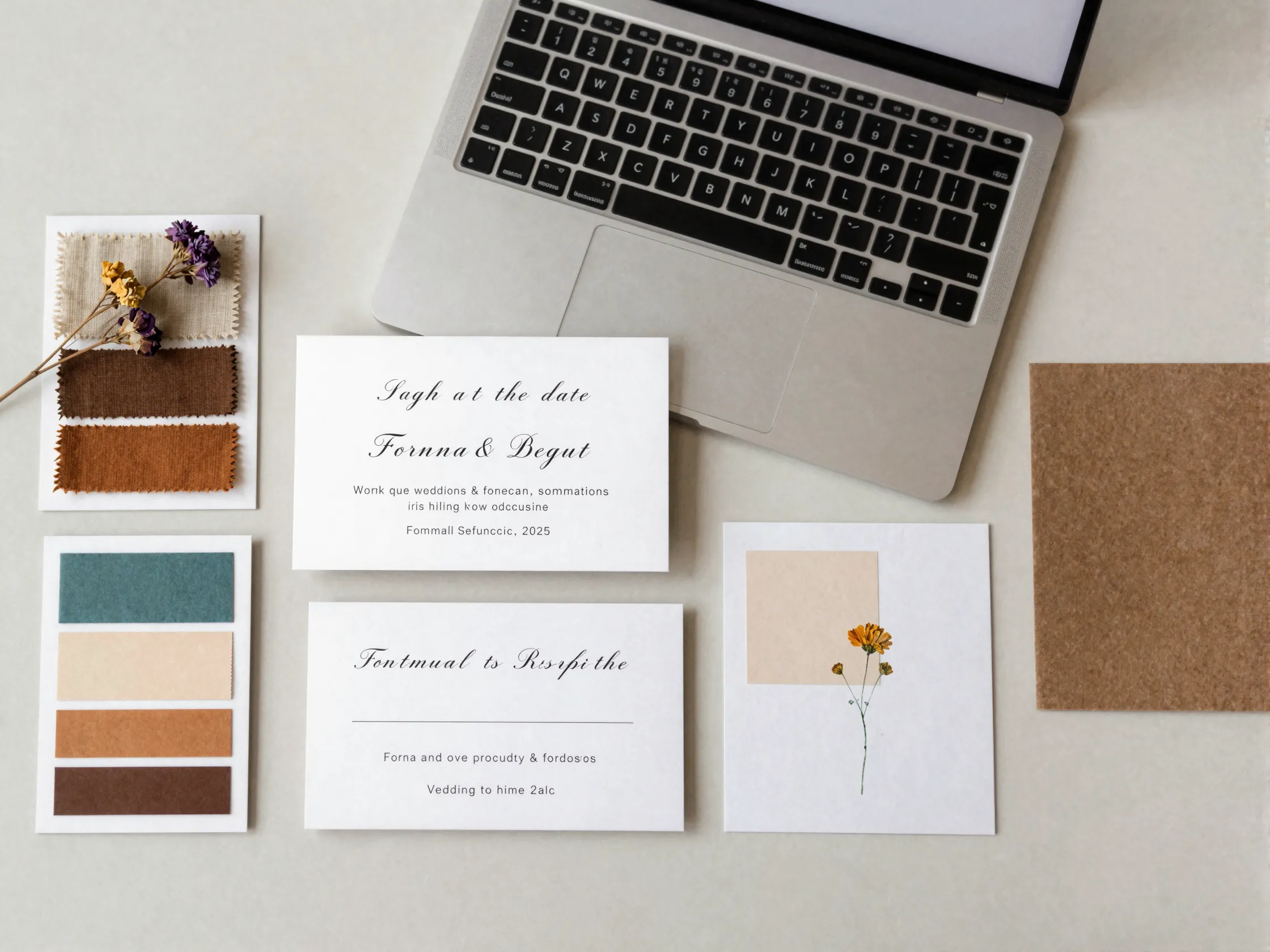
Now comes the fun part — bringing your vision to life. Your wedding aesthetic ties together your venue, florals, stationery, attire, and décor into one cohesive look.
Steps to define your aesthetic:
- Create a mood board (Pinterest, Instagram, or a physical board)
- Choose 2–3 primary colors and 1–2 accent colors
- Select a style (modern, bohemian, classic, rustic, minimalist, etc.)
- Share your vision with your florist, stationer, and décor vendors
Invitation timeline:
- Save-the-dates: Send 6–12 months before the wedding (earlier for destination weddings)
- Formal invitations: Send 6–8 weeks before the wedding
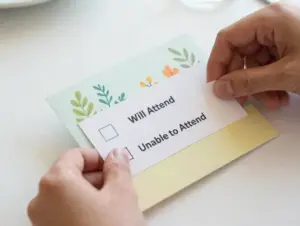
- RSVP deadline: Set 3–4 weeks before the wedding to finalize your headcount
Don’t forget your wedding website. In 2026, 74% of engaged couples create a wedding website [2] to share venue details, accommodation recommendations, registry links, and RSVP management. Platforms like Zola, The Knot, and Joy make this easy and free.
8. Plan the Details: Ceremony, Reception, and Timeline ⏱️
With your vendors booked and invitations sent, it’s time to get into the details that make your wedding yours.
Ceremony planning checklist:
- Choose your officiant and discuss the ceremony structure
- Write or select your vows
- Choose ceremony music (processional, recessional, interlude)
- Decide on readings or rituals (unity candle, ring warming, etc.)
- Confirm ceremony length with your officiant (typically 20–45 minutes)
Reception planning checklist:
- Finalize your menu and confirm dietary restrictions
- Create a seating chart
- Plan your reception timeline (cocktail hour, dinner, toasts, first dance, cake cutting, etc.)
- Choose your reception playlist or work with your DJ/band on a do-not-play list
- Plan your grand exit
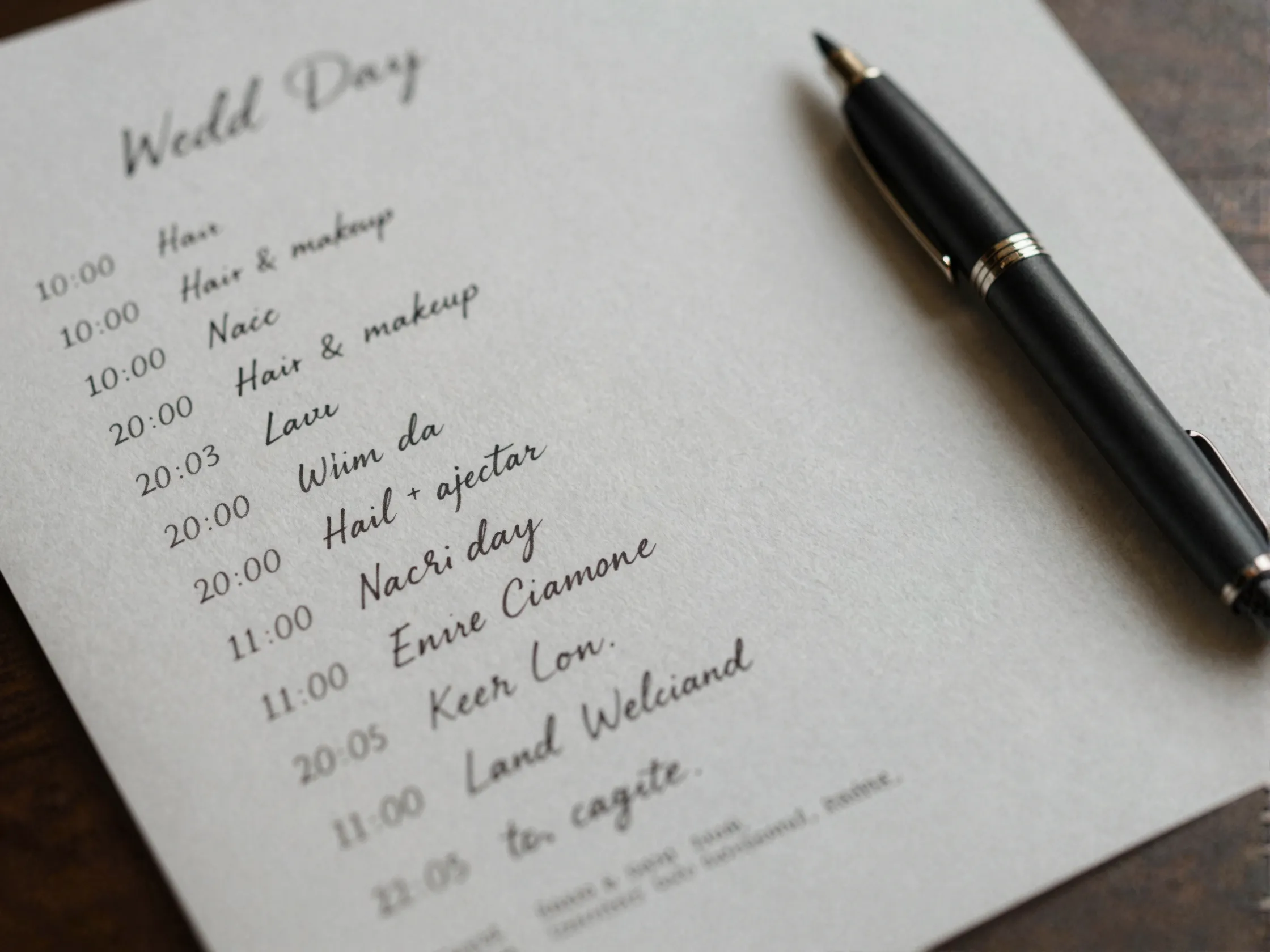
Sample Wedding Day Timeline:
| Time | Event |
|---|---|
| 10:00 AM | Hair & makeup begins |
| 1:00 PM | First look (optional) |
| 2:00 PM | Wedding party photos |
| 4:00 PM | Ceremony begins |
| 4:45 PM | Cocktail hour |
| 6:00 PM | Reception dinner |
| 7:30 PM | First dance, toasts |
| 9:30 PM | Dancing & cake cutting |
| 11:00 PM | Grand exit |
9. Use Technology and AI to Stay Organized 🤖
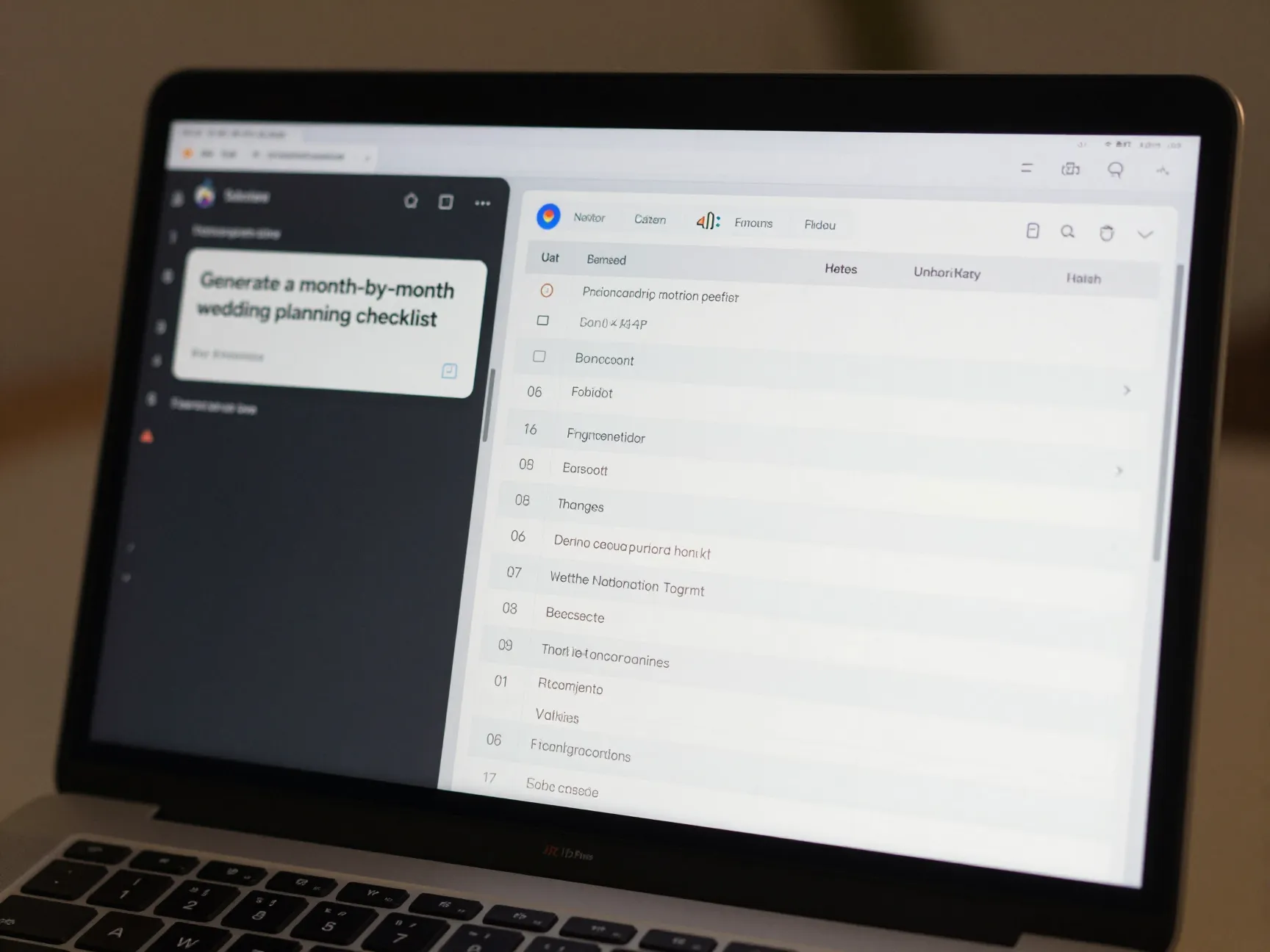
One of the most exciting developments in modern wedding planning is the rise of digital tools. In 2026, 54% of couples use AI in wedding planning — a 150% increase in just one year [2]. Couples primarily use AI for functional tasks like building timelines, drafting vendor emails, and answering etiquette questions.
Top tech tools for wedding planning:
- Zola or The Knot — All-in-one planning platforms with checklists, vendor directories, and wedding websites
- Joy — Guest management and wedding website creation
- ChatGPT or similar AI tools — Timeline building, budget spreadsheets, seating chart logic, and vendor communication drafts
- Google Sheets or Notion — Custom budget trackers and planning dashboards
- Pinterest or Instagram — Inspiration curation and aesthetic planning
How to use AI effectively in wedding planning:
- Ask it to generate a month-by-month planning checklist based on your wedding date
- Use it to draft vendor inquiry emails
- Request a sample wedding day timeline based on your ceremony time
- Ask etiquette questions (e.g., “Should I invite coworkers to my wedding?”)
- Use it to compare vendor quotes and identify red flags in contracts
💡 Remember: AI is a tool, not a replacement for human judgment. Always verify vendor recommendations and contract details yourself.
How Do I Plan a Wedding? 9 Simple Steps from Start to Finish — Quick Reference
Here’s a summary of all 9 steps in one place:
- Set your budget — Know your number before making any decisions
- Build your guest list — It drives venue size, cost, and logistics
- Choose your date — Consider season, availability, and budget
- Book your venue — Your most important and time-sensitive decision
- Hire core vendors — Photographer, caterer, entertainment first
- Decide on a planner — Even a month-of coordinator adds huge value
- Design your aesthetic and send invitations — Tie your vision together
- Plan ceremony and reception details — Build a realistic timeline
- Use technology and AI — Stay organized and save time
Common Wedding Planning Mistakes to Avoid ⚠️
Even with a great plan, couples can stumble. Here are the most common pitfalls:
- Skipping the buffer in your budget — Always keep 10–15% in reserve
- Booking vendors without contracts — Never pay a deposit without a signed agreement
- Ignoring vendor reviews — Check at least 10+ recent reviews before hiring
- Underestimating the timeline — Popular vendors and venues book out 12–18 months ahead
- Letting social media dictate your vision — 60% of couples stress about budget vs. inspiration [1]; stay grounded in your own priorities
- Forgetting to eat and rest on your wedding day — Build breaks into your timeline
Conclusion: Your Wedding Planning Journey Starts Now
Planning a wedding doesn’t have to be overwhelming. By following these 9 simple steps from start to finish, you can approach every decision with clarity and confidence. Start with your budget, build your guest list, lock in your venue, and then work through vendors, details, and technology tools one step at a time.
Your actionable next steps right now:
- ✅ Sit down with your partner and agree on a total budget number
- ✅ Draft a preliminary guest list (even a rough one)
- ✅ Research 3–5 venues in your area and request availability for your preferred dates
- ✅ Create a free account on Zola, The Knot, or Joy to start your planning checklist
- ✅ Consider whether a wedding planner or coordinator fits your budget and needs
Remember: the goal isn’t a perfect wedding — it’s your wedding. Every decision you make should reflect what matters most to you and your partner. The rest is just details. 💍
References
[1] Wedding Industry Statistics – https://saradoesseo.com/wedding-marketing/wedding-industry-statistics/
[2] The First Look Report 2026 – https://www.zola.com/expert-advice/the-first-look-report-2026
[3] The Knot Worldwide Unveils 2026 Real Weddings Study – https://www.theknotww.com/press-releases/the-knot-worldwide-unveils-2026-real-weddings-study/
[4] Real Weddings Study – https://www.theknot.com/content/wedding-data-insights/real-weddings-study
[5] 2026 Wedding Market Trends – https://wedvibes.media/2026-wedding-market-trends/
[6] 2026 Wedding Trend Forecast Immersive Venues Intimate Gatherings End Of Tradition – https://junebugweddings.com/wedding-blog/2026-wedding-trend-forecast-immersive-venues-intimate-gatherings-end-of-tradition/
[7] Wedding Trends 2026 – https://37framesphotographyblog.com/wedding-trends-2026/
[8] Future Of Marriage 2026 Trends To Watch Report – https://www.theknotww.com/blog/future-of-marriage-2026-trends-to-watch-report/