The Best Wedding Planning Advice We’ve Ever Received (9 Gems)
Planning a wedding can feel like running a small business while also being the star of the show — and nobody gives you a manual. Whether you’re newly engaged or deep in the planning trenches, the best wedding planning advice we’ve ever received (9 gems) collected here could genuinely change the way you approach your big day. These aren’t vague platitudes. These are real, actionable insights drawn from industry data, experienced planners, and couples who’ve been there. Let’s dig in. 💍
Key Takeaways
- 📊 Budget stress is real: 60% of couples say managing their budget against online inspiration is their #1 planning stressor [1] — having a strategy from day one is non-negotiable.
- 🤖 AI tools are now mainstream: 36% of engaged couples are using AI for wedding planning in 2026 [2] — don’t ignore these time-saving resources.
- 🤝 Vendors are your allies: 64% of couples say their vendors helped them stay within budget [1] — lean on their expertise.
- 🔍 Shop around more than you think: 37% of couples reached out to more vendors than initially planned to find budget-friendly options [3].
- 🎯 Your wedding should reflect you — not a Pinterest board, not your mother-in-law’s vision, and not what’s trending this season.
Why Great Wedding Advice Actually Matters
Before we get into the gems themselves, let’s acknowledge something important: wedding planning is genuinely hard. The average couple spends 12–18 months planning their wedding, navigating vendor negotiations, family dynamics, and budget constraints — all while managing their regular lives.
The wedding industry in 2026 is more complex and more inspiring than ever. Couples have access to thousands of ideas online, AI planning tools, and a marketplace flooded with vendors at every price point. That abundance is both a gift and a source of overwhelm.
The nine pieces of advice below represent the most impactful, time-tested wisdom that cuts through the noise. Think of them as your planning compass. 🧭
The Best Wedding Planning Advice We’ve Ever Received (9 Gems): Items 1–5
1. Set Your Budget Before You Fall in Love With Anything

The single most powerful thing you can do before browsing a single venue or tasting a single cake is set a realistic, detailed budget. This sounds obvious, but most couples skip this step — and they pay for it later (literally).
Here’s why this matters so much: 60% of couples report that managing their budget against online inspiration is their number one planning stressor [1]. When you see a dreamy $8,000 floral installation on Instagram before you’ve established your numbers, you’ve already set yourself up for disappointment or overspending.
How to build your wedding budget:
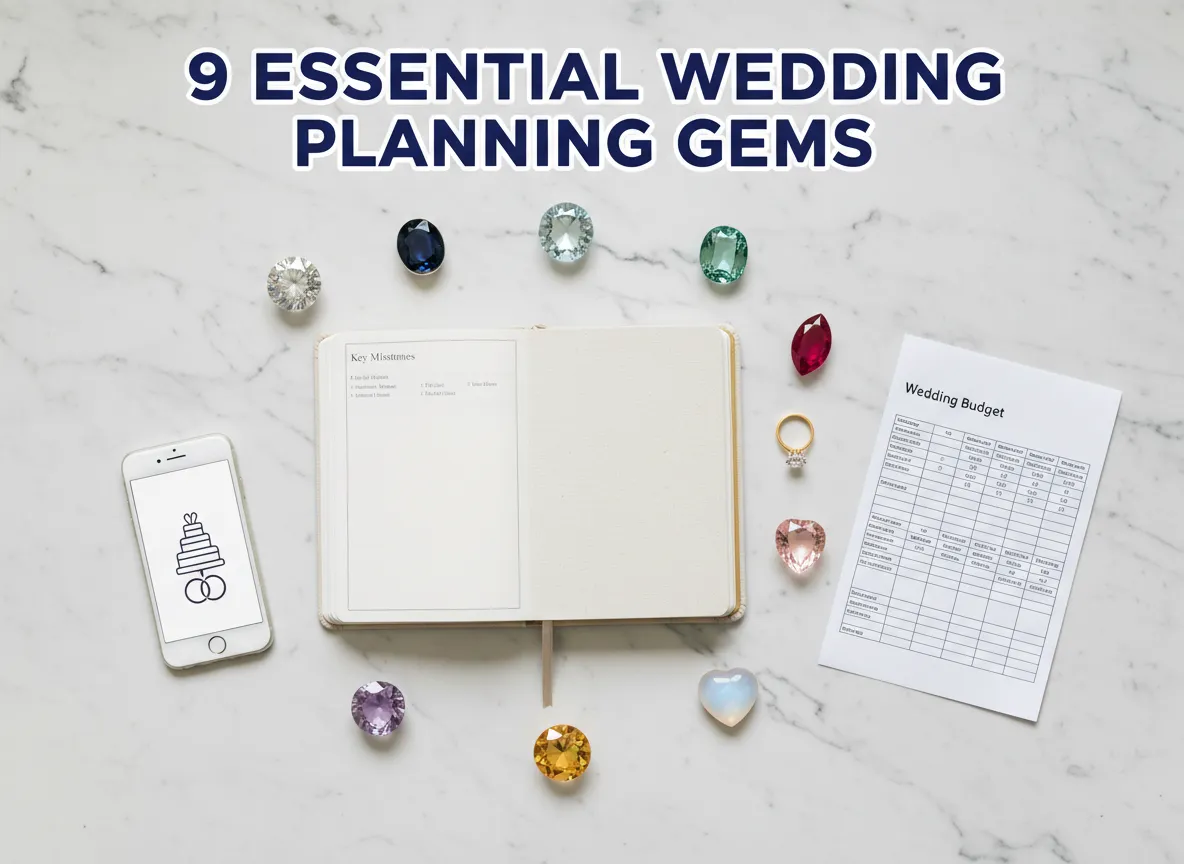
| Budget Category | Typical % of Total Budget |
|---|---|
| Venue & Catering | 40–50% |
| Photography & Video | 10–12% |
| Music & Entertainment | 5–8% |
| Florals & Décor | 8–10% |
| Attire & Beauty | 8–10% |
| Stationery & Favors | 2–4% |
| Transportation | 2–3% |
| Contingency Fund | 5–8% |
💬 “A budget isn’t a limitation — it’s a decision-making tool. Every choice becomes easier when you know your number.”
Start with your total number, divide it by category, and only then start exploring options within each bucket. You’ll feel calmer, make faster decisions, and avoid the gut-punch of falling in love with something you can’t afford.
2. Hire Vendors Who Are Partners, Not Just Service Providers

One of the most underrated pieces of wedding planning wisdom is this: your vendors are not just vendors — they’re your team. The right photographer, caterer, or planner will actively help you make better decisions, including financial ones.
The data backs this up. 64% of couples say their vendors helped them stay within budget [1]. That’s not a coincidence. Experienced wedding professionals have seen hundreds of weddings. They know where couples overspend, where you can save without sacrificing quality, and how to problem-solve on the fly.
When interviewing vendors, ask these questions:
- “Have you worked with couples at my budget level before?”
- “What’s one area where couples often overspend that I could avoid?”
- “How do you handle unexpected issues on the wedding day?”
- “Can you recommend other vendors who match our style and budget?”
The answers will tell you everything about whether this person is a true partner or just someone filling a contract.
3. Shop Around More Than You Think You Need To
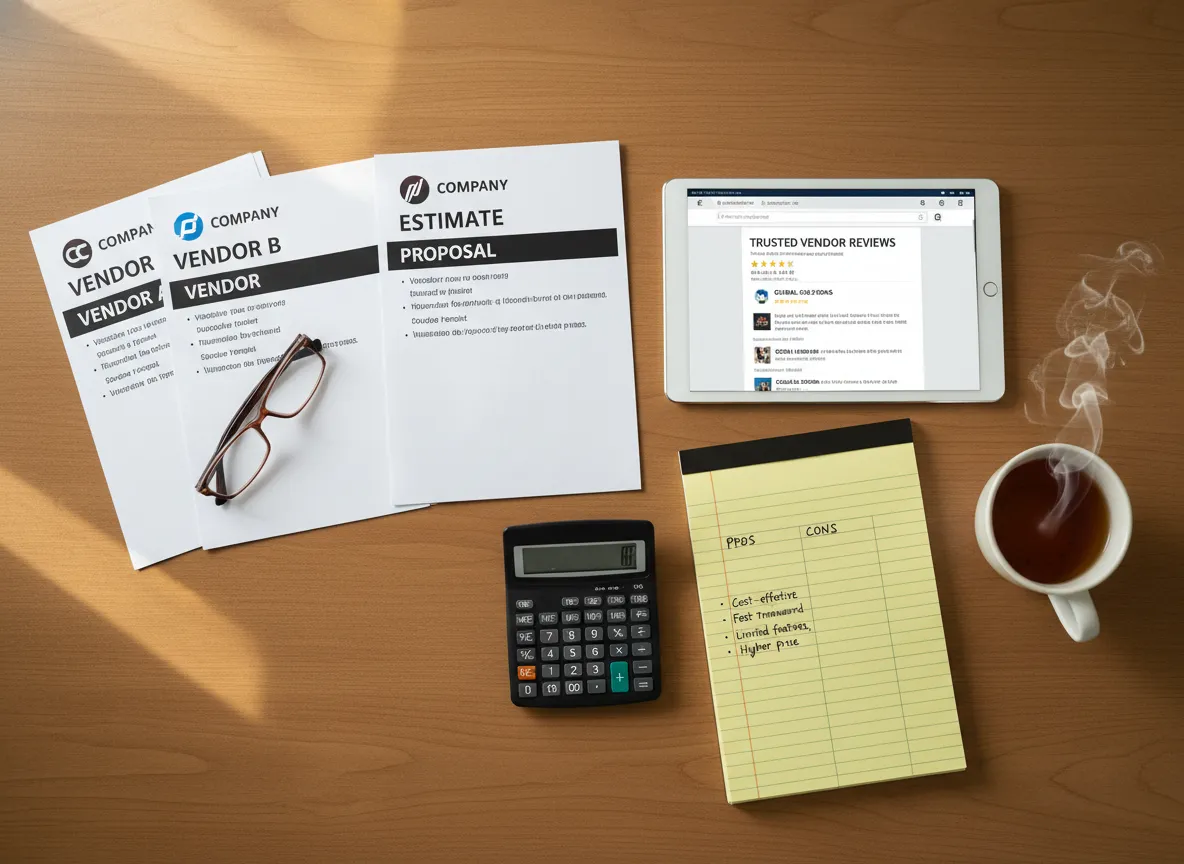
Here’s a gem that surprises many couples: the first vendor you contact is rarely the best fit. In 2026, with economic pressures affecting the wedding industry, 37% of couples reached out to more vendors than they initially planned in order to find options within their budget [3].
This isn’t a sign of indecision. It’s smart strategy. 🎯
Think of vendor shopping like interviewing candidates for a critical job. You wouldn’t hire the first person who walked in the door. The same logic applies here.
Tips for effective vendor comparison:
- Request itemized quotes so you’re comparing apples to apples
- Read reviews from the past 12 months specifically
- Ask for references from weddings similar in size and style to yours
- Don’t be afraid to negotiate — many vendors have flexibility, especially on off-peak dates
- Trust your gut during consultations; you’ll be spending a lot of time with these people
💬 “The vendor who seems slightly out of your budget at first glance might offer exactly what you need — and might be more flexible than you think.”
4. Use AI Tools to Save Time (But Keep the Human Touch)
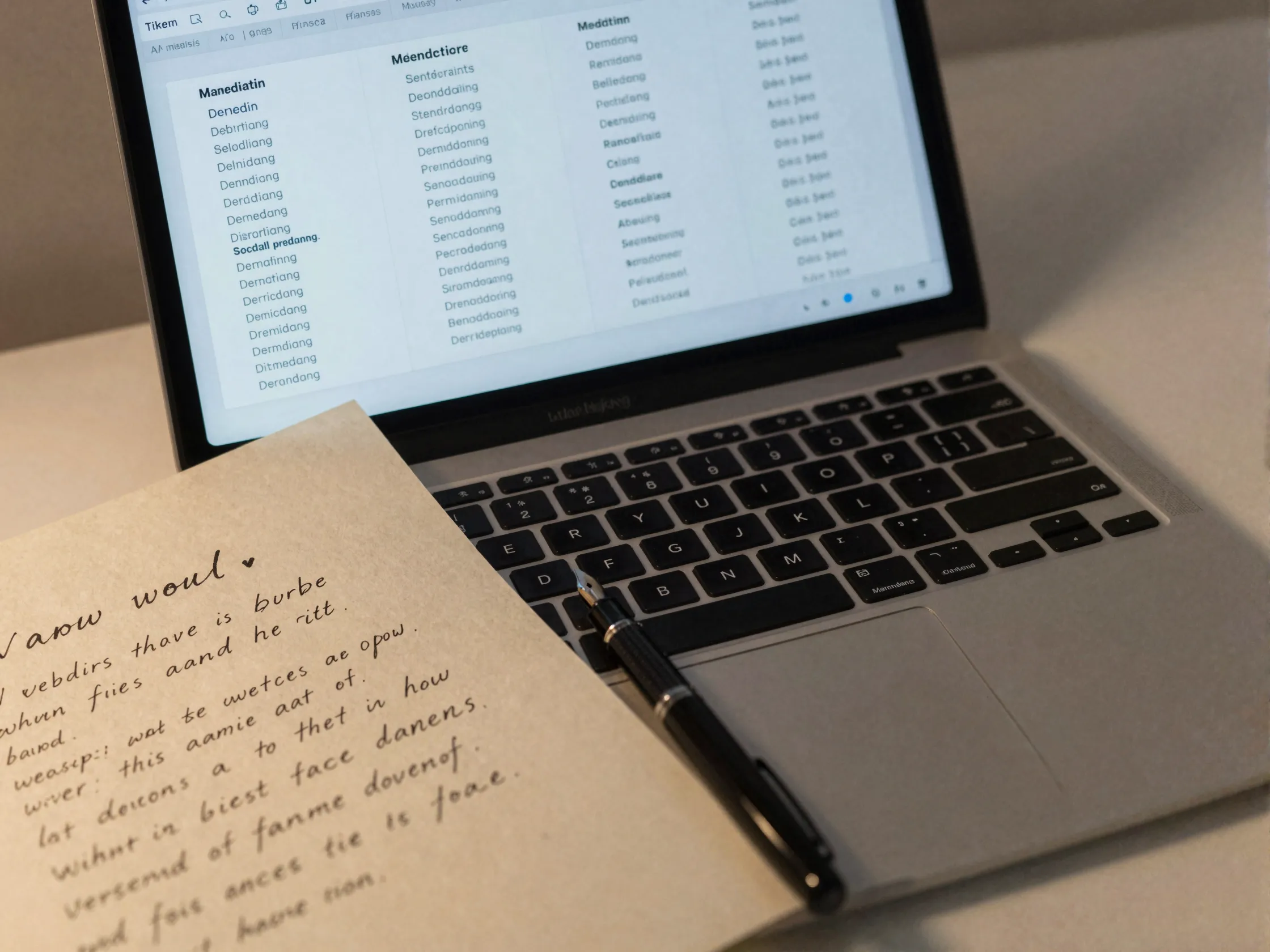
Wedding planning in 2026 looks different than it did even two years ago. 36% of engaged couples are now using AI tools for wedding planning [2], up from 20% in 2025. This isn’t a gimmick — it’s a genuine time-saver.
Couples are using AI for:
- Building detailed planning timelines
- Drafting vendor inquiry emails
- Generating seating chart options
- Creating packing lists for the wedding day
- Brainstorming décor concepts and color palettes
- Writing wedding vows (as a starting point)
Where AI helps most:
| Task | AI Usefulness | Human Touch Still Needed? |
|---|---|---|
| Creating timelines | ⭐⭐⭐⭐⭐ | Minimal |
| Drafting emails | ⭐⭐⭐⭐ | Light editing |
| Budget tracking | ⭐⭐⭐ | Yes — personal priorities |
| Vow writing | ⭐⭐ | Absolutely yes |
| Vendor selection | ⭐⭐ | Yes — relationship-based |
The key is balance. Use AI to handle the functional, repetitive, or organizational tasks. Reserve your energy for the deeply personal decisions — those require your voice, your values, and your relationship.
5. Prioritize Ruthlessly — You Can’t Have Everything
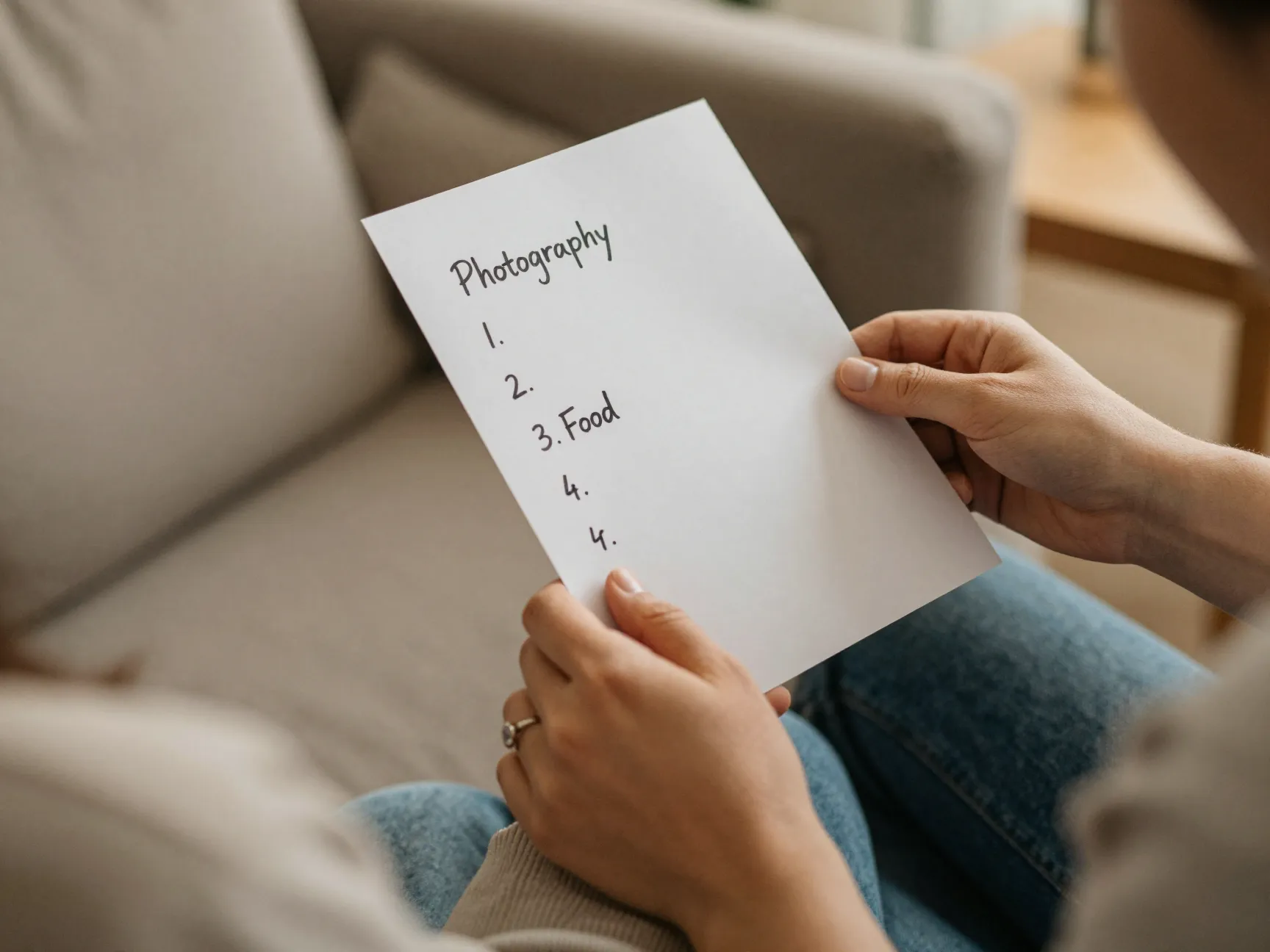
Every couple wants a stunning venue, incredible food, a world-class photographer, and a live band. The hard truth? Most budgets don’t stretch that far. And that’s okay.
One of the best pieces of wedding planning advice we’ve ever received is to sit down together — as a couple — and rank your priorities from 1 to 10. What matters most to you? What would you genuinely not notice if it were scaled back?
A simple prioritization exercise:
- Each partner independently lists their top 5 wedding priorities
- Compare lists and find the overlapping priorities
- Those overlapping items get the biggest budget allocation
- Everything else gets scaled back accordingly
This exercise does two things: it aligns you as a couple and it gives you a clear framework for every decision that follows. When a vendor upsells you on something that’s not on your priority list, you can confidently say no.
💬 “Knowing what you don’t care about is just as powerful as knowing what you do.”
The Best Wedding Planning Advice We’ve Ever Received (9 Gems): Items 6–9
6. Build a Realistic Timeline — and Add Buffer Time
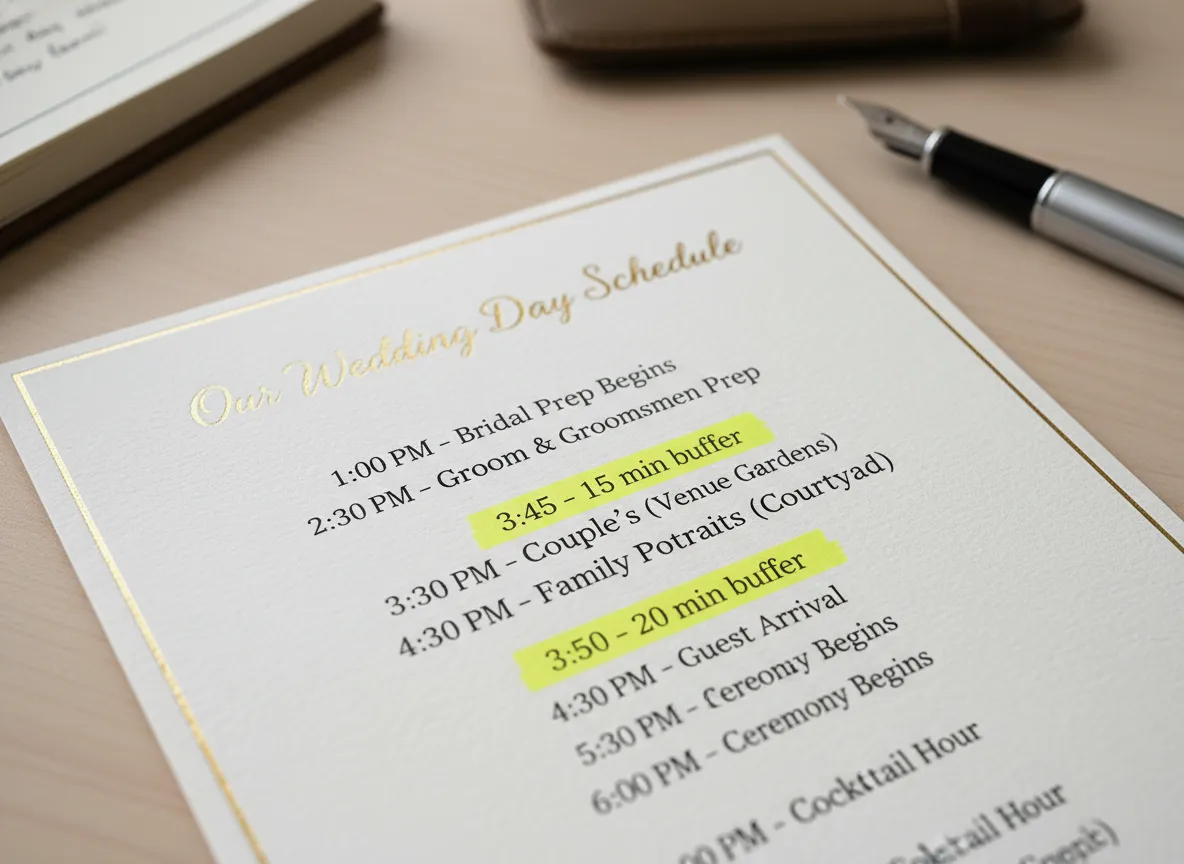
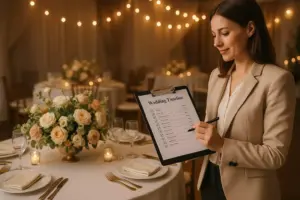
Weddings run on logistics. From the moment you wake up on your wedding day to the last dance of the night, every element needs to be choreographed. A realistic, detailed timeline is one of the most important documents you’ll create.
Most couples underestimate how long things take. Hair and makeup almost always runs longer than planned. Family photos take twice as long as you expect. Guests don’t move from cocktail hour to the reception room on cue.
Common timeline mistakes to avoid:
- Not building in travel time between locations
- Scheduling family portraits without a shot list
- Forgetting to account for vendor setup and breakdown windows
- Planning a first look but not allocating enough time for it
- Assuming the ceremony will start on time
Build in 15–20 minute buffers between major segments of the day. Share the timeline with every vendor at least two weeks before the wedding. Designate a point person (your planner, a trusted bridesmaid, or a family member) to keep things on track so you don’t have to.
7. Communicate Clearly With Your Partner Throughout the Process
Wedding planning is one of the first major collaborative projects most couples undertake together. It can reveal a lot about how you communicate, compromise, and handle stress. Treat the planning process as relationship practice, not just event logistics.
Some of the most common wedding planning conflicts stem from:
- Unspoken assumptions about who is paying for what
- Different expectations about family involvement
- Disagreements about guest list size
- One partner being more engaged in planning than the other
Practical communication habits that help:
- Schedule a weekly 30-minute “wedding check-in” conversation
- Use a shared planning tool or app so both partners have visibility
- Agree on a decision-making process for big choices (majority vote? consensus?)
- Be honest when you’re feeling overwhelmed — don’t let resentment build
💬 “The wedding is one day. The marriage is forever. How you plan together matters as much as what you plan.”
8. Don’t Let Social Media Distort Your Vision
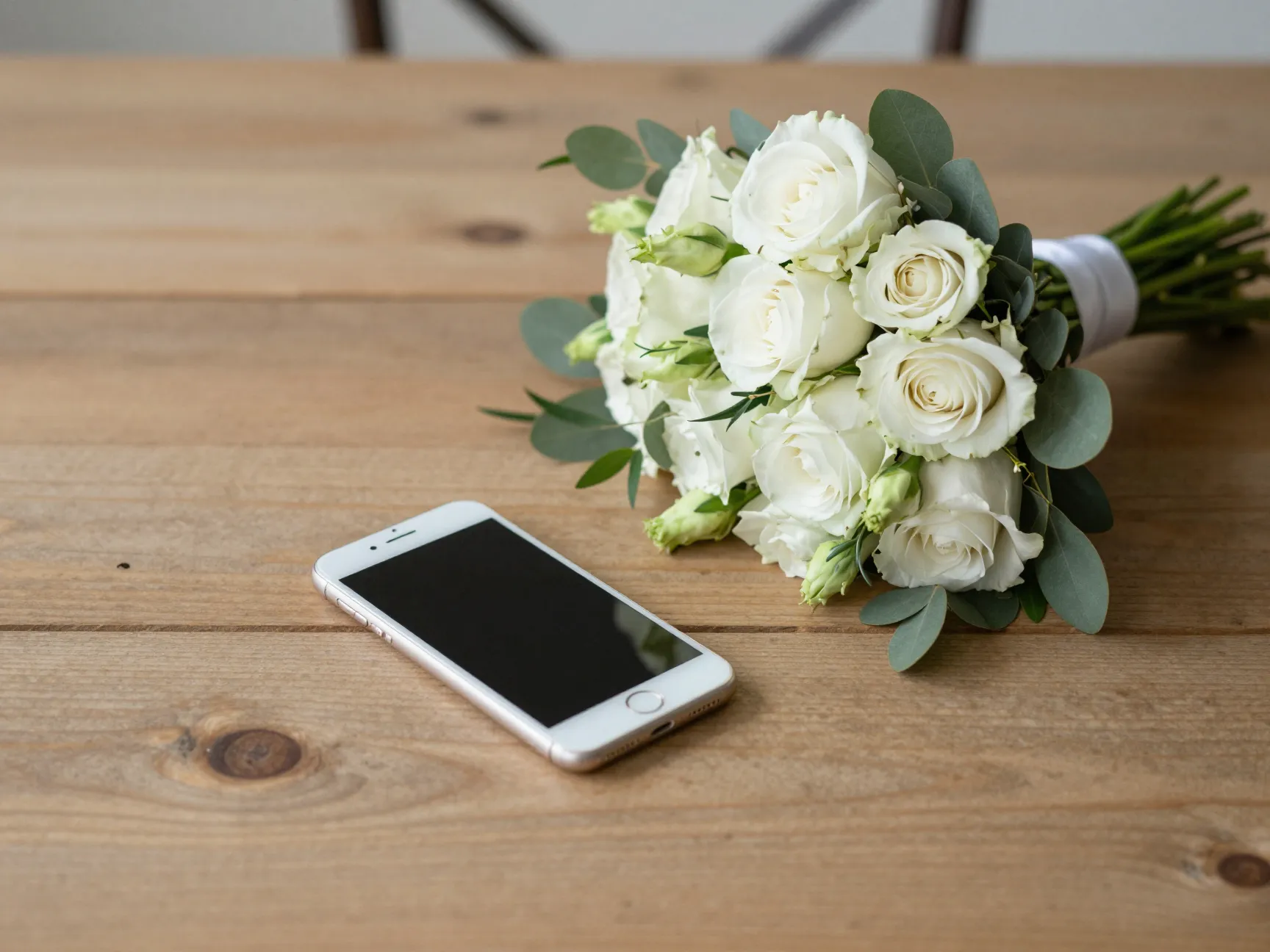
Pinterest, Instagram, and TikTok are both the best and worst things to happen to wedding planning. They’re incredible sources of inspiration — and they’re also a direct pipeline to comparison, insecurity, and budget creep.
Here’s the reality: the weddings you see on social media are curated highlights. You’re not seeing the vendor drama, the family arguments, or the moments that didn’t go as planned. You’re seeing a polished, filtered version of someone else’s day.
How to use social media wisely:
- Create a private inspiration board with a clear aesthetic direction — then stop scrolling
- Set a “social media blackout” period in the final two weeks before your wedding
- Remind yourself regularly that your wedding doesn’t need to look like anyone else’s
- Follow accounts that celebrate diverse wedding styles, not just high-budget luxury events
- Use inspiration images as a communication tool with vendors, not as a blueprint to replicate
The couples who feel most satisfied after their wedding are typically those who stayed true to their own vision — not those who chased a trend. 🌿
9. Remember What the Day Is Actually About
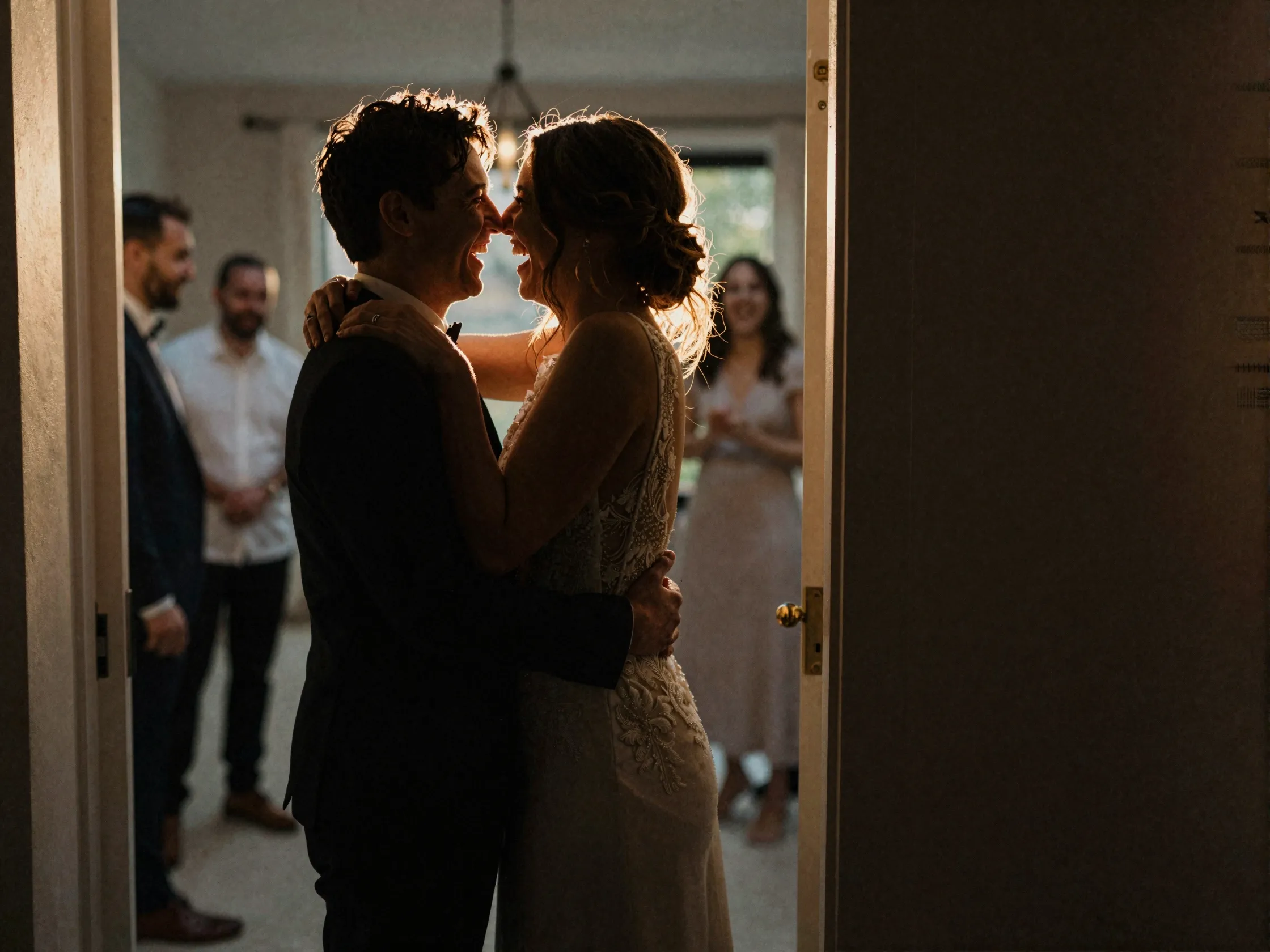
This might be the most important gem of all, and it’s the one most likely to get lost in the planning chaos. Your wedding day is a celebration of your relationship — not a performance for guests, not a content opportunity, and not a competition.
When you’re deep in the details — debating centerpiece heights and napkin fold styles — it’s easy to lose sight of the bigger picture. Step back regularly and ask yourself: “Will this matter to me in 10 years?”
A few grounding practices for the planning journey:
- Keep a photo of the two of you somewhere visible in your planning space
- Write down your “why” — why you’re getting married, what this day means to you — and revisit it when stress peaks
- Plan at least one vendor-free, planning-free date night per month
- On the actual wedding day, designate 10–15 minutes alone with your partner before the reception begins — just to breathe and be present together
💬 “No one leaves a wedding remembering the centerpieces. They remember how the room felt, how the couple looked at each other, and how the night made them feel.”
The flowers will fade. The cake will be eaten. The photos will capture the surface. But the feeling of being truly present on your wedding day? That stays with you forever. 💛
Quick Reference: The 9 Gems at a Glance
| # | The Gem | Key Action |
|---|---|---|
| 1 | Set your budget first | Build a category-by-category budget before browsing |
| 2 | Hire vendor partners | Ask partnership-focused questions in consultations |
| 3 | Shop around more | Contact more vendors than you think you need to |
| 4 | Use AI tools wisely | Automate logistics; keep personal decisions human |
| 5 | Prioritize ruthlessly | Rank priorities together as a couple |
| 6 | Build a realistic timeline | Add 15–20 min buffers between major segments |
| 7 | Communicate with your partner | Weekly check-ins + shared planning tools |
| 8 | Limit social media influence | Curate inspiration; don’t chase trends |
| 9 | Remember your “why” | Stay grounded in what the day is really about |
Conclusion: Put These Gems to Work
The best wedding planning advice we’ve ever received (9 gems) shared in this article all point toward one central truth: the couples who enjoy their wedding the most are the ones who plan with intention, communicate openly, and stay connected to what actually matters.
Here are your actionable next steps:
- This week: Sit down with your partner and set your total budget. Divide it by category using the table above.
- This month: Create your vendor priority list and begin outreach — contact more vendors than you think you need to.
- Ongoing: Schedule monthly planning check-ins and set social media boundaries that protect your vision.
- Before the wedding: Write your “why” statement and share it with your partner. Read it again the morning of your wedding.
- On the day: Put the phone down. Look at each other. Be there. 💍
Wedding planning in 2026 comes with more tools, more options, and more pressure than ever before. But the fundamentals haven’t changed. Love, clarity, and a good plan will always be the best foundation — for a wedding and for a marriage.
References
[1] Wedding Industry Statistics – https://saradoesseo.com/wedding-marketing/wedding-industry-statistics/
[2] Knots 2026 Wedding Report – https://www.jckonline.com/editorial-article/knots-2026-wedding-report/
[3] The Knot Worldwide Unveils 2026 Real Weddings Study – https://www.theknotww.com/press-releases/the-knot-worldwide-unveils-2026-real-weddings-study/
[4] Wedding Trends 2026 – https://www.thebash.com/articles/wedding-trends-2026
[5] Real Weddings Study – https://www.theknot.com/content/wedding-data-insights/real-weddings-study
[6] Future Of Marriage 2026 Trends To Watch Report – https://www.theknotww.com/blog/future-of-marriage-2026-trends-to-watch-report/
[7] Wedding Trends Defining 2026 – https://www.eventindustrynews.com/news/wedding-trends-defining-2026
[8] 2026 Wedding Market Trends – https://wedvibes.media/2026-wedding-market-trends/
[9] Wedding Trends 2026 – https://37framesphotographyblog.com/wedding-trends-2026/