8 Essential Bridal Bouquet Shapes to Define Your Wedding Style
The perfect bridal bouquet serves as more than just a beautiful accessory—it’s the defining centerpiece that ties together your entire wedding aesthetic and reflects your personal style. Whether you envision yourself walking down the aisle with a romantic cascade of flowers or a sleek, modern arrangement, understanding the 8 essential bridal bouquet shapes to define your wedding style will help you make this crucial decision with confidence.
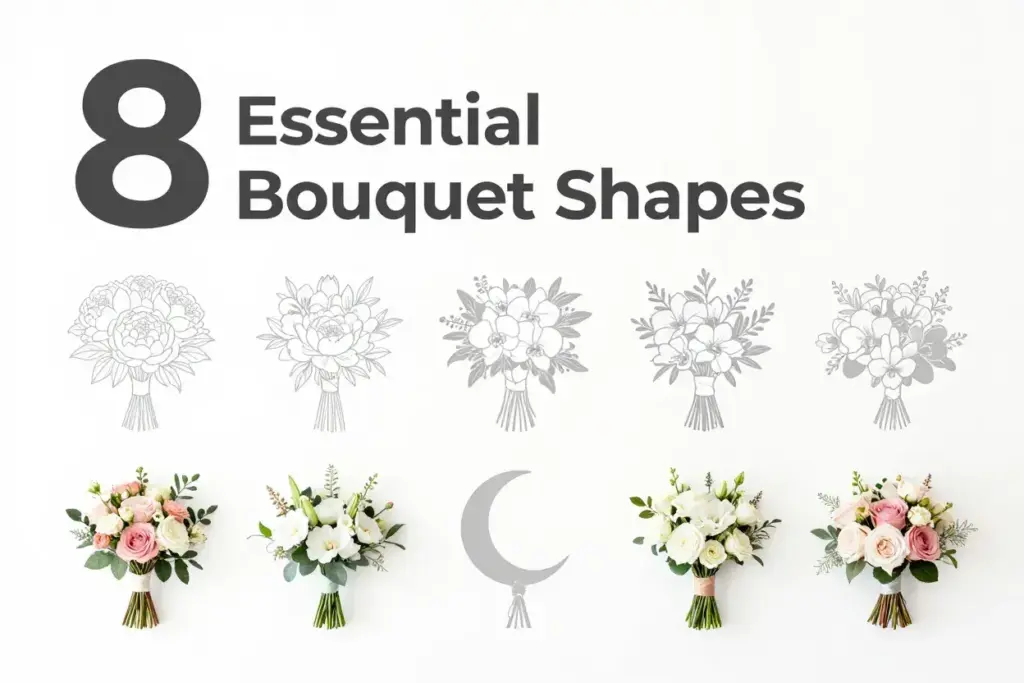
Choosing the right bouquet shape can transform your bridal look from ordinary to extraordinary. Each style carries its own personality, from timeless elegance to contemporary sophistication, and the shape you select will influence everything from your dress choice to your photographer’s approach. With wedding trends constantly evolving in 2026, brides have more options than ever to express their unique vision through floral design.
Key Takeaways
- Bouquet shapes significantly impact your overall bridal aesthetic and should complement your dress style, body type, and wedding theme
- Classic shapes like round and cascade remain popular while modern geometric and composite styles are trending in 2026
- Consider practical factors such as dress silhouette, ceremony length, and photo opportunities when selecting your bouquet shape
- Work with experienced florists who understand how different shapes affect visual proportions and can guide you toward the most flattering option
- Budget and flower availability may influence which shapes are most feasible for your specific wedding date and location
Understanding the Foundation of Bridal Bouquet Design
Before diving into the 8 essential bridal bouquet shapes to define your wedding style, it’s important to understand what makes each design unique. Bouquet shapes are determined by several key factors: the structural foundation, flower placement, overall silhouette, and visual weight distribution. These elements work together to create distinct looks that can dramatically alter your bridal appearance.
Professional florists consider multiple variables when crafting each shape, including the natural growth patterns of chosen flowers, the mechanical support required for different structures, and how the bouquet will photograph from various angles. Understanding these fundamentals helps brides make informed decisions about which shape will best serve their vision.
The visual impact of different bouquet shapes cannot be overstated. A cascading bouquet creates vertical lines that can elongate the torso, while a compact round bouquet draws attention to the waist and creates a focal point. These design principles, rooted in centuries of floral artistry, continue to influence modern bridal trends.
Factors That Influence Bouquet Shape Selection
Several practical considerations should guide your choice among the essential bridal bouquet shapes:
Body Type and Dress Style: Different shapes complement various body types and dress silhouettes. A petite bride might be overwhelmed by a large cascade, while a tall bride could carry a dramatic trailing bouquet beautifully.
Wedding Venue and Theme: Outdoor garden weddings naturally suit loose, organic shapes, while formal ballroom ceremonies call for more structured arrangements.
Personal Comfort: Consider how long you’ll be holding your bouquet and whether you’re comfortable with larger, heavier arrangements or prefer something more manageable.
Photography Goals: Discuss with your photographer how different shapes will appear in your wedding photos, particularly during key moments like the ceremony and portraits.
The Classic Collection: Traditional Bouquet Shapes That Never Go Out of Style
1. Round Bouquet (Posy Style)
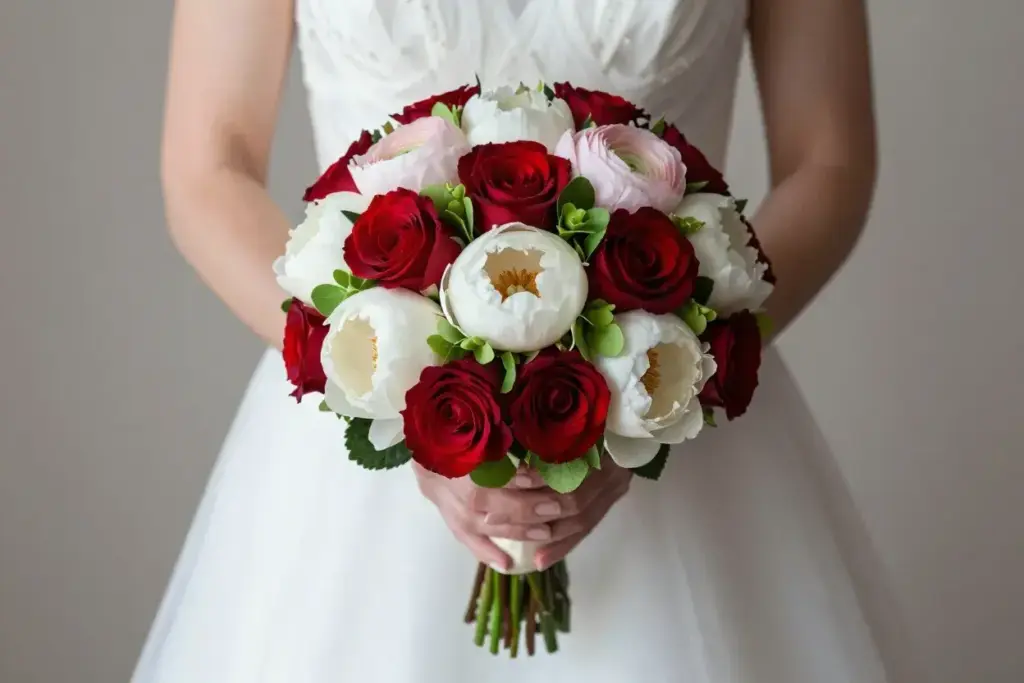
The round bouquet stands as the most recognizable and versatile of all bridal bouquet shapes. This classic design features flowers arranged in a perfect circular dome, creating a symmetrical, balanced appearance that complements virtually any wedding style. The round shape has remained popular for generations because of its timeless elegance and universal flattering qualities.
Construction and Design Elements:
Round bouquets are built on a sturdy foundation that allows flowers to be placed at uniform heights, creating the characteristic dome shape. Florists typically start with a central focal point and work outward in concentric circles, ensuring each bloom is positioned to contribute to the overall spherical silhouette. This methodical approach results in a perfectly balanced arrangement that looks beautiful from every angle.
Best Suited For:
- Classic and traditional wedding themes
- Brides wearing A-line, ball gown, or sheath dresses
- Formal ceremonies in churches or elegant venues
- Brides who prefer symmetrical, balanced aesthetics
- First-time brides seeking a foolproof, timeless choice
Flower Recommendations:
Roses, peonies, ranunculus, and hydrangeas work exceptionally well in round bouquets due to their full, rounded bloom shapes. These flowers naturally contribute to the desired spherical silhouette while providing substantial visual weight.
2. Cascade Bouquet (Waterfall Style)
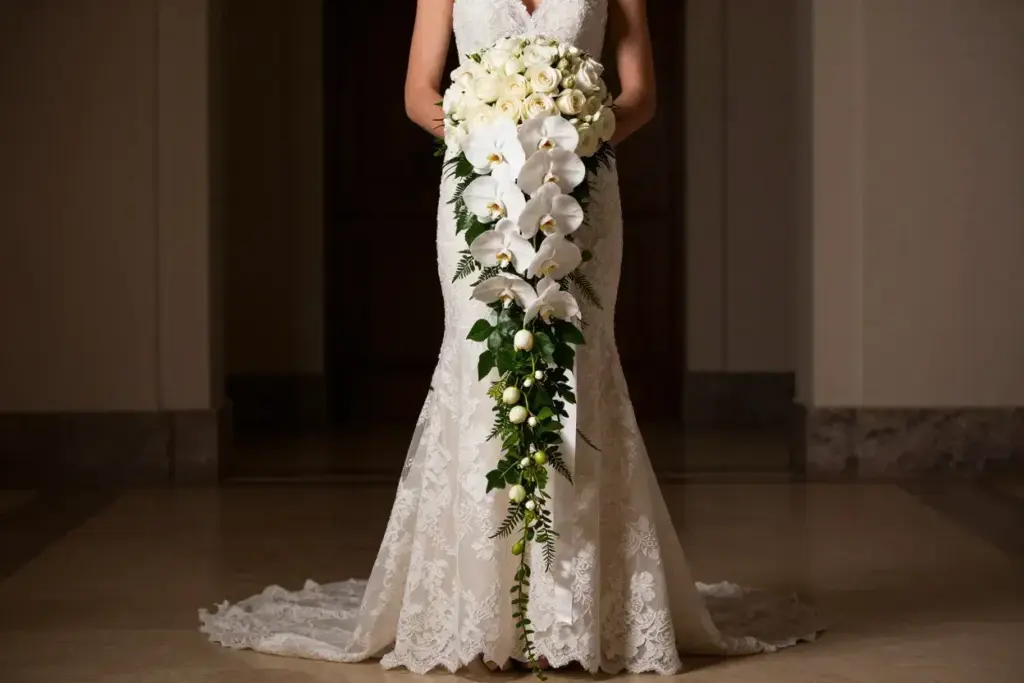
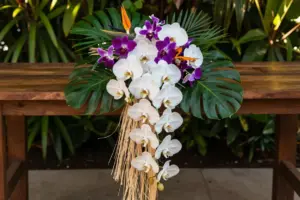
The cascade bouquet represents the epitome of bridal elegance and drama. This sophisticated shape features flowers that flow downward in a waterfall-like arrangement, creating stunning vertical lines and romantic movement. Popular during the 1980s and experiencing a major revival in 2026, cascade bouquets make a bold statement perfect for formal weddings.
Design Characteristics:
Cascade bouquets require advanced floral engineering to achieve their flowing appearance. Florists use flexible stems and trailing elements like ivy, jasmine, or long-stemmed flowers to create the downward flow. The arrangement typically features a fuller top section that gradually tapers into elegant trailing elements.
Ideal Candidates:
- Tall brides who can carry the dramatic proportions
- Formal, black-tie weddings with elegant venues
- Brides wearing fitted or mermaid-style dresses
- Traditional ceremonies with grand architectural settings
- Brides seeking maximum visual impact and photographic drama
Styling Considerations:
The cascade shape works best with long-stemmed flowers and trailing greenery. Popular choices include orchids, roses with long stems, stephanotis, and ivy. The weight distribution requires careful planning to ensure the bride can comfortably hold the arrangement throughout the ceremony.
3. Nosegay Bouquet (Compact Round)
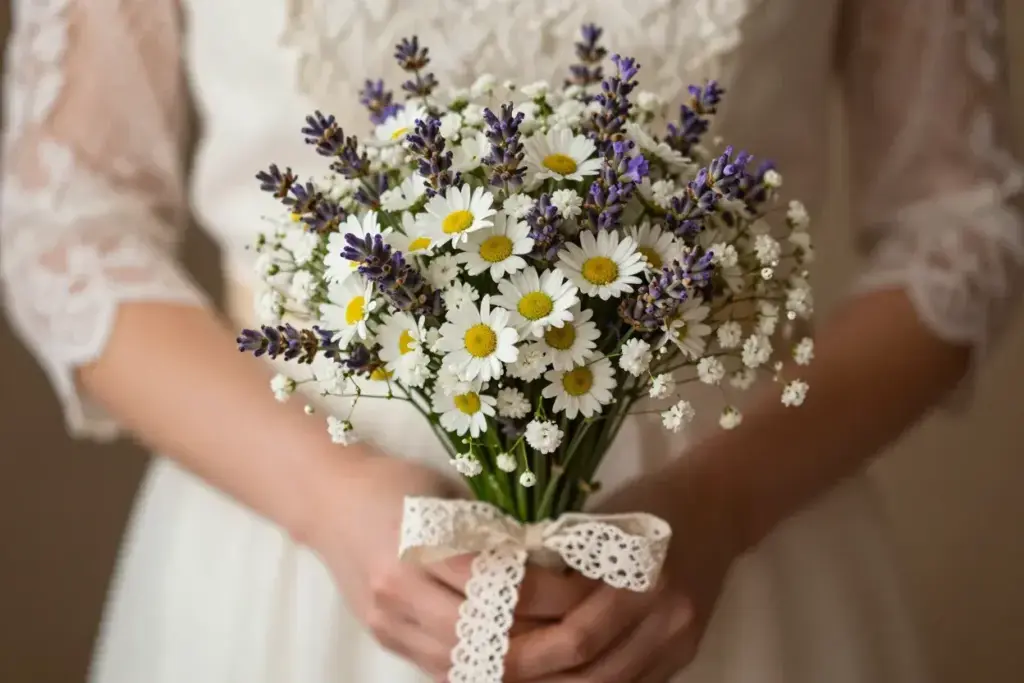
The nosegay bouquet offers a more intimate take on the classic round shape. Smaller and more compact than traditional round bouquets, nosegays feature tightly packed flowers in a neat, circular arrangement. This style originated in the Victorian era and has maintained its popularity due to its charming, delicate appearance.
Historical Significance:
Originally, nosegays served both decorative and practical purposes, with aromatic herbs and flowers believed to ward off disease and unpleasant odors. Modern nosegays maintain the compact, dense arrangement while focusing purely on aesthetic beauty.
Perfect For:
- Intimate weddings and elopements
- Petite brides who prefer proportionate arrangements
- Vintage or garden-themed weddings
- Budget-conscious couples (requires fewer flowers)
- Destination weddings where portability matters
Design Elements:
Nosegays typically measure 6-8 inches in diameter and feature flowers with similar bloom sizes for uniformity. The tight arrangement creates texture through color variation rather than structural elements.
4. Hand-Tied Bouquet (Natural Style)
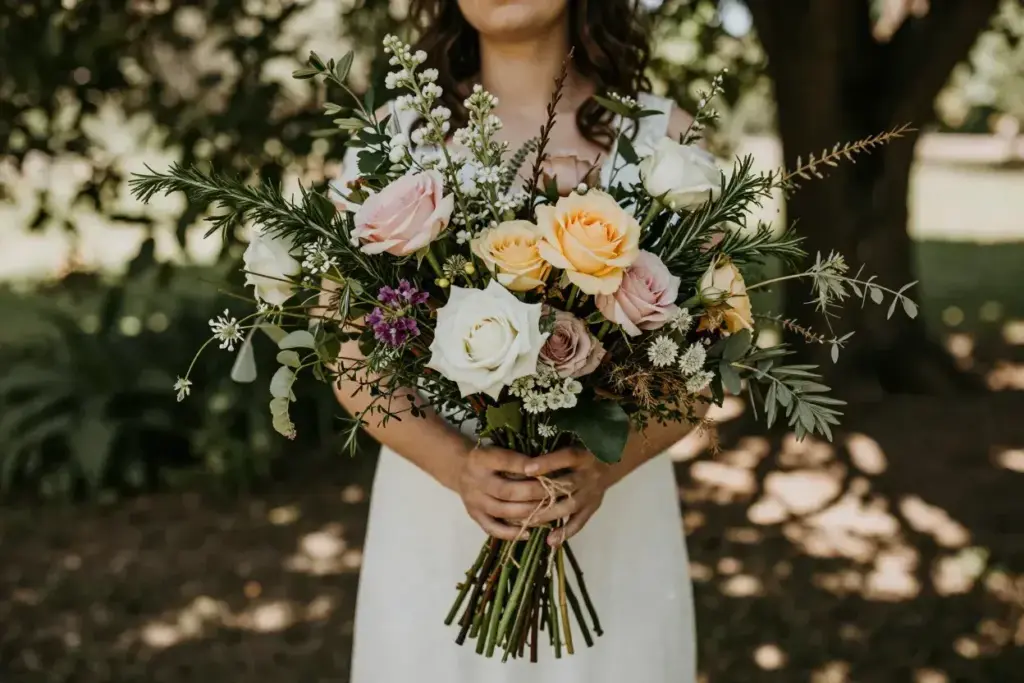
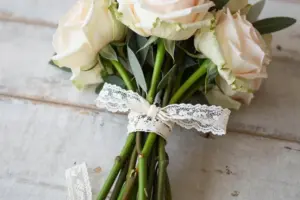
The hand-tied bouquet embraces organic beauty and natural movement. This relaxed style appears as though flowers were freshly gathered from a garden and simply tied together with ribbon. The deliberately unstructured appearance creates a romantic, effortless aesthetic that’s perfect for modern brides seeking authentic beauty.
Contemporary Appeal:
Hand-tied bouquets align perfectly with 2026’s trend toward natural, sustainable weddings. The organic shape celebrates the natural beauty of flowers without forcing them into rigid structures, appealing to environmentally conscious couples.
Styling Advantages:
- Versatile for any wedding theme
- Cost-effective due to simpler construction
- Comfortable to hold with natural grip positioning
- Photographs beautifully with organic, flowing lines
- Easy to preserve after the wedding
Flower Selection:
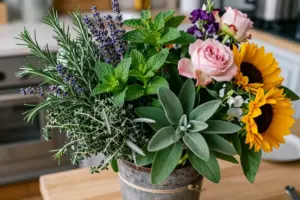
Mixed textures work exceptionally well in hand-tied arrangements. Combine garden roses, wildflowers, herbs, and varied greenery for authentic, gathered-from-nature appearance.
Modern Innovations: Contemporary Bouquet Shapes for Today’s Bride
5. Composite Bouquet (Glamelia Style)
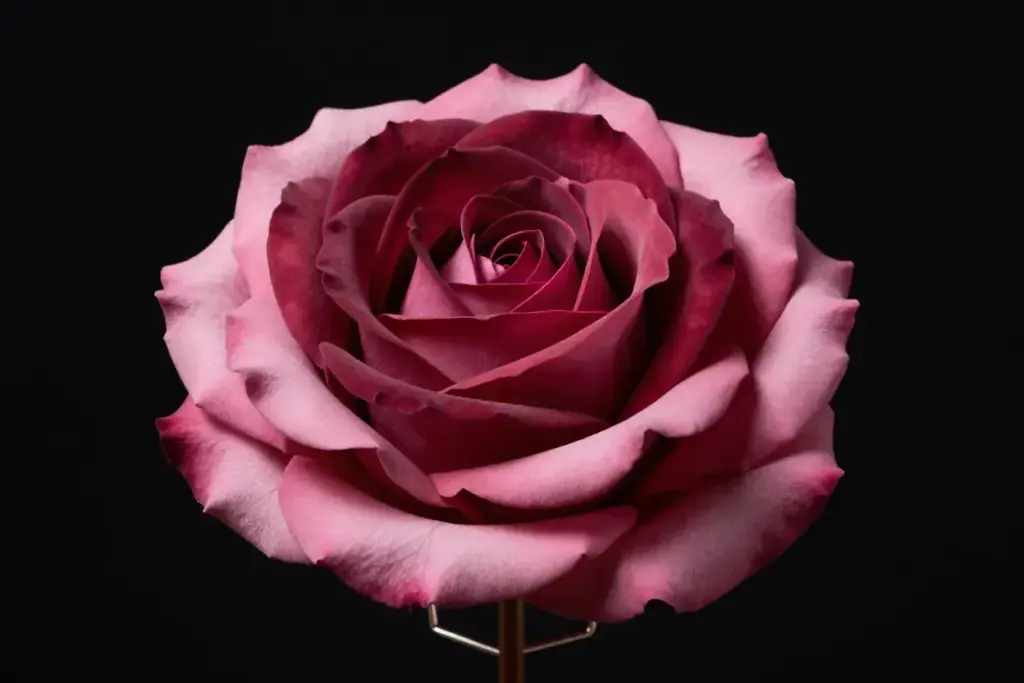
The composite bouquet represents the pinnacle of floral artistry and modern innovation. This extraordinary design technique involves deconstructing individual flowers and reconstructing them into a single, large bloom that appears almost architectural in its perfection. Also known as glamelia (a combination of gladiolus and camellia), this style creates stunning visual impact through its unexpected scale and precision.
Technical Mastery:
Creating a composite bouquet requires exceptional skill and patience. Florists carefully disassemble rose petals or other suitable flowers, then rebuild them using floral wire and tape to create one enormous, perfect bloom. The result is a sculptural masterpiece that appears both natural and impossible.
Modern Applications:
- Art deco or modern minimalist wedding themes
- Fashion-forward brides seeking unique statement pieces
- Photography-focused weddings where dramatic visuals matter
- Luxury celebrations with substantial floral budgets
- Intimate ceremonies where one stunning element makes maximum impact
Considerations:
Composite bouquets require advance planning and skilled florists. The technique is labor-intensive, making these arrangements more expensive than traditional styles. However, the unforgettable visual impact often justifies the investment for special occasions.
6. Pomander Bouquet (Sphere Style)
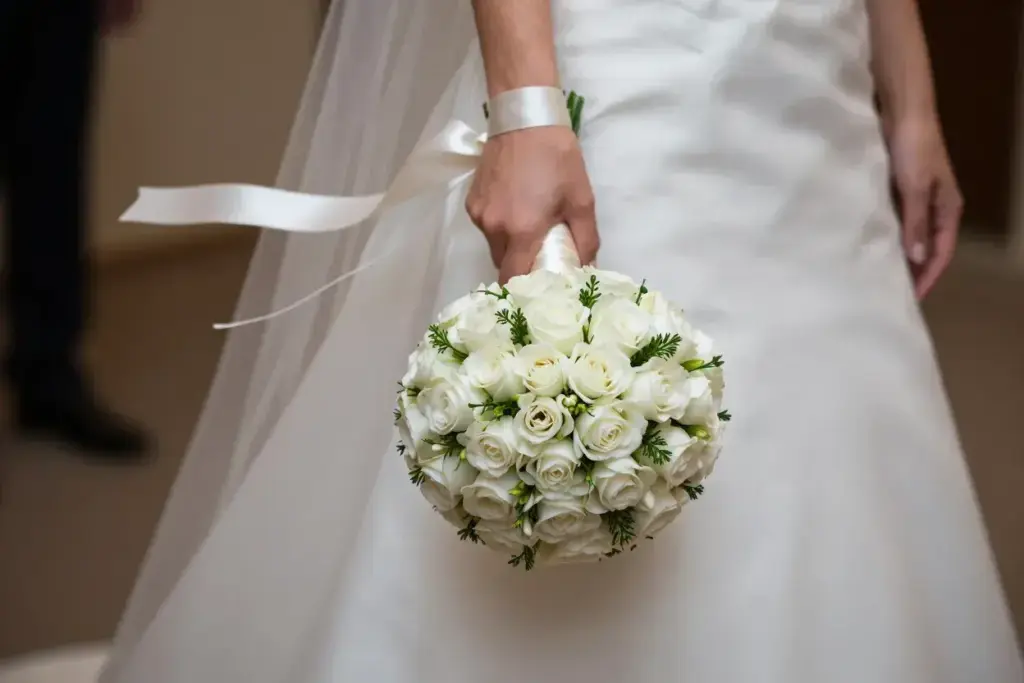
The pomander bouquet offers a playful, unexpected alternative to traditional handheld arrangements. This spherical design hangs from the wrist via a decorative ribbon or handle, creating a charming, old-world aesthetic reminiscent of Victorian accessories. The three-dimensional sphere shape provides 360-degree beauty and unique photo opportunities.
Historical Context:
Originally, pomanders were aromatic balls carried to ward off disease and mask unpleasant odors. Modern floral pomanders maintain the spherical shape while serving purely decorative purposes, often incorporating fragrant flowers and herbs as a nod to their historical roots.
Practical Benefits:
- Frees hands for ceremony elements like unity candles
- Unique photo opportunities with distinctive silhouette
- Conversation starter due to unusual design
- Comfortable wearing experience without hand fatigue
- Memorable keepsake with distinctive shape
Design Considerations:
Pomanders work best with small, densely packed flowers that maintain their shape when arranged spherically. Popular choices include baby roses, carnations, stephanotis, and small chrysanthemums.
7. Crescent Bouquet (Asymmetrical Style)
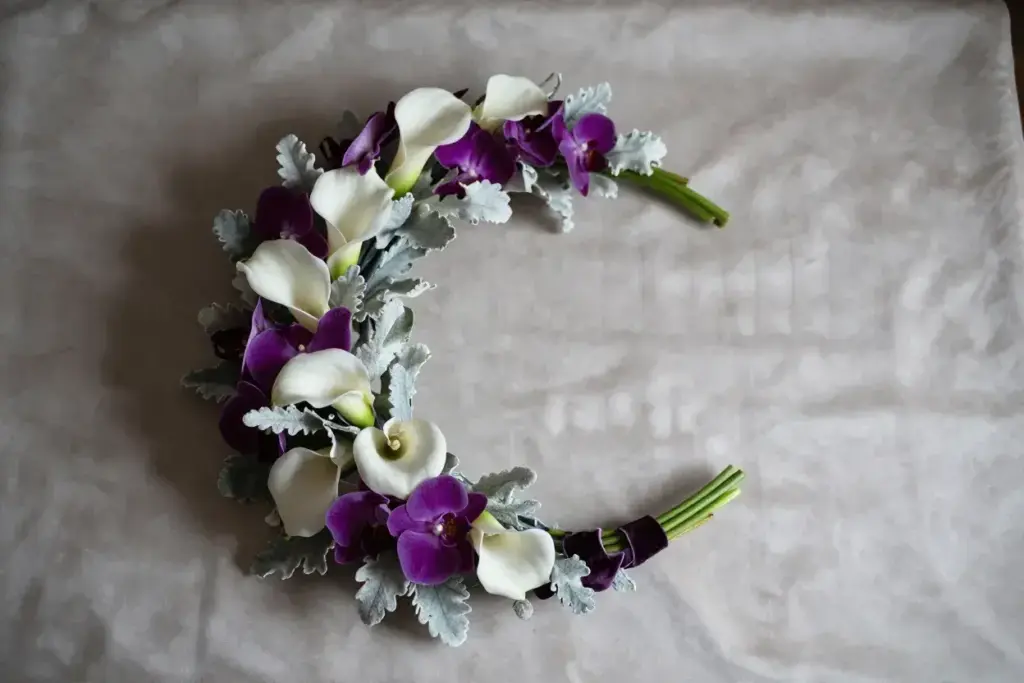
The crescent bouquet brings sophisticated asymmetry to bridal floral design. This elegant shape features a curved, moon-like silhouette that creates dynamic visual interest through its deliberate imbalance. Popular in formal European weddings, the crescent style offers refined elegance for discerning brides.
Design Philosophy:
Crescent bouquets embrace controlled asymmetry as a design principle. The curved shape creates visual movement while maintaining overall balance through careful weight distribution and color placement. This sophisticated approach appeals to brides with artistic sensibilities.
Optimal Settings:
- Formal, traditional ceremonies
- Classic or vintage-inspired wedding themes
- Elegant venue settings with architectural details
- Professional photography focused on artistic composition
- Sophisticated color palettes with refined flower choices
Technical Requirements:
Creating successful crescent bouquets requires advanced floral design skills and understanding of visual balance principles. The asymmetrical nature demands careful proportion planning to achieve elegant rather than lopsided results.
8. Structured/Geometric Bouquet (Architectural Style)
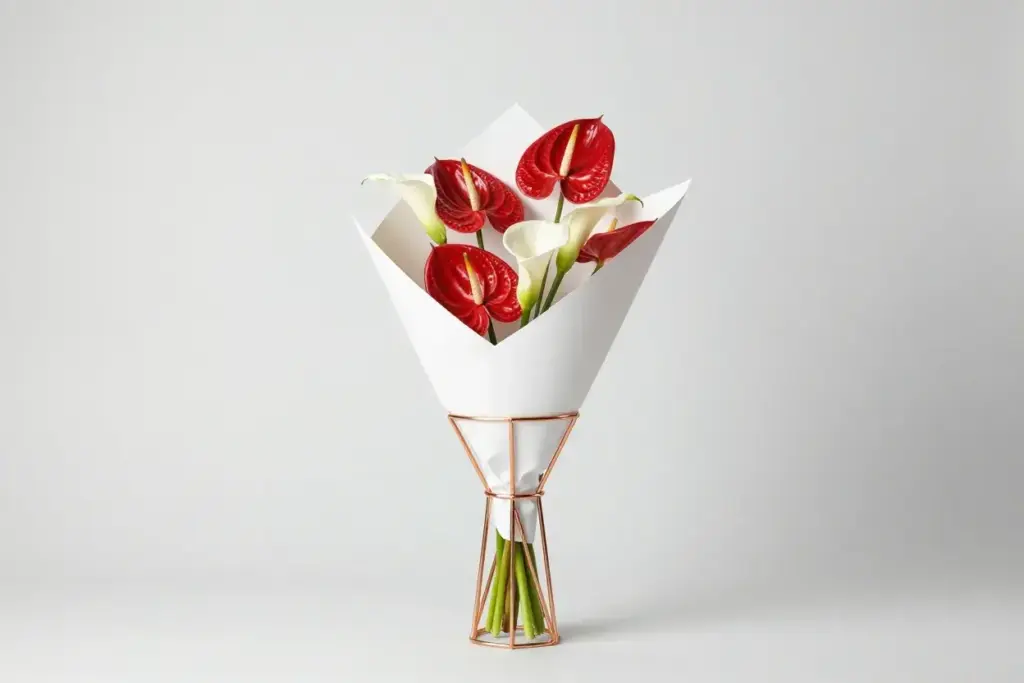
The structured bouquet represents the cutting edge of contemporary floral design. These architectural arrangements feature clean lines, geometric shapes, and modern aesthetics that appeal to minimalist brides and contemporary wedding themes. Popular geometric forms include triangular, square, and linear arrangements that challenge traditional floral expectations.
2026 Design Trends:
Geometric bouquets align perfectly with current minimalist wedding trends. These designs emphasize negative space, clean lines, and intentional structure over abundant florals, creating sophisticated, modern statements.
Contemporary Applications:
- Modern, minimalist wedding themes
- Urban venues with industrial or contemporary architecture
- Fashion-forward couples seeking editorial-style photography
- Sustainable weddings using fewer flowers more intentionally
- Artistic celebrations where design innovation matters
Material Considerations:
Structured bouquets often incorporate non-floral elements like geometric holders, modern ribbons, and architectural supports. The flower selection typically features clean-lined blooms like calla lilies, anthuriums, or carefully arranged roses.
Choosing the Perfect Shape for Your Wedding Style
Selecting among the 8 essential bridal bouquet shapes to define your wedding style requires careful consideration of multiple factors. The decision should align with your personal aesthetic, wedding theme, dress style, and practical needs. Understanding how each shape interacts with these elements ensures your choice enhances rather than conflicts with your overall bridal vision.
Matching Bouquet Shapes to Dress Styles
A-Line and Ball Gown Dresses:
These classic silhouettes pair beautifully with round, nosegay, or cascade bouquets. The structured nature of these dress styles complements traditional bouquet shapes, creating cohesive, timeless looks.
Mermaid and Fitted Dresses:
Sleek dress silhouettes work well with cascade, crescent, or structured bouquets. These shapes echo the dress’s clean lines while providing visual interest through vertical or asymmetrical elements.
Bohemian and Flowing Dresses:
Hand-tied, organic shapes complement relaxed dress styles perfectly. The natural movement of loose arrangements mirrors the free-flowing nature of bohemian gowns.
Color Coordination and Seasonal Considerations
Spring Weddings (March-May):
Pastel color palettes work beautifully with round and hand-tied bouquets featuring tulips, daffodils, and cherry blossoms. The fresh, organic shapes complement spring’s natural renewal energy.
Summer Weddings (June-August):
Bold, vibrant colors suit cascade and structured bouquets with roses, peonies, and dahlias. The dramatic shapes can handle intense summer colors without appearing overwhelming.
Fall Weddings (September-November):
Rich, warm tones pair excellently with nosegay and crescent bouquets featuring chrysanthemums, marigolds, and autumn foliage. These compact shapes showcase fall’s abundant textures.
Winter Weddings (December-February):
Deep, sophisticated colors work well with composite and pomander bouquets using roses, evergreens, and winter berries. The structured shapes complement winter’s formal aesthetic.
Working with Professional Florists
Collaborating with experienced florists is crucial for successfully executing your chosen bouquet shape. Professional florists understand the technical requirements of different designs and can guide you toward shapes that align with your vision, budget, and practical needs.
Questions to Ask Your Florist
Technical Expertise:
- “Which of these bouquet shapes do you specialize in?”
- “What structural support will my chosen shape require?”
- “How will this shape hold up throughout a long ceremony?”
Design Consultation:
- “Which shape would you recommend for my dress style?”
- “How can we incorporate my color preferences into this shape?”
- “What flowers work best for my chosen bouquet style?”
Practical Considerations:
- “What’s the weight difference between these bouquet shapes?”
- “How far in advance do you need to start this design?”
- “What backup plans exist if preferred flowers aren’t available?”
Budget Considerations by Shape
Most Budget-Friendly:
Hand-tied and nosegay bouquets typically require fewer flowers and less labor, making them cost-effective choices for budget-conscious couples.
Moderate Investment:
Round and crescent bouquets require moderate skill and flower quantities, placing them in the mid-range price category.
Premium Investment:
Cascade, composite, and structured bouquets demand advanced skills and additional materials, positioning them as luxury options.
Preserving Your Bouquet After the Wedding
Regardless of which shape you choose from the 8 essential bridal bouquet shapes to define your wedding style, preserving your bouquet creates lasting memories of your special day. Different preservation methods work better with certain shapes, making it important to plan preservation early in your design process.
Preservation Methods by Shape
Pressing and Framing:
Flat shapes like hand-tied and crescent bouquets press well for framed displays. The natural arrangement translates beautifully to two-dimensional presentations.
Freeze-Drying:
Three-dimensional shapes like round, cascade, and pomander bouquets maintain their original form through professional freeze-drying processes.
Resin Preservation:
Composite and structured bouquets can be preserved in clear resin for modern, artistic displays that maintain their architectural integrity.
Conclusion
The 8 essential bridal bouquet shapes to define your wedding style offer endless possibilities for expressing your unique vision and personality. From the timeless elegance of round bouquets to the contemporary sophistication of geometric designs, each shape brings distinct advantages and aesthetic qualities to your wedding day.
Remember that your bouquet choice should reflect your personal style while complementing your dress, venue, and overall wedding theme. Consider practical factors like comfort, photography goals, and budget alongside aesthetic preferences to make the best decision for your celebration.
Take these actionable next steps:
- Schedule consultations with experienced florists who specialize in your preferred bouquet shapes
- Bring photos of your dress, venue, and inspiration images to design meetings
- Consider your wedding timeline and how long you’ll be holding your bouquet
- Discuss preservation options early in the planning process
- Plan a trial arrangement if choosing complex shapes like composite or structured designs
Your bridal bouquet will be featured in countless photos and memories from your wedding day. Investing time in understanding these essential bouquet shapes ensures you’ll choose an arrangement that perfectly captures your style and enhances your bridal beauty for years to come.
References
[1] American Institute of Floral Designers. “Bridal Bouquet Construction Techniques.” Professional Floral Design Manual, 2026.
[2] Wedding Industry Report. “2026 Bridal Trends and Preferences Survey.” Bridal Association of America, January 2026.
[3] International Florist Association. “Historical Development of Bridal Bouquet Styles.” Floral Design History Quarterly, Vol. 15, 2025.
[4] Professional Wedding Photographers Association. “Impact of Bouquet Shapes on Wedding Photography.” Photography Techniques Annual, 2026.