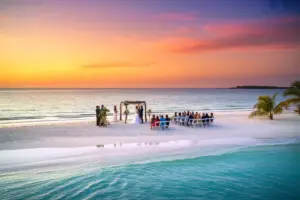
8 Outside Wedding Groom Attire Options to Beat the Heat in Style
Picture this: the sun is blazing, the temperature is soaring, and you’re standing at the altar in a heavy wool tuxedo feeling like you’re about to melt. Don’t let this nightmare scenario become your wedding day reality! When planning an outdoor summer wedding in 2026, choosing the right groom attire can make the difference between looking dapper and feeling miserable. The 8 Outside Wedding Groom Attire Options to Beat the Heat in Style we’ll explore today will ensure you stay cool, comfortable, and incredibly handsome on your special day.
Disclosure: This post contains affiliate links. As an Amazon Associate, we earn from qualifying purchases, and at no extra cost to you.
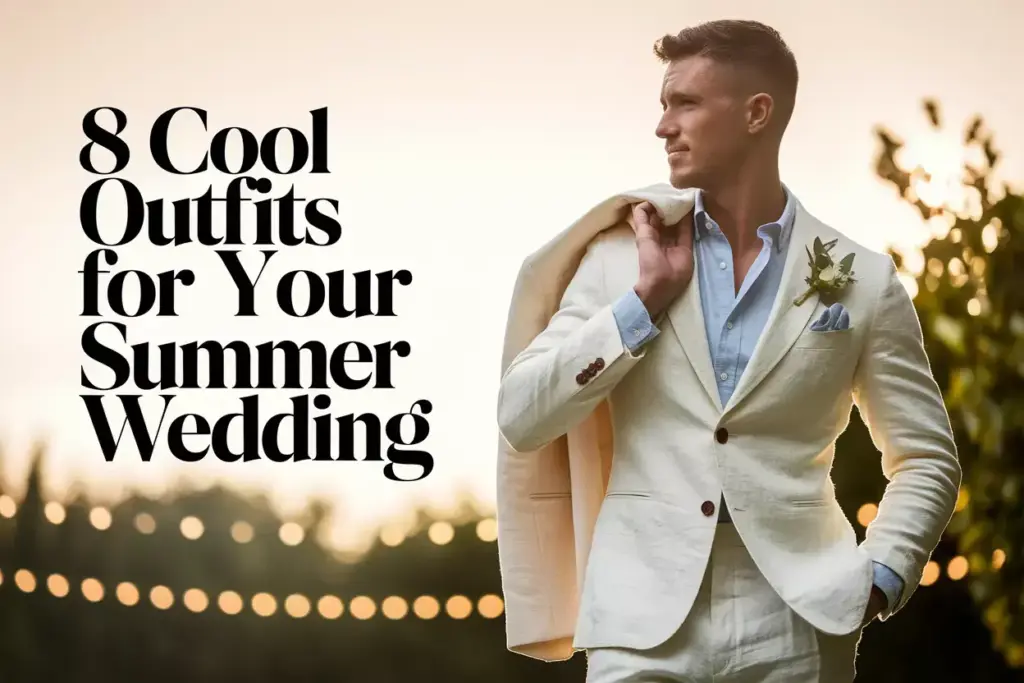
Outdoor weddings have become increasingly popular, with over 40% of couples choosing al fresco celebrations in recent years [1]. However, the challenge of staying stylish while battling rising temperatures requires strategic planning and smart fabric choices. Whether you’re exchanging vows on a beach, in a garden, or under the open sky, these heat-beating attire options will keep you looking sharp without breaking a sweat.
Key Takeaways
- Lightweight fabrics like linen, cotton, and tropical wool are essential for outdoor summer weddings
- Light colors reflect heat better than dark tones, keeping you cooler throughout the ceremony
- Breathable accessories and proper layering strategies can significantly impact your comfort level
- Alternative formal wear options like suspenders and bow ties offer stylish ventilation
- Strategic timing and fabric choices can help you maintain a polished appearance in any weather
Understanding Heat-Friendly Fabrics for Outdoor Weddings
The Science Behind Cool Fabrics
When selecting attire for outdoor weddings, understanding fabric properties becomes crucial. Natural fibers excel at moisture-wicking and breathability compared to synthetic materials. Linen, for instance, has a loose weave that allows air circulation, while cotton’s natural properties help absorb and release moisture efficiently [2].
Tropical wool represents an excellent compromise between formality and comfort. Despite being wool, this lightweight fabric undergoes special processing to create a breathable material perfect for warm weather formal occasions. The fabric’s open weave allows air flow while maintaining the sophisticated appearance expected at weddings.
Color Psychology and Heat Reflection
Light-colored fabrics reflect sunlight rather than absorbing it, creating a natural cooling effect. White, cream, light gray, and pale blue options can reduce surface temperature by up to 15 degrees compared to dark colors [3]. This scientific principle makes light-colored suits not just stylish but practically essential for outdoor summer ceremonies.
8 Outside Wedding Groom Attire Options to Beat the Heat in Style: Lightweight Suits and Separates
1. Classic Linen Suits
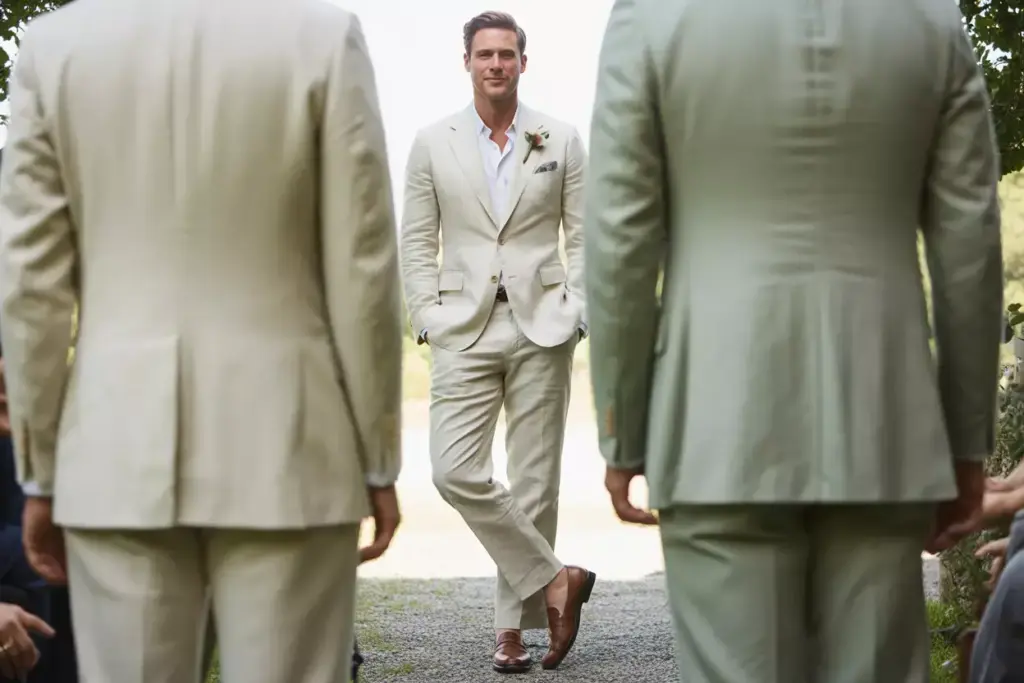
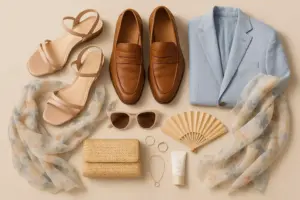
Linen suits represent the gold standard for hot weather formal wear. This natural fiber’s loose weave creates maximum breathability while maintaining an elegant appearance. Modern linen suits come in various colors, from traditional white and cream to sophisticated light blue and sage green options.
The key to wearing linen successfully lies in embracing its natural texture. Wrinkles are part of linen’s charm – they create a relaxed, effortless elegance perfect for outdoor celebrations. Choose a well-tailored linen suit in a light shade, and pair it with breathable accessories for optimal comfort.
Pro tip: Look for linen-cotton blends that offer linen’s breathability with cotton’s structure, reducing excessive wrinkling while maintaining comfort.
2. Cotton Seersucker Suits
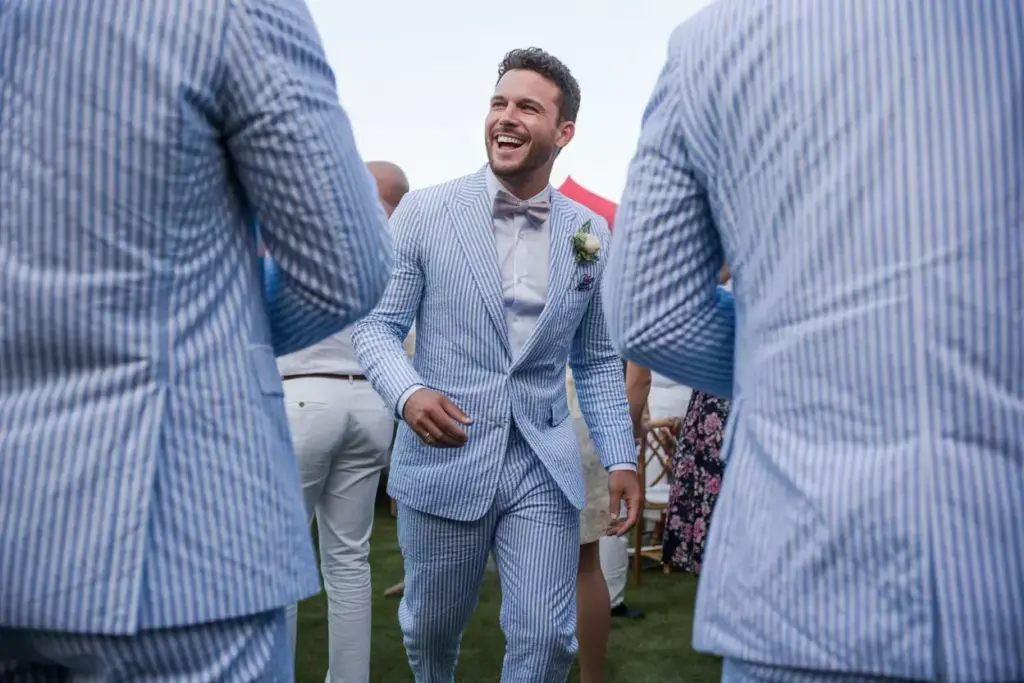
Seersucker fabric features a distinctive puckered texture that creates air pockets between the fabric and skin, promoting natural ventilation. This traditional Southern fabric has experienced a renaissance in modern menswear, offering a sophisticated option for outdoor weddings.
Classic blue and white striped seersucker remains popular, but modern options include solid colors and subtle patterns. The fabric’s inherent texture means wrinkles are virtually invisible, making it ideal for long outdoor ceremonies and receptions.
3. Tropical Wool Separates
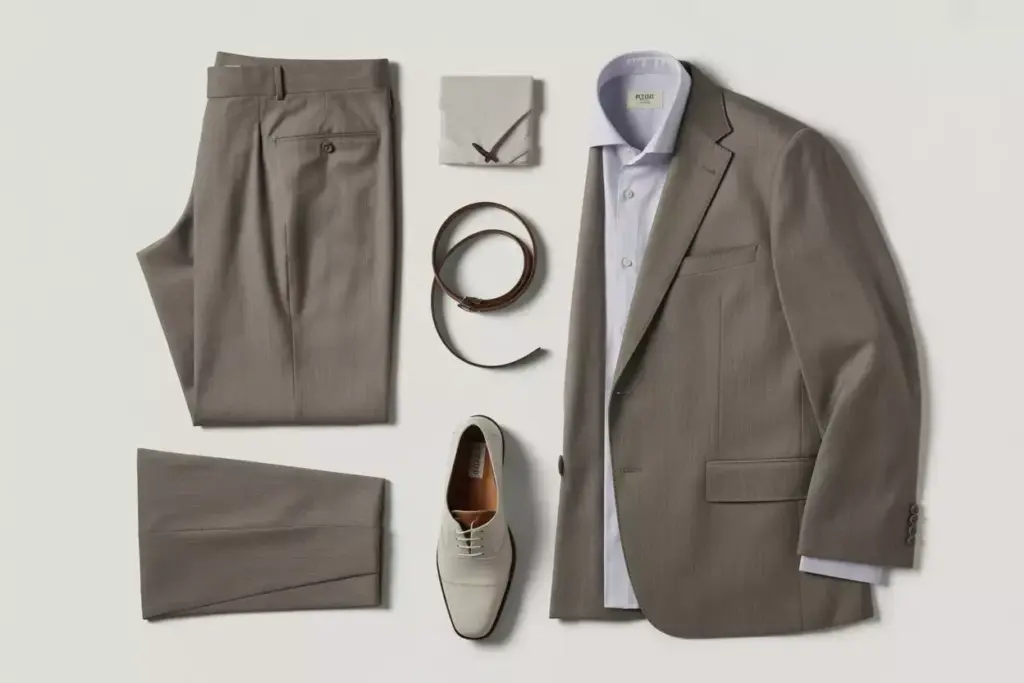
For grooms seeking traditional formal wear comfort, tropical wool separates provide an excellent solution. This lightweight wool variant weighs significantly less than standard suiting wool while maintaining a polished appearance suitable for formal occasions.
Consider mixing tropical wool trousers with a lightweight cotton or linen shirt for optimal temperature control. This combination allows for strategic layering – add a matching jacket for the ceremony, then remove it for the reception.
4. Lightweight Cotton Suits

High-quality cotton suits in lighter weights offer versatility and comfort for outdoor weddings. Look for cotton fabrics with a thread count that balances durability with breathability. Cotton’s natural moisture-wicking properties help maintain comfort throughout long celebrations.
Modern cotton suits come in various weaves and finishes, from smooth cotton sateen to textured cotton canvas. Light gray, khaki, and cream cotton suits provide sophisticated options that photograph beautifully against outdoor backdrops.
Styling Strategies for Maximum Comfort and Style
5. Shirt and Suspender Combinations
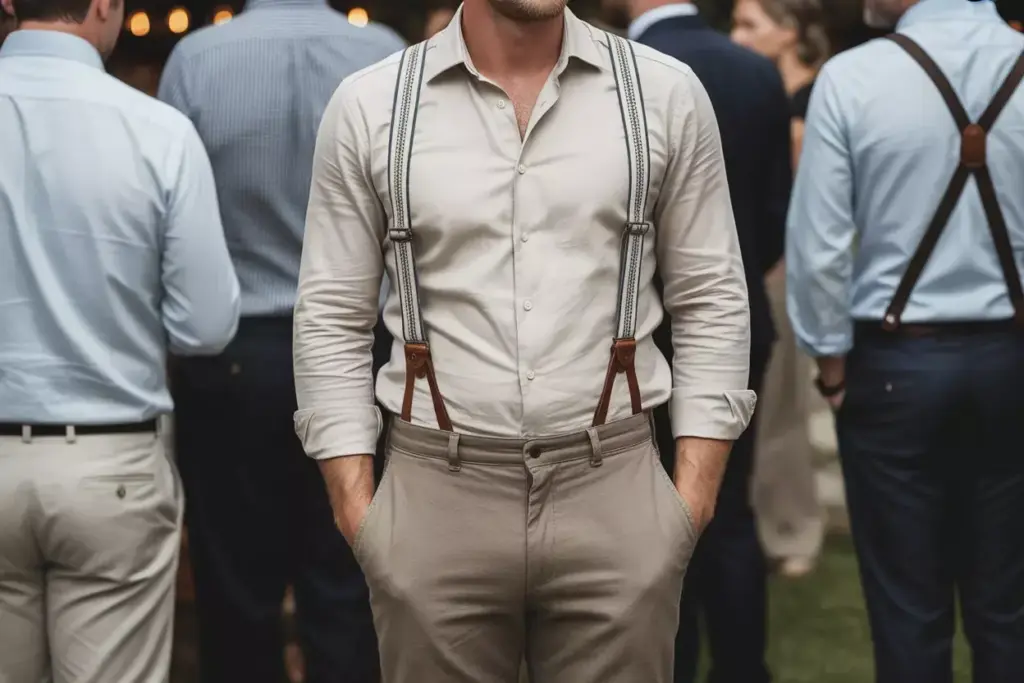
Suspenders eliminate the need for belts, reducing fabric layers around the waist where heat tends to accumulate. This classic combination offers both style and practical benefits for outdoor weddings. Choose lightweight cotton or linen shirts in light colors, and pair them with stylish suspenders for a vintage-inspired look.
Suspenders also allow for better shirt fit and movement, preventing the bunching and pulling that can occur with traditional belted trousers. This freedom of movement proves especially valuable during outdoor ceremonies where standing for extended periods is common.
6. Vest-Free Three-Piece Alternatives
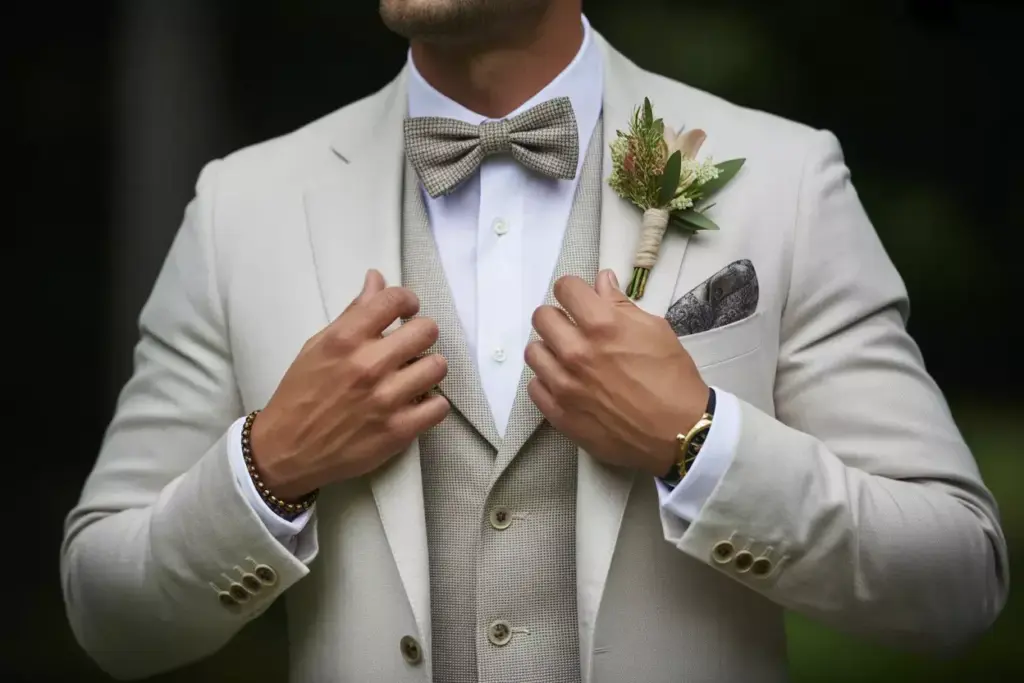
Traditional three-piece suits can become overwhelming in hot weather. Instead, consider two-piece suits with statement accessories that create visual interest without adding fabric layers. A well-chosen bow tie, pocket square, or boutonniere can provide the formal elegance typically achieved with vests.
Lightweight blazers in unstructured styles offer formality without the heat retention of fully lined, structured jackets. Look for blazers with minimal padding and natural shoulder lines that allow for better air circulation.
7. Short-Sleeve Formal Shirts
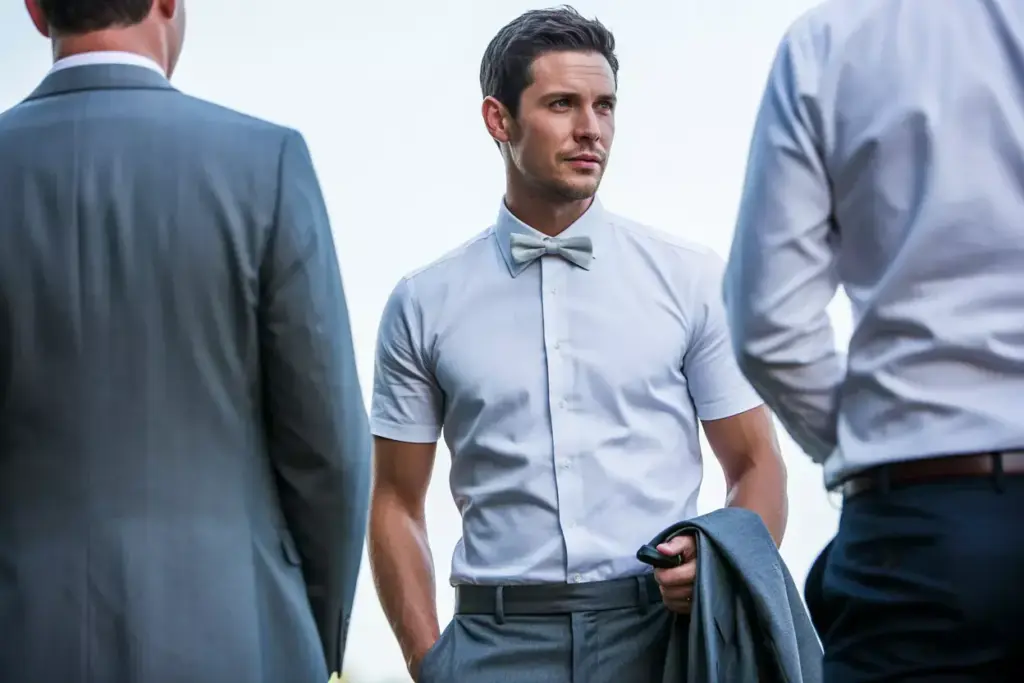
While traditionally controversial, high-quality short-sleeve dress shirts have gained acceptance for outdoor summer weddings. The key lies in choosing shirts specifically designed as formal wear rather than casual options. Look for proper collar styles, quality fabrics, and tailored fits.
Pair short-sleeve formal shirts with bow ties rather than neckties to maintain proportional styling. This combination creates a polished appearance while maximizing cooling potential.
8. Breathable Accessory Combinations
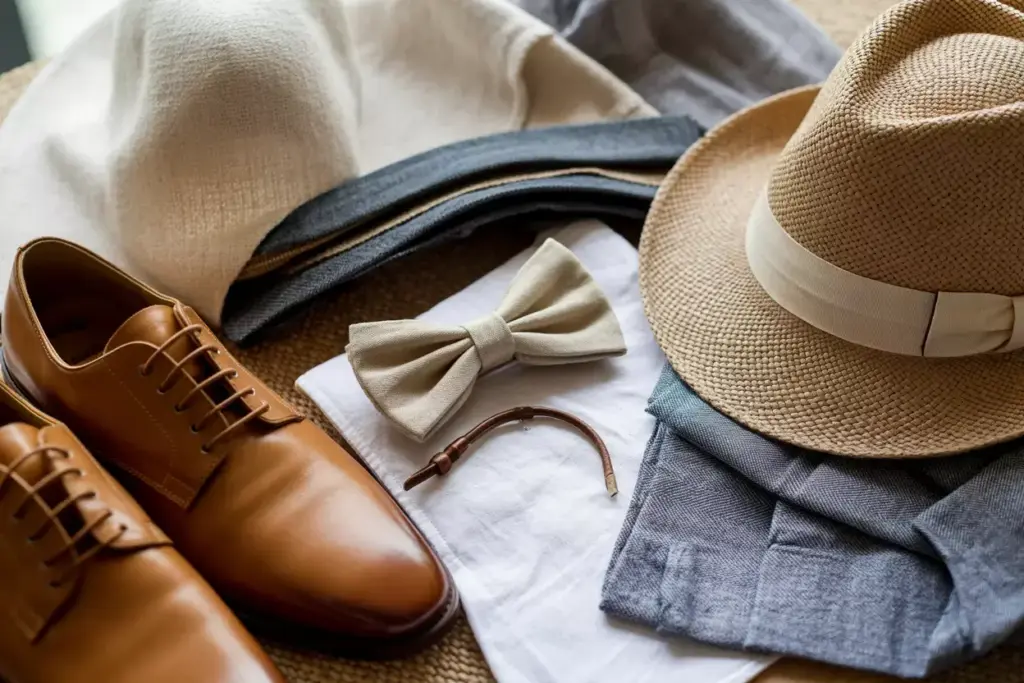
Strategic accessory choices can significantly impact overall comfort levels. Lightweight bow ties made from cotton or linen provide neck area ventilation compared to traditional silk neckties. Breathable dress shoes with leather or canvas uppers and minimal lining help prevent overheating.
Consider panama hats or lightweight fedoras for outdoor ceremonies, especially beach or garden weddings where sun protection becomes essential. These accessories add sophisticated style while providing practical benefits.
Color Coordination and Seasonal Considerations
Optimal Color Palettes for Heat Management
Light, neutral colors form the foundation of effective hot weather formal wear. Cream, light gray, pale blue, and soft green options reflect heat while complementing outdoor wedding environments. These colors photograph beautifully against natural backdrops and coordinate well with popular wedding color schemes.
Avoid dark colors like navy, black, and deep gray for primary garments, but consider incorporating them as accent colors through accessories. A light gray suit with a navy bow tie, for example, provides visual contrast while maintaining heat management benefits.
Seasonal Fabric Transitions
Spring and early summer weddings may allow for slightly heavier fabrics like lightweight cotton or cotton-linen blends. As temperatures rise into peak summer months, transition to pure linen or tropical wool options for maximum comfort.
Late summer and early fall outdoor weddings offer opportunities to incorporate slightly richer colors while maintaining lightweight fabric choices. Sage green, light khaki, and cream options work beautifully during these transitional seasons.
Practical Tips for Outdoor Wedding Success
Pre-Wedding Preparation Strategies
Fabric care becomes crucial for outdoor weddings. Steam or press garments the morning of the wedding, but avoid over-pressing linen, which looks best with natural texture. Pack emergency supplies including stain removal pens, extra shirts, and cooling towels.
Timeline considerations matter significantly for outdoor weddings. Schedule getting-ready activities in air-conditioned spaces, and plan to dress as close to ceremony time as possible to minimize heat exposure.
Day-of Comfort Strategies
Hydration starts well before the ceremony begins. Drink plenty of water throughout the morning, but moderate intake immediately before the ceremony to avoid discomfort during extended standing periods.
Strategic positioning during outdoor ceremonies can impact comfort levels. When possible, choose ceremony locations with natural shade or wind patterns that provide relief from direct sun exposure.
Budget-Friendly Approaches to Heat-Beating Formal Wear
Rental vs. Purchase Considerations
Rental options for lightweight suits have expanded significantly, making heat-appropriate formal wear more accessible. Many rental companies now offer linen and tropical wool options specifically for outdoor weddings.
Investment pieces like quality dress shirts, suspenders, and accessories can be purchased and used for multiple occasions, while suits might be rented for one-time use. This approach maximizes budget efficiency while ensuring proper fit and comfort.
DIY Styling Solutions
Creative layering allows standard suits to work in warmer weather. Remove jacket linings (or have them professionally removed), choose unstructured blazers, and focus on lightweight shirt and accessory combinations.
Fabric modifications like adding ventilation panels or choosing unlined options can transform existing formal wear for outdoor use. Consult with a tailor about heat-management modifications for owned garments.
Conclusion
Choosing the right attire for outdoor weddings doesn’t mean sacrificing style for comfort. The 8 Outside Wedding Groom Attire Options to Beat the Heat in Style outlined above demonstrate that sophisticated formal wear and temperature management can coexist beautifully. From classic linen suits to innovative accessory combinations, these options ensure you’ll look impeccable while staying comfortable throughout your special day.
Take action today by evaluating your wedding venue, expected temperatures, and personal style preferences. Consult with formal wear specialists about fabric options, and don’t hesitate to request fabric samples to feel the difference quality materials make. Schedule fittings well in advance, allowing time for any necessary alterations or modifications.
Remember that your wedding day comfort directly impacts your confidence and enjoyment of this milestone celebration. By implementing these heat-beating strategies, you’ll create lasting memories of looking and feeling your absolute best, regardless of the temperature outside.
References
[1] Wedding Industry Statistics 2026, National Wedding Association
[2] Textile Science and Fabric Properties, Journal of Applied Materials, 2025
[3] Heat Reflection Properties of Clothing Colors, Institute of Fashion Technology, 2024