8 Essential Tips for Using Outdoor Photo Booths (Rain or Shine!)
Picture this: guests are laughing, posing, and creating unforgettable memories at an outdoor celebration when suddenly, dark clouds roll in and raindrops begin to fall. While indoor events never face this dilemma, outdoor photo booths must be prepared for Mother Nature’s unpredictable moods. Whether planning a beach wedding, garden party, or corporate picnic, these 8 Essential Tips for Using Outdoor Photo Booths (Rain or Shine!) will ensure picture-perfect moments regardless of weather conditions.
Disclosure: This post contains affiliate links. As an Amazon Associate, we earn from qualifying purchases, and at no extra cost to you.
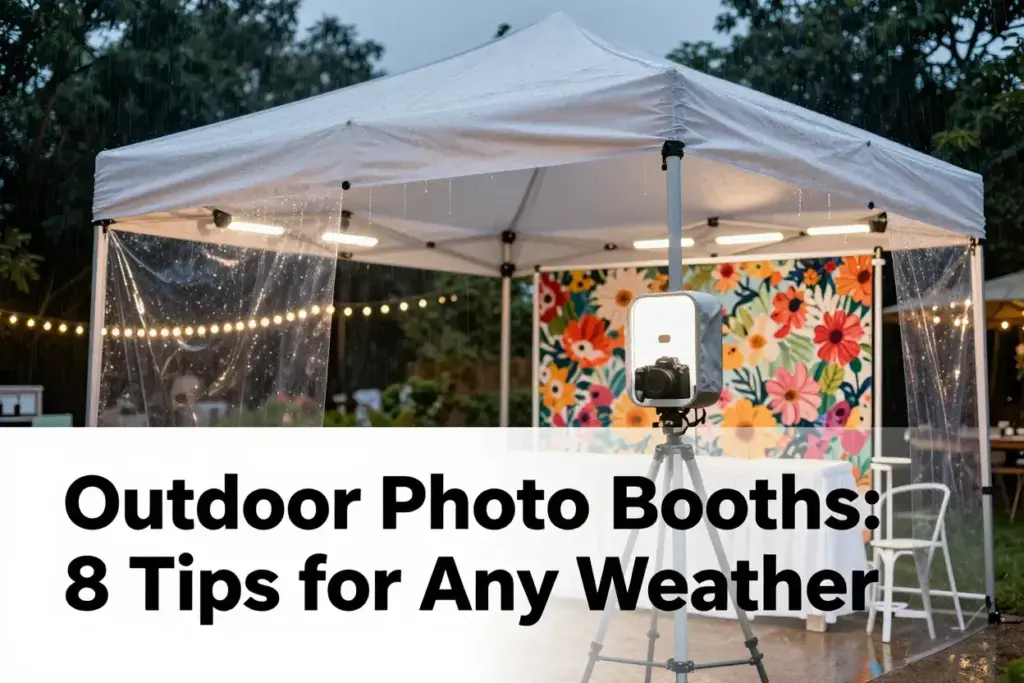
Outdoor photo booths have become increasingly popular for events, offering natural lighting and scenic backdrops that indoor setups simply cannot match. However, success depends on proper planning, weatherproofing, and adaptability. From protecting expensive equipment to maintaining guest comfort, outdoor photo booth operations require specialized knowledge and preparation strategies.
Key Takeaways
- Weather protection is crucial – invest in quality canopies, waterproof equipment covers, and backup plans for severe weather conditions
- Power management requires portable battery solutions and weatherproof electrical connections to ensure uninterrupted operation
- Lighting adaptability from natural daylight to artificial evening illumination determines photo quality throughout the event
- Equipment anchoring and wind-resistant setups prevent damage and ensure guest safety during outdoor conditions
- Guest comfort features like weather shields and easy access paths encourage participation regardless of weather
1. Master Weather Protection and Equipment Safety
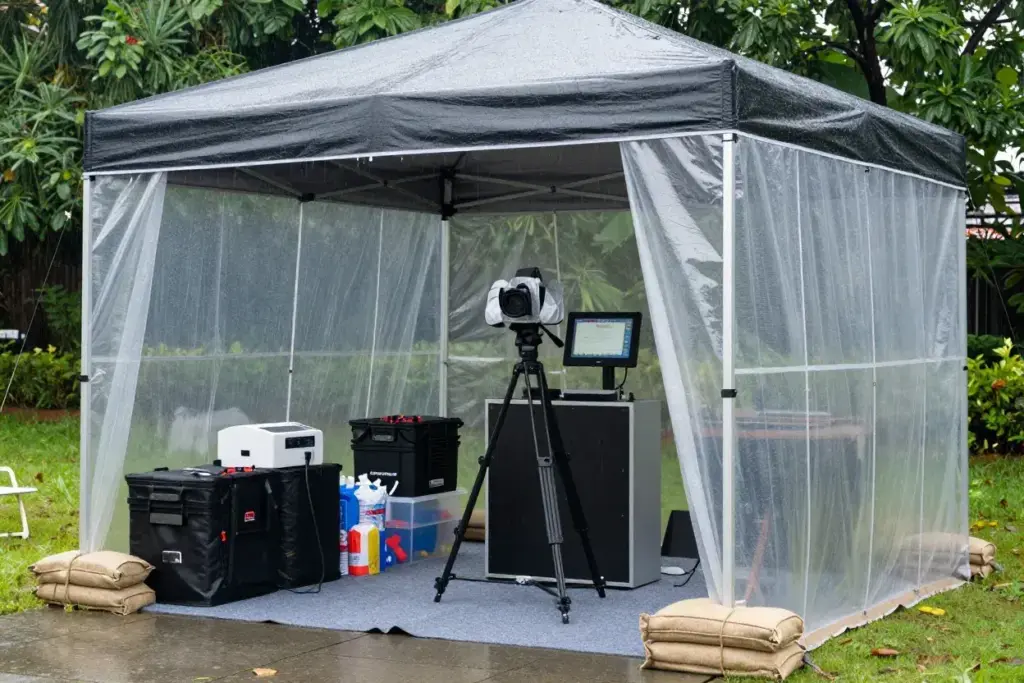
The foundation of successful outdoor photo booth operations lies in comprehensive weather protection strategies. Professional-grade canopies serve as the primary defense against rain, wind, and harsh sunlight, but selecting the right shelter requires careful consideration of size, material, and anchoring systems.
Essential Weather Protection Equipment
Waterproof canopies should feature heavy-duty vinyl or polyester construction with sealed seams and reinforced stress points. A minimum 10×10 foot coverage area accommodates standard photo booth setups while providing adequate guest space. Clear side panels offer additional protection while maintaining visibility and airflow.
Equipment covers protect cameras, printers, and electronics from moisture damage. Custom-fitted rain covers for specific camera models ensure full functionality while maintaining weather protection. Waterproof storage containers safeguard props, costumes, and backup equipment during unexpected weather changes.
Wind Resistance and Anchoring
Sandbags and weighted bases provide essential stability for lightweight equipment. Professional setups require a minimum of 40 pounds per canopy leg to withstand moderate wind conditions. Guy lines and stakes offer additional anchoring for fabric elements and backdrop systems.
Equipment positioning within the protected area maximizes weather resistance. Electronics should be placed furthest from canopy openings, while backup equipment remains easily accessible in weatherproof storage.
“Proper weather protection isn’t just about keeping equipment dry – it’s about maintaining professional service quality regardless of conditions.” – Event Photography Association [1]
2. Optimize Power Solutions for Outdoor Environments
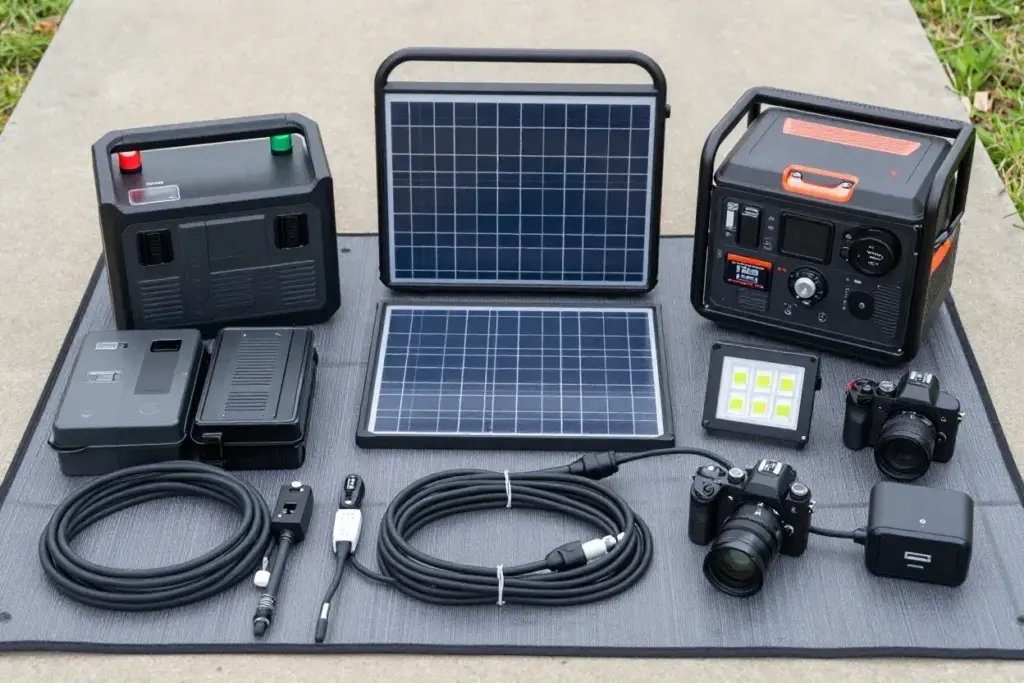
Reliable power management distinguishes professional outdoor photo booth operations from amateur setups. Unlike indoor venues with readily available electrical outlets, outdoor locations demand portable power solutions and careful energy consumption planning.
Battery-Powered Equipment Options
High-capacity portable batteries provide 8-12 hours of continuous operation for cameras, lighting, and printing equipment. Lithium-ion battery packs offer superior performance in varying temperature conditions compared to traditional lead-acid alternatives.
Solar charging systems supplement battery power during extended outdoor events. Portable solar panels can maintain battery levels throughout daylight hours, extending operational time without requiring generator backup.
Generator Backup Systems
Quiet-running generators serve as reliable backup power sources for extended events or high-demand equipment. Inverter generators produce clean power suitable for sensitive electronics while maintaining noise levels appropriate for social gatherings.
Weatherproof electrical connections prevent power interruptions during adverse conditions. Ground fault circuit interrupter (GFCI) protection ensures electrical safety in wet conditions, while weatherproof extension cords and junction boxes maintain reliable connections.
Power Consumption Management
Energy-efficient LED lighting significantly reduces power requirements compared to traditional tungsten or halogen alternatives. Modern LED panels provide superior color accuracy while consuming 75% less energy than conventional lighting systems.
Smart power distribution involves prioritizing essential equipment during low-battery situations. Cameras and basic lighting take precedence over non-essential accessories like decorative lighting or charging stations for guest devices.
3. Perfect Lighting Techniques for Changing Conditions
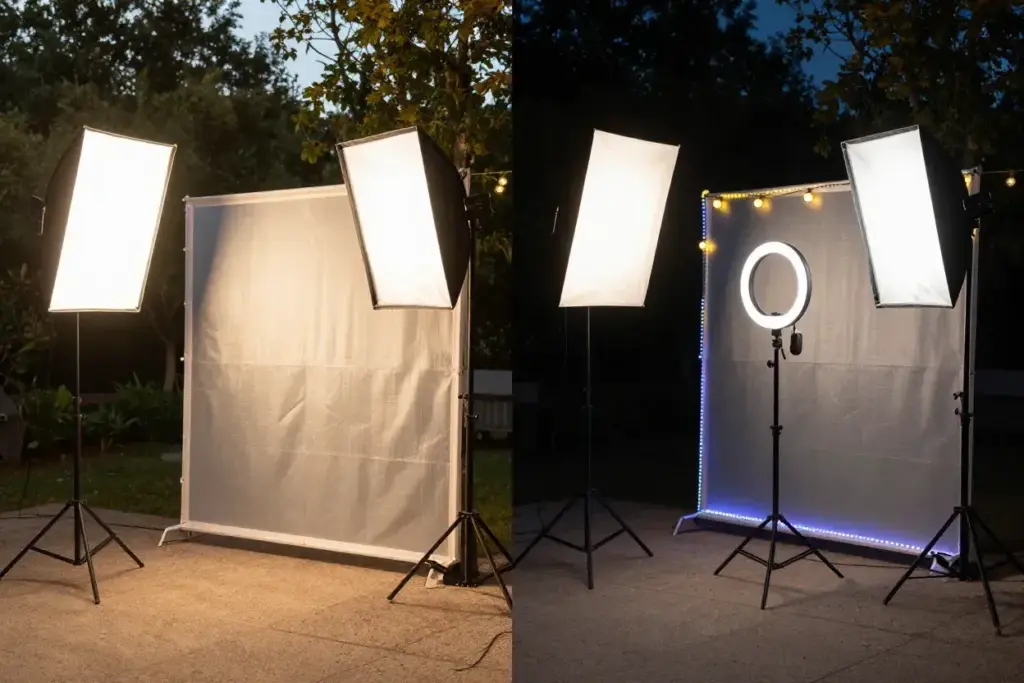
Outdoor lighting presents unique challenges as natural conditions change throughout the event duration. Mastering adaptive lighting techniques ensures consistent photo quality from bright afternoon sunshine to romantic evening ambiance.
Natural Light Management
Golden hour optimization takes advantage of the warm, flattering light occurring during the first hour after sunrise and final hour before sunset. Positioning the photo booth to capture this natural illumination creates stunning backdrop lighting without additional equipment.
Harsh sunlight mitigation requires diffusion techniques to prevent unflattering shadows and overexposed highlights. Diffusion panels and reflector systems soften direct sunlight while maintaining adequate illumination levels for quality photography.
Artificial Lighting Solutions
Portable LED panels provide consistent, adjustable lighting regardless of natural conditions. Modern LED systems offer color temperature control, allowing operators to match ambient lighting conditions or create specific mood effects.
Ring lights and softboxes eliminate harsh shadows while providing flattering illumination for portrait photography. Battery-powered options ensure mobility and weather resistance while maintaining professional lighting quality.
Evening and Night Photography
String lights and ambient lighting create magical evening atmospheres while providing sufficient illumination for photo booth operations. LED strip lights integrated into backdrop designs offer both decorative appeal and functional lighting.
Flash photography techniques become essential as natural light diminishes. External flash units with diffusion attachments provide controlled illumination while maintaining natural-looking results.
4. Design Weather-Resistant Backdrop Systems
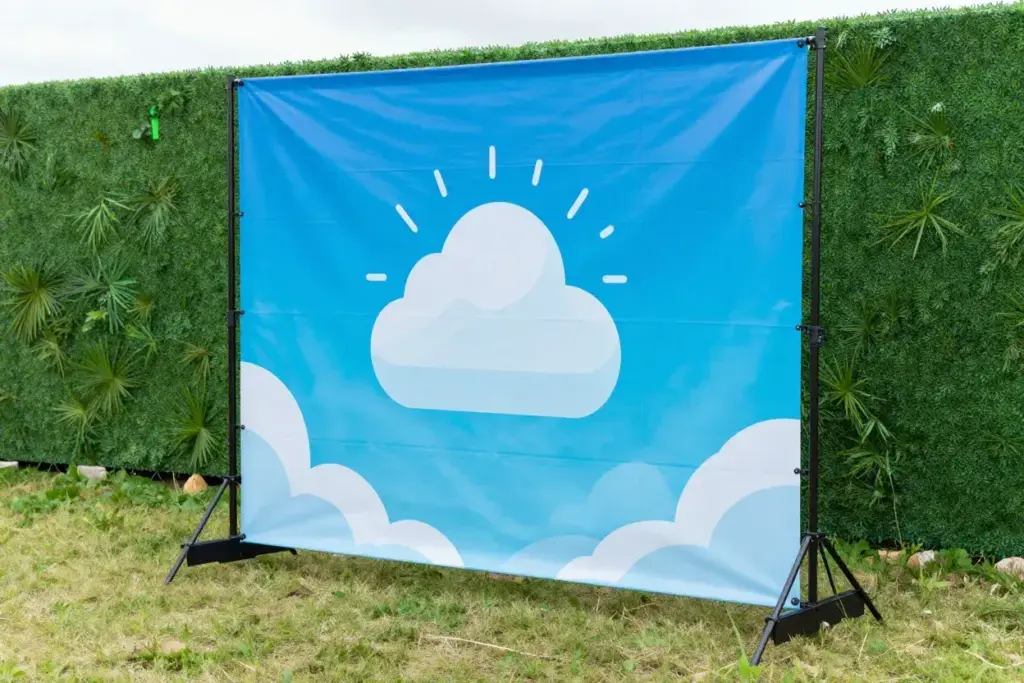
Creative backdrop design for outdoor photo booths requires balancing aesthetic appeal with weather resistance and structural stability. Traditional paper backdrops simply cannot withstand outdoor conditions, necessitating specialized materials and mounting systems.
Durable Material Selection
Vinyl banners offer excellent weather resistance while maintaining vibrant colors and sharp graphics. Heavy-duty vinyl withstands wind, rain, and UV exposure without fading or tearing, making it ideal for extended outdoor use.
Fabric backdrops treated with weather-resistant coatings provide elegant draping effects while resisting moisture damage. Polyester blends offer superior durability compared to cotton alternatives while maintaining professional appearance.
Natural Integration Options
Living walls and greenery backdrops integrate seamlessly with outdoor environments while providing unique photographic opportunities. Artificial foliage offers weather resistance and consistent appearance throughout varying conditions.
Architectural elements like pergolas, arches, or decorative screens provide permanent backdrop solutions for venues hosting regular outdoor events. These structures accommodate changing decorative themes while maintaining weather protection.
Modular and Portable Systems
Telescoping backdrop stands offer quick setup and breakdown while providing adjustable height and width configurations. Weighted base systems ensure stability without requiring permanent installation or ground penetration.
Interchangeable panel systems allow backdrop customization throughout events while maintaining structural integrity. Magnetic connection systems enable quick backdrop changes without tools or complex hardware.
5. Implement Smart Prop and Accessory Management
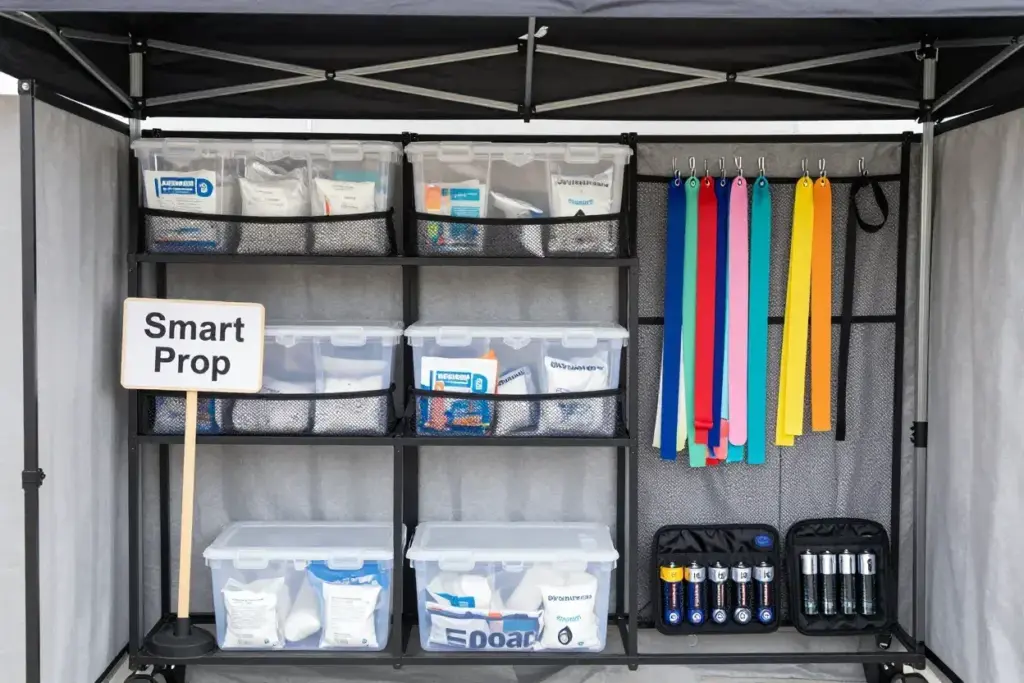
Outdoor photo booth props face unique challenges from wind displacement, moisture damage, and temperature fluctuations. Effective prop management systems ensure accessories remain organized, accessible, and in excellent condition throughout events.
Weatherproof Storage Solutions
Clear storage containers with tight-fitting lids protect props from moisture while maintaining visibility for quick selection. Silica gel packets prevent condensation damage to paper props and delicate accessories.
Hanging organization systems within the photo booth canopy keep frequently used props easily accessible while protecting them from ground moisture and wind displacement. Mesh pockets and hook systems provide organized storage without consuming valuable floor space.
Wind-Resistant Prop Design
Weighted prop bases prevent lightweight accessories from blowing away during windy conditions. Magnetic attachments secure props to metal backdrop frames while allowing easy removal for guest use.
Fabric and flexible materials withstand wind better than rigid alternatives while maintaining visual appeal. Ribbon streamers and fabric flowers create movement and visual interest without breaking in moderate wind conditions.
Temperature-Sensitive Considerations
Adhesive prop elements may fail in extreme temperatures, requiring alternative attachment methods for outdoor use. Velcro systems and mechanical fasteners provide reliable connections regardless of temperature fluctuations.
Electronic props like light-up accessories require battery management in temperature extremes. Cold weather battery performance decreases significantly, necessitating backup power sources and insulated storage.
6. Ensure Guest Comfort and Accessibility
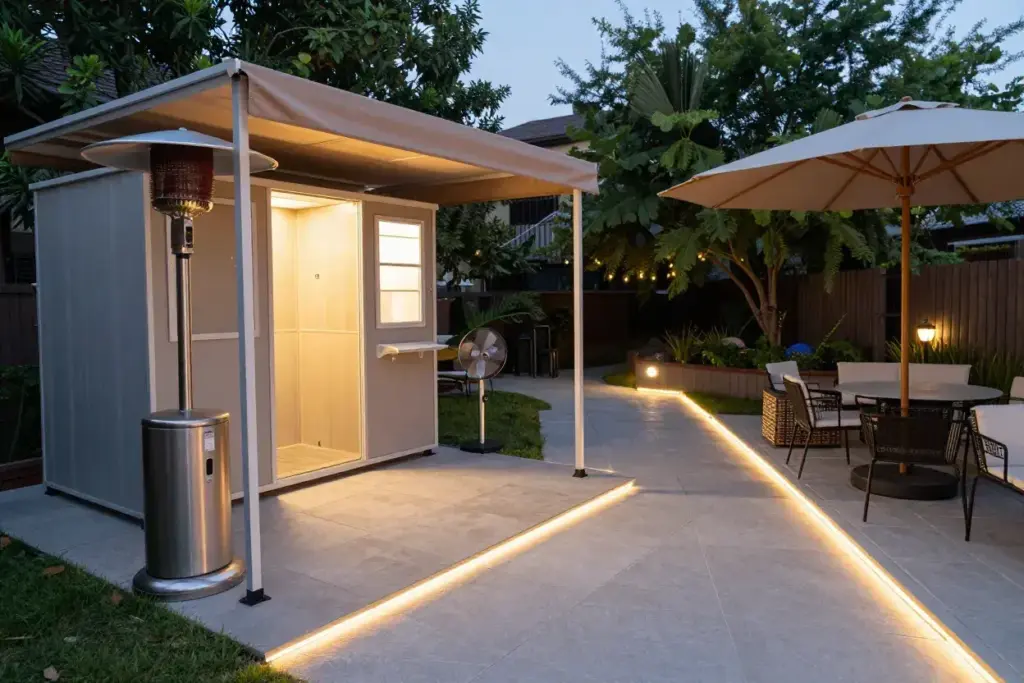
Guest participation directly correlates with comfort levels and accessibility of outdoor photo booth setups. Weather conditions significantly impact guest willingness to participate, making comfort considerations essential for successful operations.
Weather Comfort Features
Heating elements extend photo booth usability during cool weather conditions. Portable patio heaters provide warmth zones around the photo booth area, encouraging guest participation during chilly evenings.
Cooling solutions become essential during hot weather events. Portable fans and misting systems create comfortable environments while avoiding equipment damage from excessive moisture.
Accessibility Improvements
Stable flooring systems prevent slips and falls on wet grass or uneven terrain. Interlocking floor tiles or portable platforms create safe, level surfaces for guests wearing formal attire or mobility aids.
Clear pathways to and from the photo booth prevent congestion and safety hazards. Rope lighting or solar path lights illuminate walkways during evening events while maintaining aesthetic appeal.
Guest Convenience Features
Umbrella stations provide immediate weather protection for guests moving to and from the photo booth. Towel stations allow guests to dry hands or remove moisture before handling props or posing for photos.
Seating areas near the photo booth encourage longer interaction times and group participation. Weather-resistant furniture maintains comfort while withstanding outdoor conditions throughout events.
7. Plan Comprehensive Backup Strategies
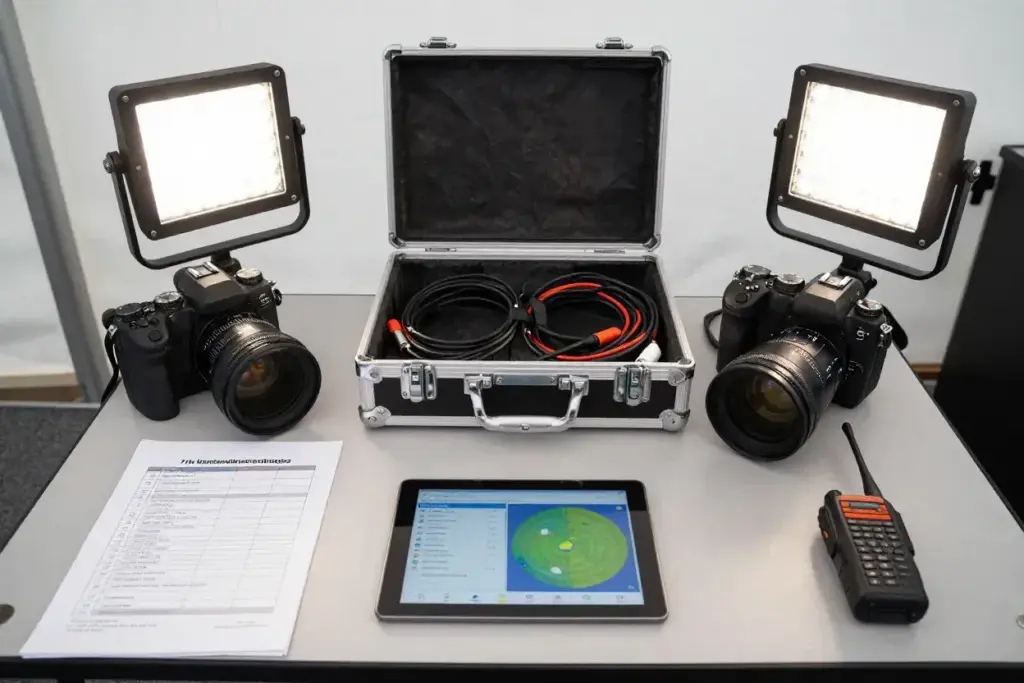
Professional outdoor photo booth operations require multiple contingency plans addressing equipment failure, severe weather, and unexpected challenges. Comprehensive backup strategies ensure service continuity regardless of circumstances.
Equipment Redundancy
Backup cameras prevent service interruption due to equipment failure or weather damage. Identical camera models ensure consistent photo quality and eliminate operator learning curves during emergency substitutions.
Spare lighting equipment maintains professional photo quality when primary systems fail. Modular lighting systems allow partial replacement without complete setup changes.
Severe Weather Protocols
Indoor backup locations provide alternatives when outdoor conditions become unsafe or unsuitable. Pre-arranged indoor spaces with adequate power and space accommodate photo booth operations during severe weather.
Equipment evacuation procedures protect valuable electronics during rapidly deteriorating conditions. Quick-disconnect systems and wheeled transport cases enable rapid equipment relocation.
Communication Systems
Weather monitoring apps provide real-time updates on changing conditions, allowing proactive responses to approaching weather systems. Lightning detection systems ensure guest and operator safety during thunderstorm conditions.
Client communication protocols keep event organizers informed of weather-related decisions and backup plan implementations. Clear decision trees eliminate confusion during high-stress weather situations.
8. Master Setup and Breakdown Efficiency
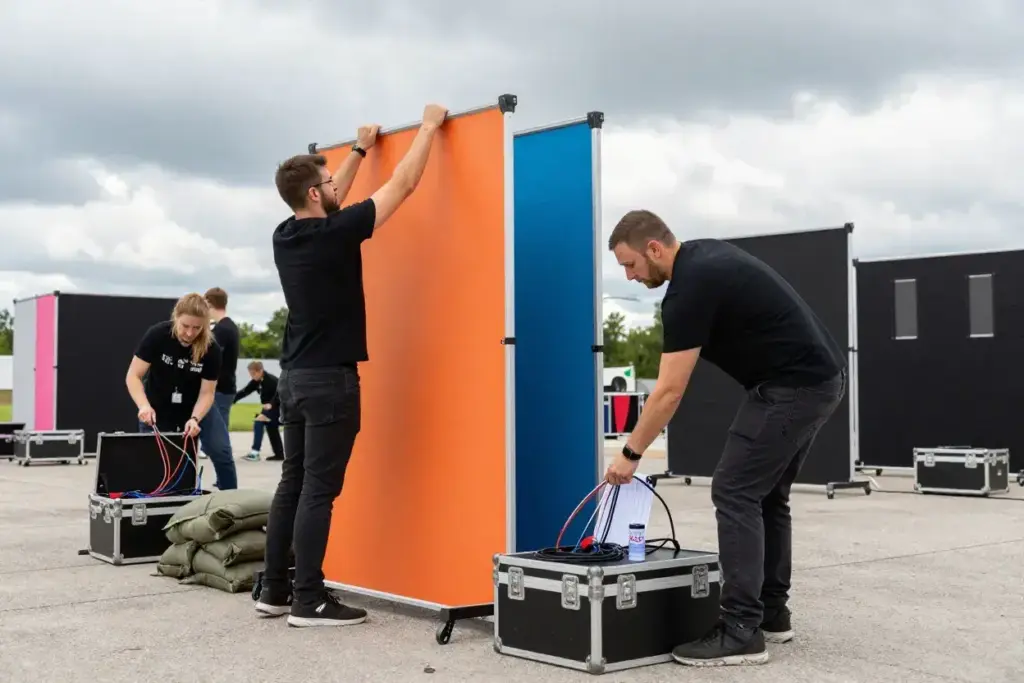
Efficient setup and breakdown procedures minimize weather exposure time while ensuring complete system functionality. Outdoor conditions often provide limited time windows for equipment deployment, making systematic approaches essential.
Pre-Event Preparation
Equipment checklists prevent forgotten items that could compromise outdoor operations. Weather-specific packing lists ensure appropriate gear selection based on forecast conditions.
Site surveys identify optimal positioning for weather protection, power access, and guest flow. Backup location identification provides alternatives if primary positions become unsuitable.
Rapid Deployment Techniques
Modular assembly systems reduce setup time while maintaining professional appearance. Color-coded components eliminate confusion during time-sensitive deployment situations.
Team coordination protocols ensure efficient use of available personnel during setup and breakdown operations. Assigned responsibilities prevent duplication of effort while ensuring complete system deployment.
Weather-Responsive Procedures
Accelerated breakdown protocols protect equipment when weather conditions deteriorate rapidly. Priority equipment lists ensure most valuable items receive protection first during emergency situations.
Partial operation modes maintain basic photo booth functionality when full setup becomes impractical due to weather constraints. Essential-only configurations provide guest services while minimizing equipment exposure.
Advanced Considerations for Professional Operations
Insurance and Liability Management
Weather-related insurance coverage protects against equipment damage and liability claims resulting from outdoor operations. Comprehensive policies should address wind damage, water damage, and guest injury claims.
Safety protocols minimize liability exposure while maintaining professional service quality. Regular equipment inspections and documented maintenance procedures demonstrate professional standards and due diligence.
Seasonal Adaptations
Winter operations require specialized equipment and procedures for sub-freezing conditions. Battery warming systems and condensation prevention become critical for reliable operation.
Summer challenges include heat-related equipment stress and guest comfort issues. Cooling systems and UV protection extend equipment life while maintaining optimal performance.
Technology Integration
Weather monitoring integration with photo booth software provides automated responses to changing conditions. Smart sensors can trigger equipment protection protocols when preset weather thresholds are exceeded.
Remote monitoring capabilities allow off-site supervision of outdoor photo booth operations. Cellular connectivity enables real-time status updates and remote troubleshooting capabilities.
Conclusion
Successfully implementing these 8 Essential Tips for Using Outdoor Photo Booths (Rain or Shine!) transforms challenging outdoor conditions into opportunities for memorable guest experiences. From comprehensive weather protection to efficient setup procedures, each strategy contributes to professional-quality operations regardless of environmental conditions.
The key to outdoor photo booth success lies in thorough preparation, quality equipment, and adaptable procedures. Weather protection forms the foundation, while reliable power management and adaptive lighting ensure consistent photo quality. Comfortable guest experiences drive participation, while comprehensive backup strategies maintain service continuity during challenging conditions.
Professional outdoor photo booth operators who master these essential techniques position themselves for success in the growing outdoor event market. The investment in weather-resistant equipment and systematic procedures pays dividends through expanded service capabilities and enhanced client satisfaction.
Next Steps for Implementation
- Assess current equipment for outdoor suitability and identify necessary upgrades or additions
- Develop written procedures for each essential tip, creating standardized protocols for consistent implementation
- Practice setup and breakdown in various weather conditions to identify potential challenges and refine procedures
- Build relationships with backup venue providers to ensure indoor alternatives during severe weather
- Invest in quality weather protection equipment as the foundation for all other outdoor operations
The outdoor photo booth market continues expanding as clients seek unique, memorable experiences for their special events. Mastering these essential techniques ensures readiness to capitalize on this growing opportunity while delivering exceptional service regardless of weather conditions.
References
[1] Event Photography Association. “Weather Protection Standards for Outdoor Photography Equipment.” Professional Photography Guidelines, 2026.