How to Organize Family Group Shots for a Smooth and Quick Photo Session
Family group photos capture precious moments that will be treasured for generations. However, anyone who has attempted to coordinate a large family gathering for photos knows the challenges: restless children, impatient adults, and the pressure to get everyone looking their best simultaneously. The difference between chaotic photo sessions that drag on for hours and efficient ones that produce beautiful results often comes down to organization and preparation.
In 2025, with increasingly busy schedules and shorter attention spans, photographers and family organizers need strategic approaches to capture those perfect group shots without testing everyone’s patience. Whether you’re a professional photographer or the designated family photographer for your reunion, the right preparation can transform a potentially stressful experience into a smooth, enjoyable memory-making opportunity.
Key Takeaways
Disclosure: This post contains affiliate links. As an Amazon Associate, we earn from qualifying purchases, and at no extra cost to you.
- Pre-session planning is crucial—create shot lists, assign roles, and communicate expectations before the photo day
- Arrange people strategically by height, relationship, and visual balance to create aesthetically pleasing compositions
- Use verbal and non-verbal communication techniques to maintain everyone’s attention and quickly achieve natural smiles
- Implement time-saving workflows like “anchor person” techniques and batch processing similar groupings
- Prepare contingency plans for weather changes, difficult family dynamics, and technology issues to avoid session delays
Why Proper Organization Matters for Family Photo Sessions
The difference between amateur and professional-looking family photos isn’t always about equipment or technical skill—it’s often about organization. Well-organized photo sessions result in:
- Higher quality images with better expressions and poses
- More variety of shots in less time
- Reduced stress for everyone involved
- Better participation from reluctant family members
- Efficient use of optimal lighting conditions
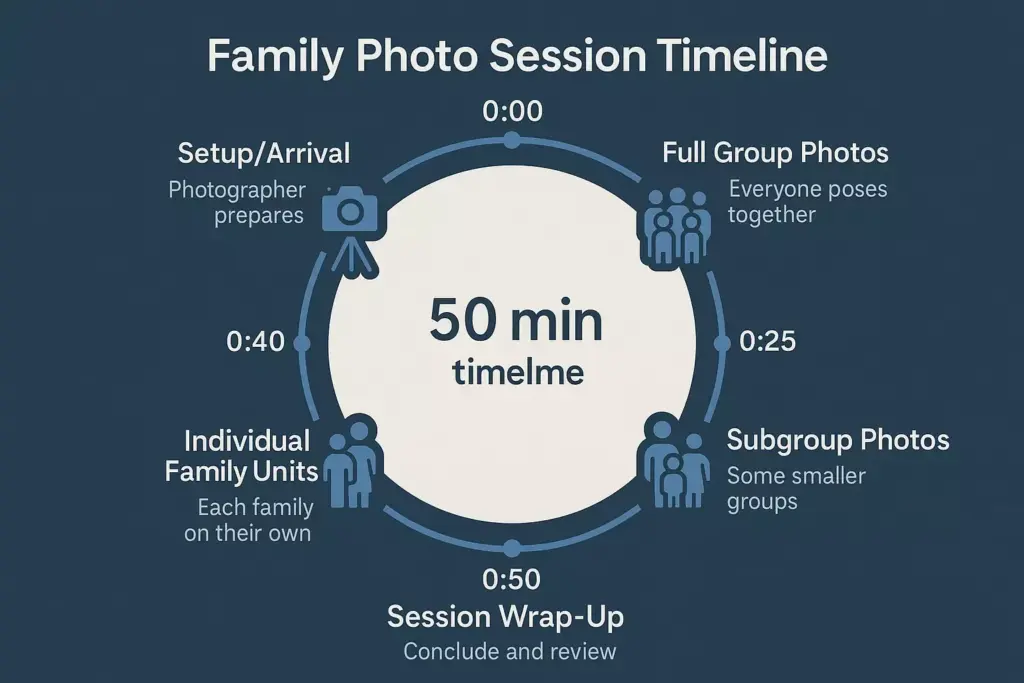
A 2024 survey by the Professional Photographers Association found that the average family photo session runs 60-90 minutes, but well-organized sessions can capture the same quality and quantity of images in just 30-45 minutes. This time efficiency is particularly crucial when photographing groups with young children, elderly family members, or during challenging weather conditions.
Pre-Session Planning: The Foundation of Success
Creating a Comprehensive Shot List
Before anyone steps in front of the camera, develop a detailed shot list that includes:
- Must-have groupings (immediate families, generations, siblings)
- Nice-to-have combinations (cousins, in-laws, activity-based shots)
- Priority order based on participants’ needs (children’s attention spans, elderly family members’ comfort)
📝 Pro Tip: Share your shot list with a key family member in advance for feedback. They may identify important groupings you hadn’t considered.
Location Scouting and Preparation
Visit your shooting location ahead of time to:
- Identify 2-3 specific spots for different group sizes
- Note where the light will be during your scheduled session
- Plan for backup locations in case of weather issues
- Identify seating options for elderly family members
- Spot potential distractions or hazards
Communicating Expectations Clearly
Send a pre-session guide to all participants that includes:
| Information | Details to Include | Why It Matters |
|---|---|---|
| Clothing Guidelines | Color palette, style suggestions, what to avoid | Creates visual cohesion |
| Timing | Arrival time (15 minutes early), estimated duration | Sets expectations for schedule |
| Location Details | Address, parking information, meeting spot | Reduces confusion and delays |
| Special Instructions | Props to bring, special groupings planned | Ensures all elements are ready |
| Weather Contingency | Alternative plans if weather changes | Reduces anxiety about conditions |
Organizing People Efficiently on Photo Day
The “Anchor Person” Technique
One of the most efficient approaches to family group organization is the “anchor person” technique:
- Identify 1-2 “anchor” individuals who will appear in most photos
- Position these anchors first in each new grouping
- Build outward by adding and removing people around the anchors
- Maintain the same lighting setup throughout these changes
This approach minimizes repositioning of everyone for each shot and maintains consistent lighting and background elements.
Height and Visual Balance Considerations
Arrange people with these principles in mind:
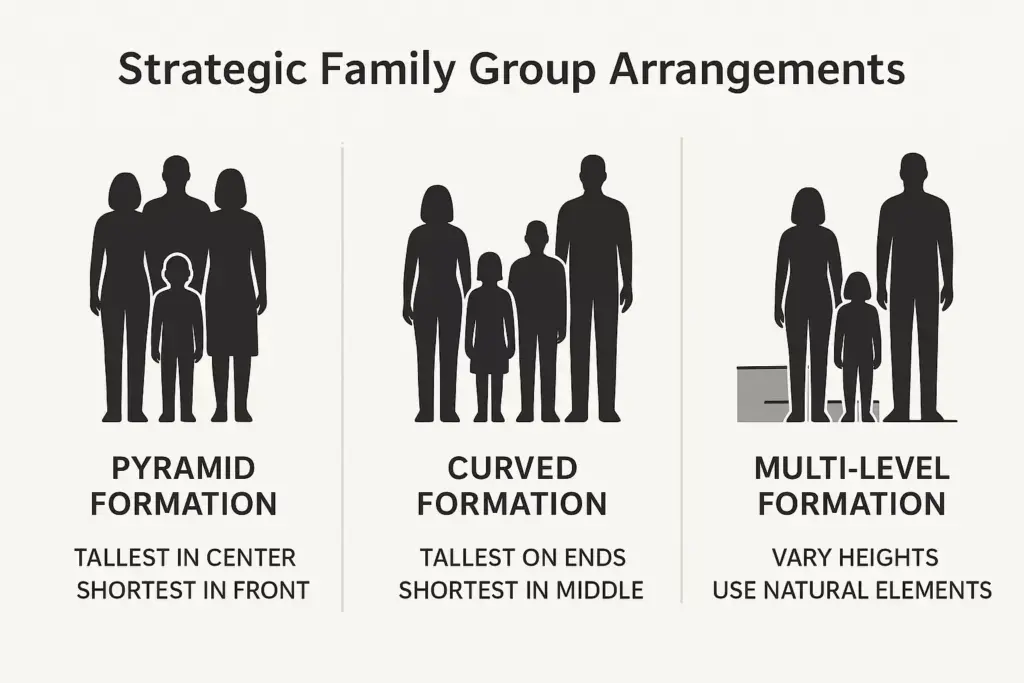
- Tallest in the back, shortest in front (generally)
- Create a gentle arc or pyramid shape rather than straight lines
- Break symmetry occasionally for more natural-looking compositions
- Consider visual weight by distributing colors and body types evenly
![Visual diagram showing family arrangement patterns]
Special Considerations for Different Group Sizes
Adapt your approach based on the number of people:
Small Groups (5-10 people):
- Can be arranged in simple formations
- Allow for more creative poses and arrangements
- Consider seated/standing combinations
Medium Groups (11-20 people):
- Use multiple rows with height variation
- Consider steps, stairs, or gentle slopes to create natural tiers
- Create visual interest with slight angles rather than straight lines
Large Groups (21+ people):
- May require elevated vantage points (ladder or balcony)
- Consider wider, shallower arrangements rather than deep ones
- Use clear, simple directions and visual markers
Communication Techniques for Smooth Direction
Verbal Communication Strategies
Effective communication keeps sessions moving and maintains good energy:
- Use a confident, upbeat tone that projects authority without tension
- Give clear, concise directions using landmarks (“move closer to the tree”)
- Count down for smiles (“Great expressions on 3, 2, 1…”)
- Use family-appropriate humor to generate natural smiles
- Acknowledge good participation, especially from children
Non-Verbal Direction Techniques
Supplement verbal direction with these non-verbal approaches:
- Use hand signals for minor adjustments
- Demonstrate poses yourself rather than just describing them
- Make eye contact with individuals who need adjustment
- Use a small mirror to show people how they look
- Have visual reference cards for complex poses
Managing Different Age Groups Simultaneously
Different generations require different approaches:
Children (under 12):
- Keep their attention with quick, engaging interactions
- Photograph them first while energy is high
- Have helpers positioned nearby to redirect attention
- Use props or simple games for natural expressions
Teenagers:
- Acknowledge their contributions and ideas
- Give them specific roles or responsibilities
- Allow some input on poses to increase buy-in
- Consider separate “friends-style” photos in addition to formal groupings
Elderly Family Members:
- Schedule during their highest energy time of day
- Ensure comfortable seating is available
- Position them first and build groups around them
- Be aware of sun sensitivity and temperature concerns
Time-Saving Workflows and Techniques
Batch Processing Similar Groupings
Maximize efficiency by grouping similar shots together:
- Start with the full group when everyone is fresh and attentive
- Work from largest to smallest groupings to allow people to leave when finished
- Complete all shots in one location before moving to another
- Batch by family unit (all shots with the Smith family, then all with the Jones family)
Equipment Setup for Quick Transitions
Prepare your equipment to minimize transition time:
- Use zoom lenses to quickly adjust for different group sizes without changing position
- Set up lighting that can accommodate various group sizes without major adjustments
- Have assistants manage reflectors or secondary lighting
- Use preset camera settings for different groupings and lighting conditions
- Consider tethered shooting to quickly verify expressions and compositions
Digital Organization During the Session
Stay organized digitally throughout the shoot:
- Create a folder structure before beginning
- Use clear file naming conventions
- Flag key images during the session
- Back up regularly to prevent data loss
- Consider voice memos between setups to note specific details or requests
Managing Common Challenges
Weather and Environmental Factors
Be prepared for environmental challenges:
- Have sun diffusers for harsh midday light
- Know your rain plan with specific indoor locations
- Bring wind clips for clothing on breezy days
- Have towels or blankets for wet or dirty seating areas
- Consider seasonal elements (fall leaves, spring flowers) as natural props
Handling Difficult Family Dynamics
Navigate complex relationships tactfully:
- Research family structures beforehand to avoid awkward groupings
- Use a family “liaison” to quietly advise on sensitive relationships
- Have a signal system with the main family contact for potential issues
- Plan separate photos for conflicted family members if necessary
- Use physical spacing and grouping to respect relationship boundaries
Technical Troubleshooting on the Fly
Prepare for technical issues:
- Bring backup equipment for critical components
- Have spare batteries and memory cards easily accessible
- Know how to quickly troubleshoot lighting failures
- Have a smartphone as backup for emergency captures
- Bring basic repair tools for glasses, clothing, or equipment
Post-Session Organization
Immediate Next Steps
After the session concludes:
- Verify all planned shots were captured before people leave
- Back up images to multiple locations
- Send a thank-you message with timeline expectations
- Make preliminary selects while the session is fresh in your mind
- Document any special requests or promised deliverables
Organizing Images for Efficient Delivery
Streamline your post-processing workflow:
- Create consistent collection categories (full group, immediate families, generations)
- Use color coding or rating systems for selection priorities
- Batch edit similar groupings together
- Create delivery-ready folders for different family units
- Prepare web-friendly versions for social media sharing
Advanced Techniques for Exceptional Results
Creative Composition Ideas
Elevate your family photos with these composition techniques:
- Environmental storytelling that incorporates meaningful locations
- Activity-based groupings that capture family traditions
- Generational comparisons (grandparents with grandchildren in similar poses)
- Timeline progressions showing family growth over the session
- Unexpected angles that create more dynamic compositions
Incorporating Meaningful Props and Settings
Add depth to your images with:
- Family heirlooms that tell a story
- Symbolic objects representing shared interests
- Location elements that have family significance
- Color themes that complement family history
- Seasonal elements that mark the time period
Capturing Authentic Moments Between Posed Shots
Some of the most treasured images happen between formal poses:
- Keep shooting during transitions
- Watch for natural interactions between family members
- Create “controlled spontaneity” with simple prompts
- Document the photo session itself as part of the family story
- Be ready for unexpected emotional moments
Conclusion: Creating Treasured Family Memories Through Organization
Family group photos are more than just images—they’re tangible connections to our heritage that will be passed down for generations. The difference between stressful, chaotic photo sessions and smooth, enjoyable ones comes down to thoughtful organization and preparation.
By implementing the strategies outlined in this guide—from pre-session planning and strategic people arrangement to effective communication techniques and time-saving workflows—you’ll be able to create beautiful family portraits while making the experience itself a positive memory.
Remember these key principles:
- Preparation prevents problems—invest time before the session to save time during it
- Communication creates comfort—when everyone knows what to expect, they can relax and be natural
- Flexibility ensures success—even with perfect planning, be ready to adapt to changing circumstances
- Organization enables creativity—when the logistics run smoothly, you can focus on capturing authentic connections
Whether you’re a professional photographer looking to streamline your family sessions or the designated family photographer at your next reunion, these techniques will help you capture those precious moments efficiently and beautifully. The result will be not just stunning photos but also a positive experience that family members will be eager to repeat in years to come.
Next Steps
- Create your shot list template that can be customized for different family sizes
- Develop a pre-session guide to share with families before photo day
- Practice your verbal and non-verbal direction techniques with smaller groups
- Invest in any equipment that will help streamline your workflow
- Build a contingency plan document for common challenges
With these tools and techniques in your arsenal, you’ll be well-equipped to organize family group photos that capture both the individuals and the relationships that make each family unique.