6 Essential Tips for Having Pets at Your Wedding (Without the Stress)
Picture this: walking down the aisle with your beloved four-legged family member by your side, their tail wagging with pure joy as they witness the most important day of your life. For many couples in 2026, pets aren’t just animals—they’re cherished family members who deserve a place in life’s biggest celebrations. However, incorporating furry friends into wedding festivities can feel overwhelming without proper planning and preparation.
Disclosure: This post contains affiliate links. As an Amazon Associate, we earn from qualifying purchases, and at no extra cost to you.
The good news? With the right strategies, having pets at your wedding can be both magical and stress-free. These 6 Essential Tips for Having Pets at Your Wedding (Without the Stress) will transform what might seem like a logistical nightmare into a beautiful, memorable experience that honors your entire family—including the ones with paws, feathers, or fins.
Key Takeaways
- Plan early and communicate clearly with venues, vendors, and guests about pet participation to avoid last-minute complications
- Assign dedicated pet handlers who can manage your furry friends throughout the ceremony and reception
- Prepare backup plans for weather, pet behavior, and emergency situations to ensure smooth execution
- Consider your pet’s personality and stress levels when deciding their level of involvement in wedding activities
- Create pet-friendly spaces with comfort items, water stations, and quiet retreat areas for when animals need breaks
Understanding the Growing Trend of Pet-Inclusive Weddings
The wedding industry has witnessed a significant shift toward pet-inclusive celebrations in recent years. According to recent surveys, approximately 37% of couples now include their pets in wedding ceremonies, up from just 19% a decade ago [1]. This trend reflects changing attitudes about family structures and the important role pets play in modern relationships.
Why couples choose to include pets:
- Pets are considered family members
- Emotional support during stressful wedding planning
- Unique photo opportunities and memorable moments
- Honoring the pet’s role in the couple’s love story
- Creating a more personal, authentic celebration
However, successful pet inclusion requires careful consideration of logistics, guest comfort, and animal welfare. The following 6 Essential Tips for Having Pets at Your Wedding (Without the Stress) address these challenges comprehensively.
1. Start with Thorough Venue Research and Communication
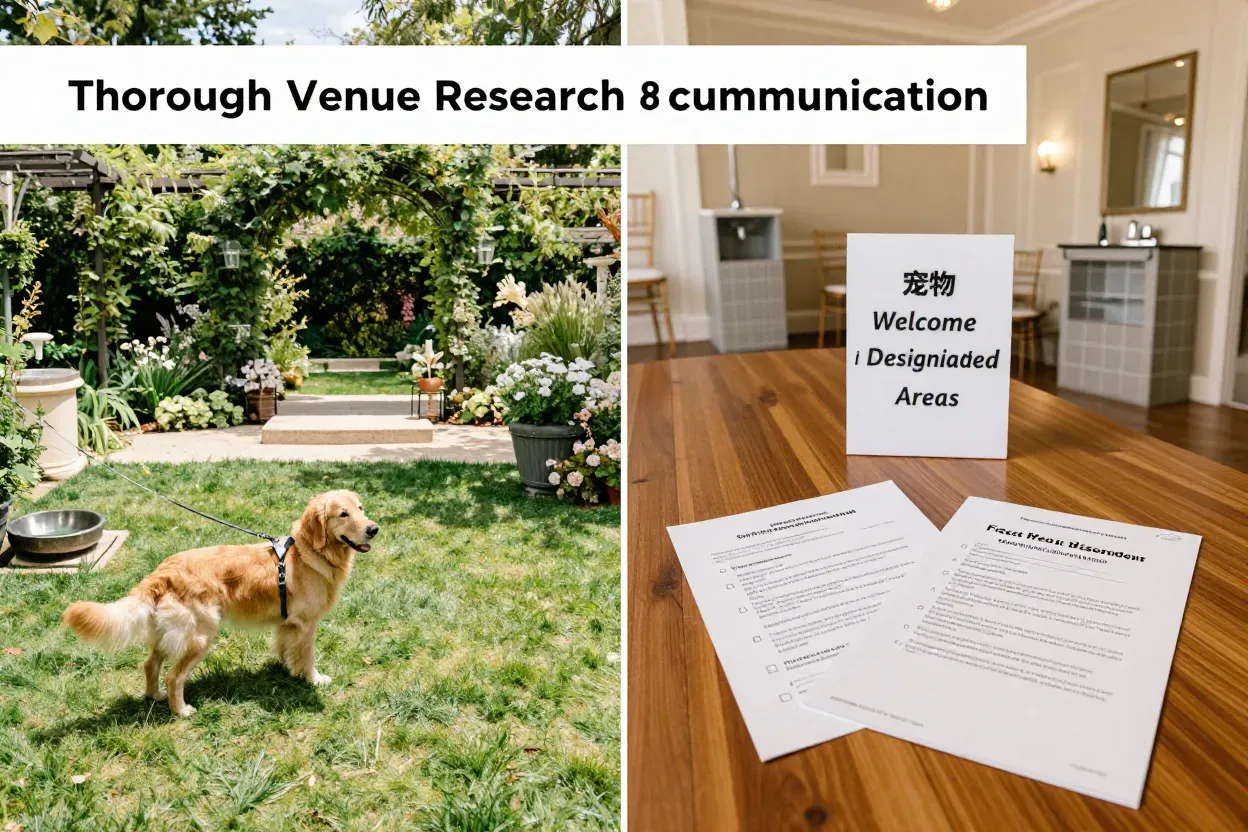
Choosing Pet-Friendly Venues
The foundation of stress-free pet inclusion begins with selecting the right venue. Not all wedding locations welcome animals, and those that do often have specific policies and restrictions.
Essential questions to ask potential venues:
- Do you allow pets on the property?
- Are there specific areas where pets are permitted or prohibited?
- What documentation is required (vaccination records, insurance)?
- Are there additional fees for pet inclusion?
- What cleanup responsibilities fall to the couple?
- Are there noise restrictions that might affect barking dogs?
Outdoor vs. Indoor Considerations
Outdoor venues typically offer more flexibility for pet inclusion:
- ✅ More space for animals to move around
- ✅ Natural bathroom areas
- ✅ Better ventilation and air circulation
- ✅ Easier cleanup for accidents
Indoor venues present unique challenges:
- ⚠️ Limited space and potential crowd stress
- ⚠️ Flooring concerns (slippery surfaces, damage)
- ⚠️ Climate control considerations
- ⚠️ More restricted movement options
Documentation and Legal Requirements
Ensure compliance with local regulations and venue policies:
- Vaccination records (rabies, DHPP for dogs, FVRCP for cats)
- Health certificates from licensed veterinarians
- Liability insurance coverage for pet-related incidents
- Registration or licensing documentation if required locally
2. Designate Professional Pet Handlers and Support Staff
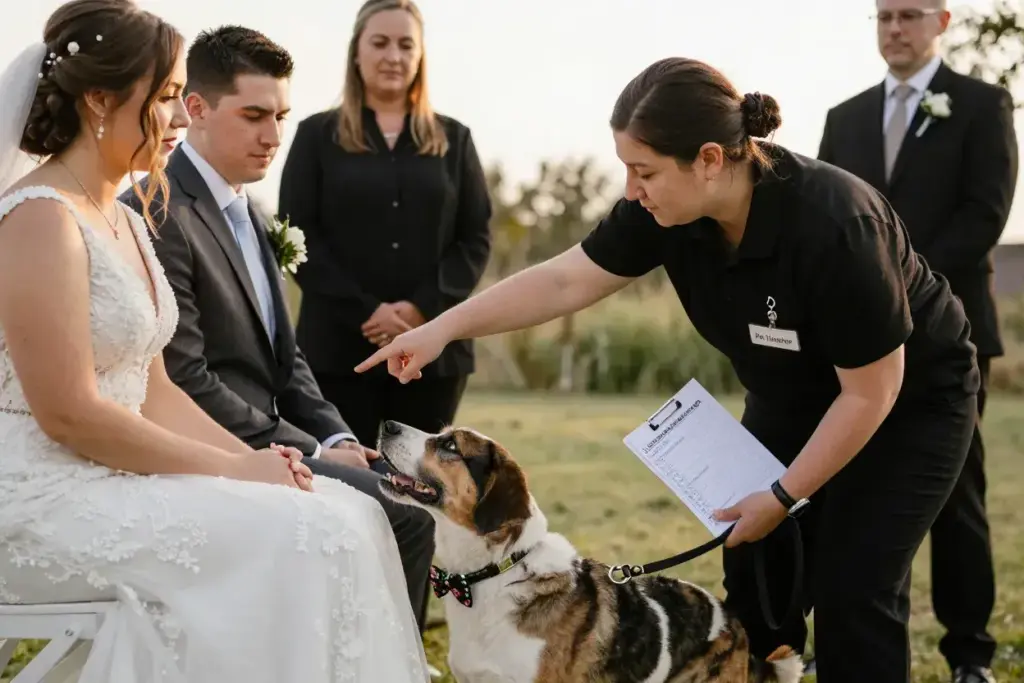
The Importance of Dedicated Pet Care
One of the most crucial elements in these 6 Essential Tips for Having Pets at Your Wedding (Without the Stress) involves ensuring your pets have dedicated supervision. Couples should never attempt to manage their pets personally during the ceremony—this responsibility belongs to trained handlers.
Professional pet handler responsibilities:
- Pre-ceremony preparation (grooming, dressing, calming)
- Ceremony coordination (timing, positioning, cue management)
- Reception oversight (feeding, bathroom breaks, guest interactions)
- Emergency response (veterinary contact, behavior management)
- Transportation logistics (arrival, departure, safe containment)
Finding Qualified Pet Handlers
Where to locate professional pet handlers:
- Wedding planners with pet experience
- Local dog training facilities
- Pet sitting services with event experience
- Veterinary technicians offering side services
- Professional animal wranglers for film/photography
Backup Handler Systems
Always designate secondary handlers in case of emergencies:
- Close family members familiar with your pet
- Friends with animal handling experience
- Professional backup services
- Venue staff trained in basic pet management
Handler Preparation Timeline
| Timeline | Handler Tasks |
|---|---|
| 2-3 months before | Meet pets, assess temperament, discuss expectations |
| 1 month before | Practice ceremony walk-through, establish routines |
| 1 week before | Final preparation meeting, emergency contact exchange |
| Wedding day | Arrive early, manage all pet logistics, coordinate with photographer |
3. Create Comprehensive Preparation Plans and Backup Strategies
Pre-Wedding Pet Preparation
Successful pet inclusion requires weeks of advance preparation. These 6 Essential Tips for Having Pets at Your Wedding (Without the Stress) emphasize the importance of conditioning your pets for the wedding environment.
Training and conditioning schedule:
8-12 weeks before wedding:
- Begin basic obedience refresher training
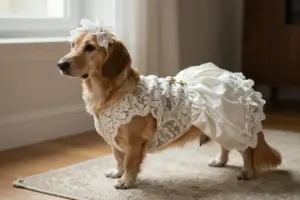
- Practice wearing wedding attire (collars, bowties, dresses)
- Introduce wedding music and sounds gradually
- Socialize with larger groups of people
4-6 weeks before wedding:
- Conduct venue visits if possible
- Practice ceremony walk-through at home
- Test photography poses and positioning
- Evaluate stress responses and adjust plans
1-2 weeks before wedding:
- Final grooming appointments
- Veterinary health check
- Pack emergency supplies kit
- Confirm all logistics with handlers
Weather Contingency Planning
Hot weather considerations:
- Provide shade structures and cooling mats
- Schedule frequent water breaks
- Monitor for signs of overheating
- Have cooling vests or bandanas available
- Plan indoor retreat spaces
Cold weather preparations:
- Weather-appropriate pet clothing
- Heated waiting areas
- Paw protection for snow/ice
- Shortened outdoor exposure times
- Warm blankets and bedding
Rainy day alternatives:
- Covered ceremony spaces
- Waterproof pet clothing
- Towels for drying
- Indoor photo location options
- Modified ceremony timing
Emergency Response Planning
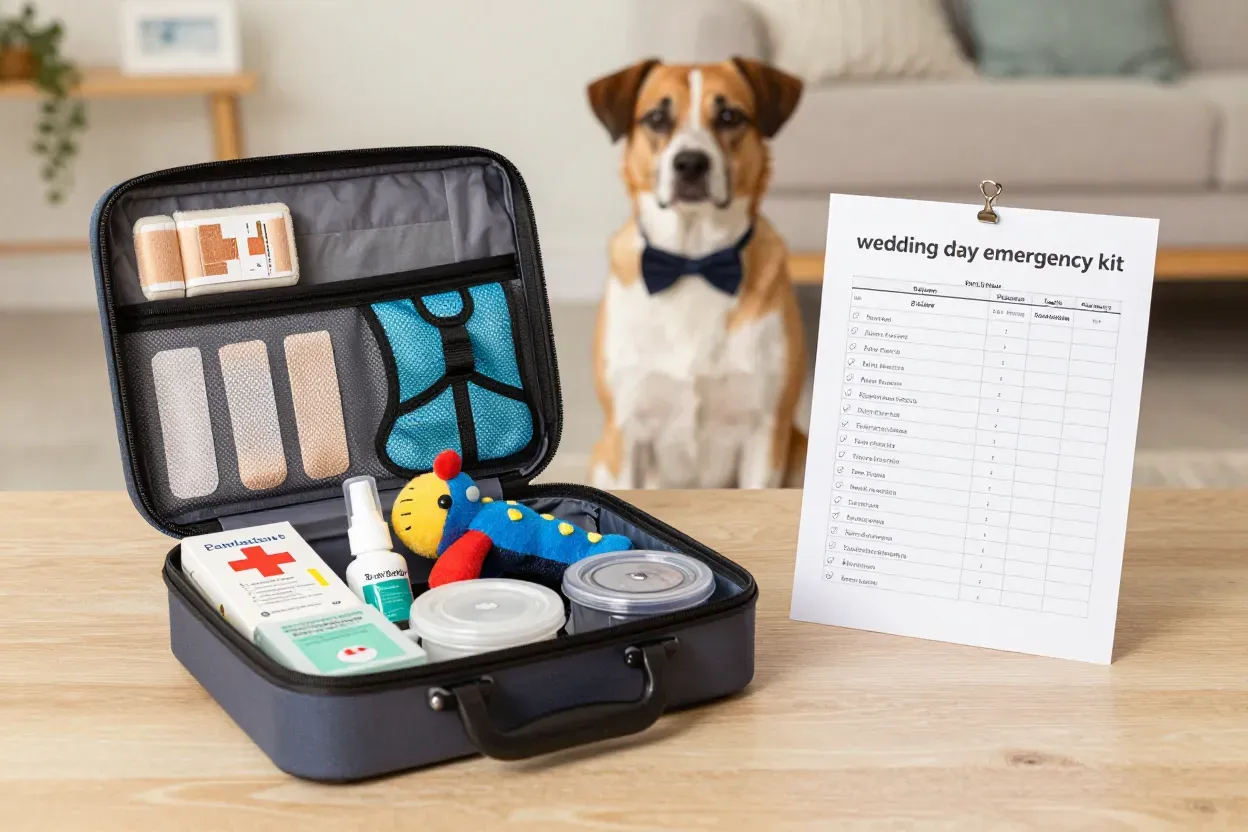
Essential emergency supplies kit:
- First aid supplies (bandages, antiseptic, thermometer)
- Medications (if pet requires regular doses)
- Comfort items (favorite toys, blankets)
- Food and water bowls
- Waste cleanup supplies
- Emergency veterinary contact information
Behavioral emergency protocols:
- Designated quiet retreat spaces
- Calming aids (pheromone sprays, anxiety wraps)
- Removal procedures if pet becomes stressed
- Alternative transportation arrangements
- Guest communication strategies
4. Design Pet-Friendly Ceremony and Reception Logistics
Ceremony Integration Strategies
The fourth of these 6 Essential Tips for Having Pets at Your Wedding (Without the Stress) focuses on seamless ceremony integration. Consider your pet’s role carefully—not every animal needs to walk down the aisle.
Popular pet ceremony roles:
- Ring bearer (with secure backup rings)
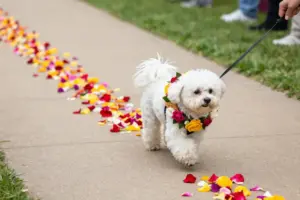
- Flower pet (scattering petals or wearing floral collars)
- Processional companion (walking with wedding party)
- Altar attendant (sitting quietly during vows)
- Photo participant (joining for specific shots only)
Reception Considerations
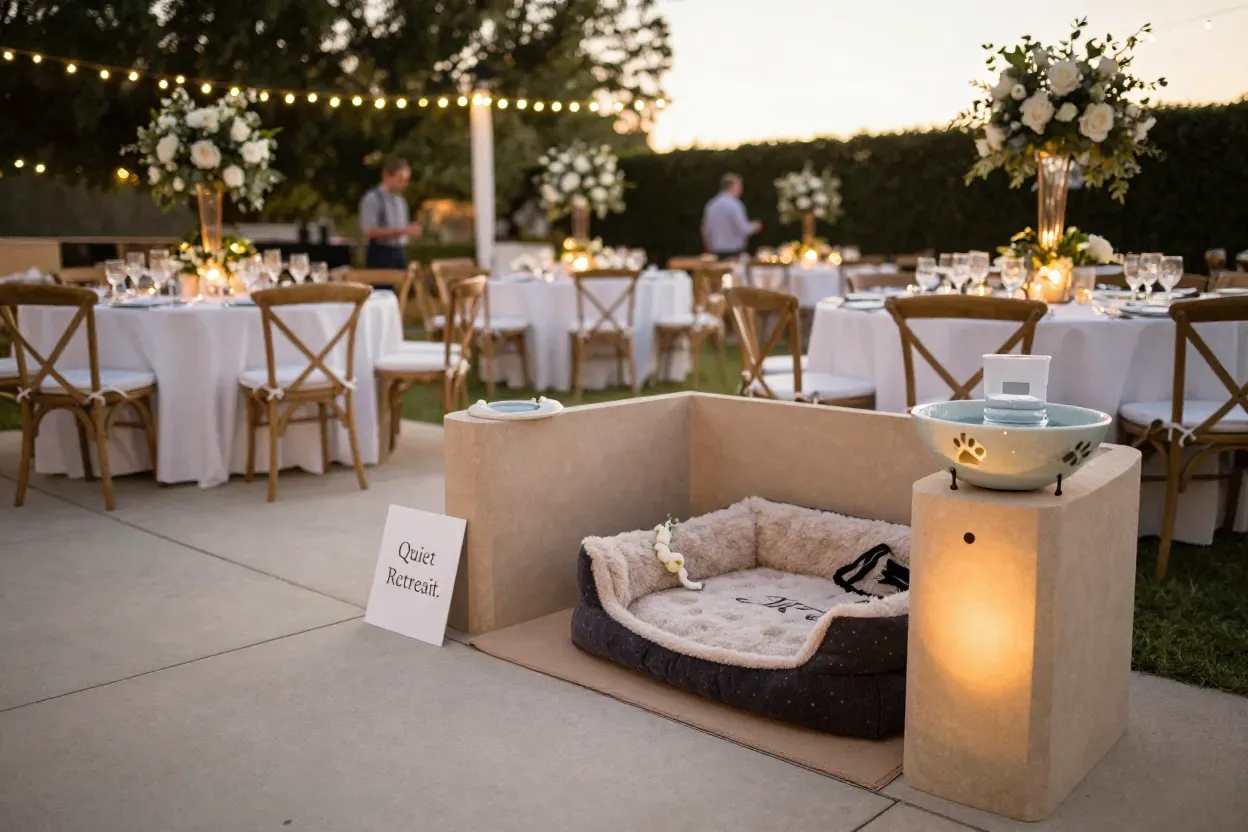
Pet-friendly reception elements:
- Designated pet areas with comfortable bedding
- Water stations throughout venue
- Pet-safe food options (if offering pet treats)
- Quiet retreat spaces away from loud music
- Supervised play areas for multiple pets
Guest interaction management:
- Clear signage about pet interaction rules
- Handler supervision during guest mingling
- Designated photo opportunity times
- Respect for pets needing space
- Allergy considerations for sensitive guests
Timeline Coordination
Sample wedding day pet schedule:
| Time | Activity | Handler Responsibility |
|---|---|---|
| 2:00 PM | Pet arrival and preparation | Grooming, dressing, calming |
| 3:30 PM | Pre-ceremony photos | Positioning, treat rewards |
| 4:00 PM | Ceremony participation | Cue management, positioning |
| 4:30 PM | Post-ceremony photos | Quick session, then retreat |
| 5:00 PM | Cocktail hour rest | Quiet space, food, water |
| 7:00 PM | Reception entrance | Brief appearance, guest greetings |
| 8:00 PM | Departure or quiet retreat | Transportation or overnight care |
5. Address Guest Comfort and Communication Strategies
Pre-Wedding Guest Communication
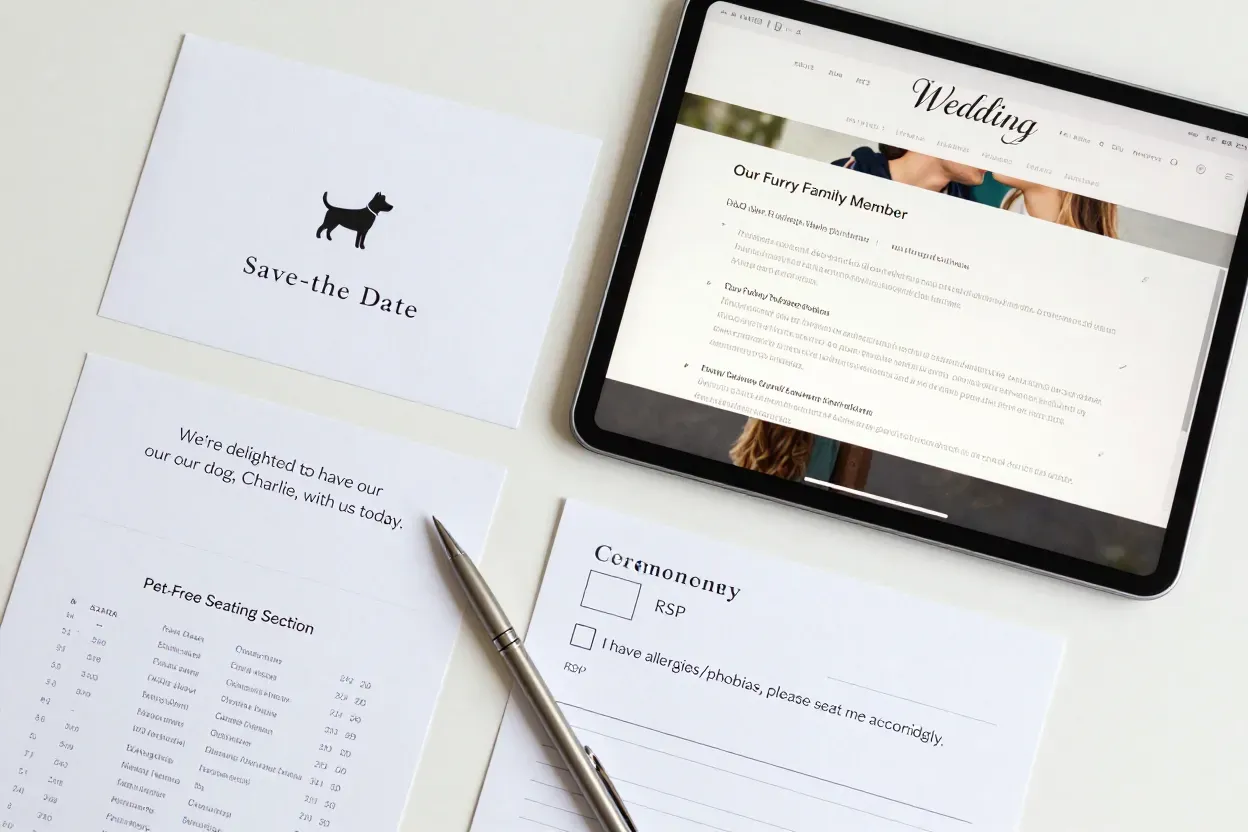
Transparent communication about pet inclusion helps manage expectations and ensures guest comfort. Include pet information in wedding communications early in the planning process.
Essential guest communications:
- Save-the-date mentions of pet participation
- Wedding website pet information section
- RSVP questions about allergies or concerns
- Ceremony program pet acknowledgments
- Reception timeline including pet activities
Managing Allergies and Phobias
Accommodation strategies for guests with concerns:
- Designated pet-free seating sections
- Indoor/outdoor separation options
- Advanced notice for medication preparation
- Alternative ceremony viewing areas
- Respectful seating arrangements
Cultural and Religious Considerations
Some cultural or religious traditions may have specific guidelines about animals in ceremonial spaces:
- Consult with officiant about any restrictions
- Research cultural customs and sensitivities
- Provide alternative viewing options if needed
- Respect diverse guest backgrounds and beliefs
- Consider separate blessing ceremonies if appropriate
6. Plan Post-Wedding Pet Care and Recovery
Post-Ceremony Transition Planning
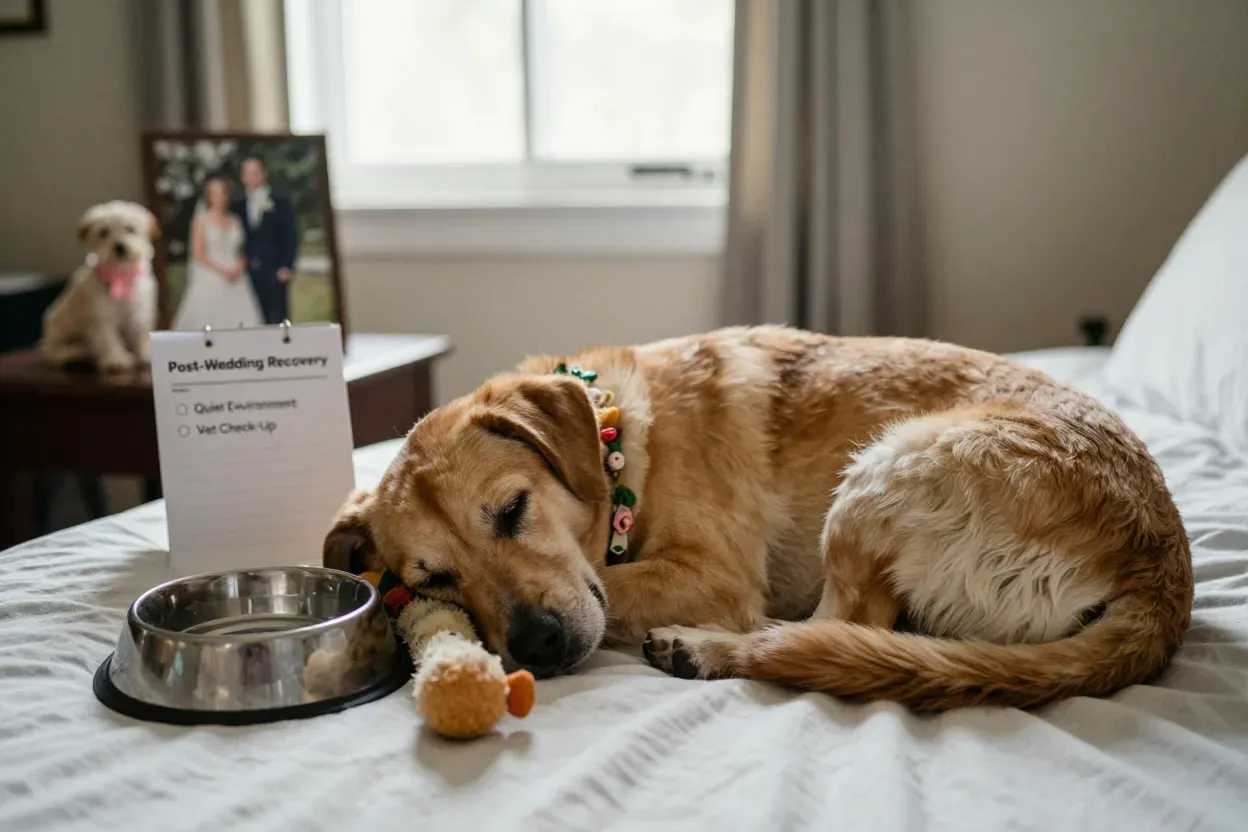
The final element of these 6 Essential Tips for Having Pets at Your Wedding (Without the Stress) involves planning for after the celebration. Wedding days can be exhausting for pets, requiring careful recovery consideration.
Post-wedding pet care options:
- Early departure with trusted caregiver
- Overnight pet sitting at familiar location
- Honeymoon pet boarding at preferred facility
- Family member care during reception continuation
- Professional pet hotel services with special accommodations
Recovery and Decompression
Post-wedding pet recovery strategies:
- Return to normal feeding and exercise routines
- Provide quiet, familiar environments
- Monitor for stress-related behaviors
- Schedule veterinary check-up if concerns arise
- Maintain consistent care schedules
Memory Preservation
Capturing pet memories:
- Professional photography packages including pet shots
- Video footage of ceremony participation
- Guest photo sharing with pet interactions
- Custom artwork or portraits from wedding photos
- Memory books including pet participation stories
Additional Considerations for Specific Pet Types
Dogs at Weddings
Breed-specific considerations:
- Large breeds: Space requirements, strength management
- Small breeds: Protection from crowds, temperature sensitivity
- High-energy breeds: Exercise needs, stimulation requirements
- Senior dogs: Mobility limitations, comfort needs
Cats at Weddings
Feline-specific challenges:
- Higher stress sensitivity to crowds and noise
- Escape prevention and secure containment
- Litter box accessibility and privacy
- Temperature regulation and quiet spaces
Exotic Pets
Special requirements for birds, rabbits, or other animals:
- Species-specific environmental needs
- Specialized handler requirements
- Veterinary emergency preparedness
- Guest education about appropriate interactions
Budget Considerations for Pet-Inclusive Weddings
Cost Planning
Typical expenses for pet inclusion:
- Professional handler fees: $200-$500
- Pet grooming and attire: $50-$200
- Venue pet fees: $50-$300
- Additional insurance: $25-$100
- Emergency supplies: $50-$150
- Photography add-ons: $100-$400
Cost-Saving Strategies
Budget-friendly alternatives:
- Train reliable family members as handlers
- DIY pet wedding attire
- Negotiate venue pet fees
- Combine pet grooming with regular appointments
- Use existing emergency supplies
Conclusion
Incorporating beloved pets into wedding celebrations can create magical, unforgettable moments that truly reflect the complete family unit. These 6 Essential Tips for Having Pets at Your Wedding (Without the Stress) provide a comprehensive framework for successful pet inclusion while maintaining the joy and elegance of the special day.
The key to success lies in thorough preparation, professional support, and realistic expectations about your pet’s capabilities and comfort levels. Remember that not every pet is suited for wedding participation, and that’s perfectly acceptable—the goal is celebrating love in whatever form feels most authentic to the couple.
Immediate next steps for couples considering pet inclusion:
- Assess your pet’s temperament honestly and consult with veterinarians or animal behaviorists
- Research pet-friendly venues in your area and schedule visits to discuss policies
- Begin basic training and conditioning at least 8-12 weeks before the wedding date
- Interview potential pet handlers and establish clear expectations and responsibilities
- Communicate with guests early about pet participation to address any concerns
- Create detailed backup plans for various scenarios and emergency situations
With careful planning and the right support team, pets can add an extra layer of joy, personality, and meaning to wedding celebrations. The investment in proper preparation pays dividends in stress reduction and ensures that both two-legged and four-legged family members can fully enjoy this milestone celebration.
Whether your pet plays a starring role walking down the aisle or simply makes a brief appearance for photos, their presence can make your wedding day feel more complete and authentically representative of your family’s love story.
References
[1] The Knot 2025 Real Weddings Study: Pet Inclusion Trends and Statistics