8 Essential Elements of Traditional Hindu Bridal Makeup: The Complete 2026 Guide
Your wedding day is one of the most photographed moments of your life — and your bridal makeup tells a story that goes far deeper than beauty. Traditional Hindu bridal makeup is a living art form, rooted in centuries of ritual, symbolism, and regional identity. Whether you are a bride-to-be, a makeup artist, or simply someone who loves the rich world of South Asian beauty, understanding the 8 Essential Elements of Traditional Hindu Bridal Makeup is the first step toward creating a look that is both timeless and deeply personal.
Disclosure: This post contains affiliate links. As an Amazon Associate, we earn from qualifying purchases, and at no extra cost to you.
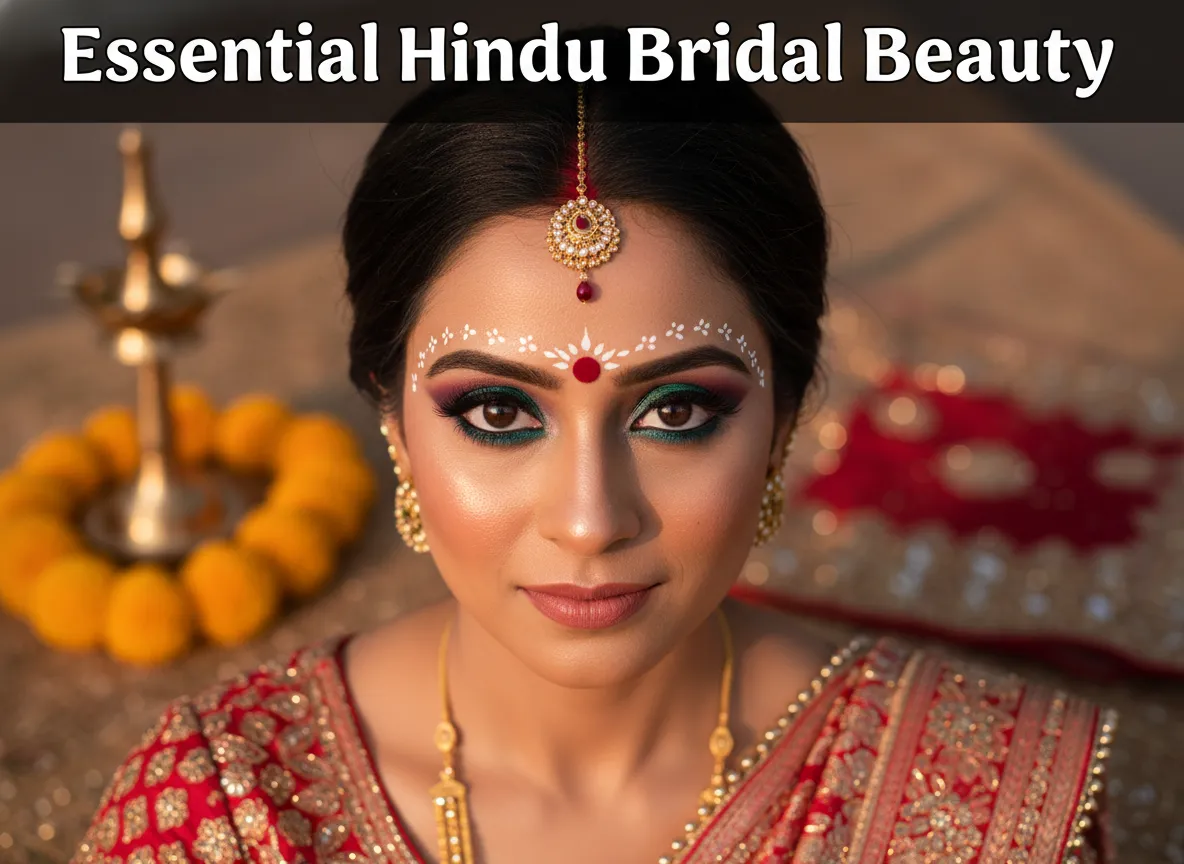
In 2026, the conversation around traditional Hindu bridal makeup has never been more exciting. Modern brides are blending heritage techniques with contemporary finishes — think radiant skin meets bold kohl, or monochromatic color harmony paired with intricate temple designs. This guide breaks down each of the 8 Essential Elements of Traditional Hindu Bridal Makeup in detail, giving you the knowledge to make informed, confident choices for the most important look of your life.
Key Takeaways
- 🌸 Traditional Hindu bridal makeup is built on 8 core elements, each carrying cultural and aesthetic significance.
- 💡 In 2026, the trend is shifting toward radiant, breathable skin and soft sculpting rather than heavy, cakey coverage.
- 👁️ Bold kohl and eye definition remain non-negotiable in most regional Hindu bridal traditions.
- 🔴 The red bindi and temple forehead designs are powerful symbols of bridal identity, not just decorative choices.
- 🎨 Monochromatic color harmony and coordinated lip colors are the modern bride’s tools for a polished, cohesive look.
Why These 8 Elements Matter in Traditional Hindu Bridal Makeup
Before we dive into each element, it helps to understand why traditional Hindu bridal makeup follows a specific structure. Unlike everyday makeup, bridal makeup in Hindu traditions is deeply tied to:
- Religious and cultural symbolism (the bindi, sindoor, and certain colors carry spiritual meaning)
- Regional identity (Bengali, South Indian, Rajasthani, and Maharashtrian brides all have distinct looks)
- Longevity requirements (a bridal look must last 8–12 hours through ceremonies, dancing, and emotion)
- Photography and lighting (traditional looks are designed to photograph beautifully under both natural and artificial light)
“A traditional Hindu bridal look is not just makeup — it is a visual language that communicates who you are, where you come from, and the sacred step you are taking.”
Understanding this context makes each of the 8 Essential Elements of Traditional Hindu Bridal Makeup feel less like a checklist and more like a meaningful ritual.
The 8 Essential Elements of Traditional Hindu Bridal Makeup Explained
1. Radiant, Glowing Skin as the Base
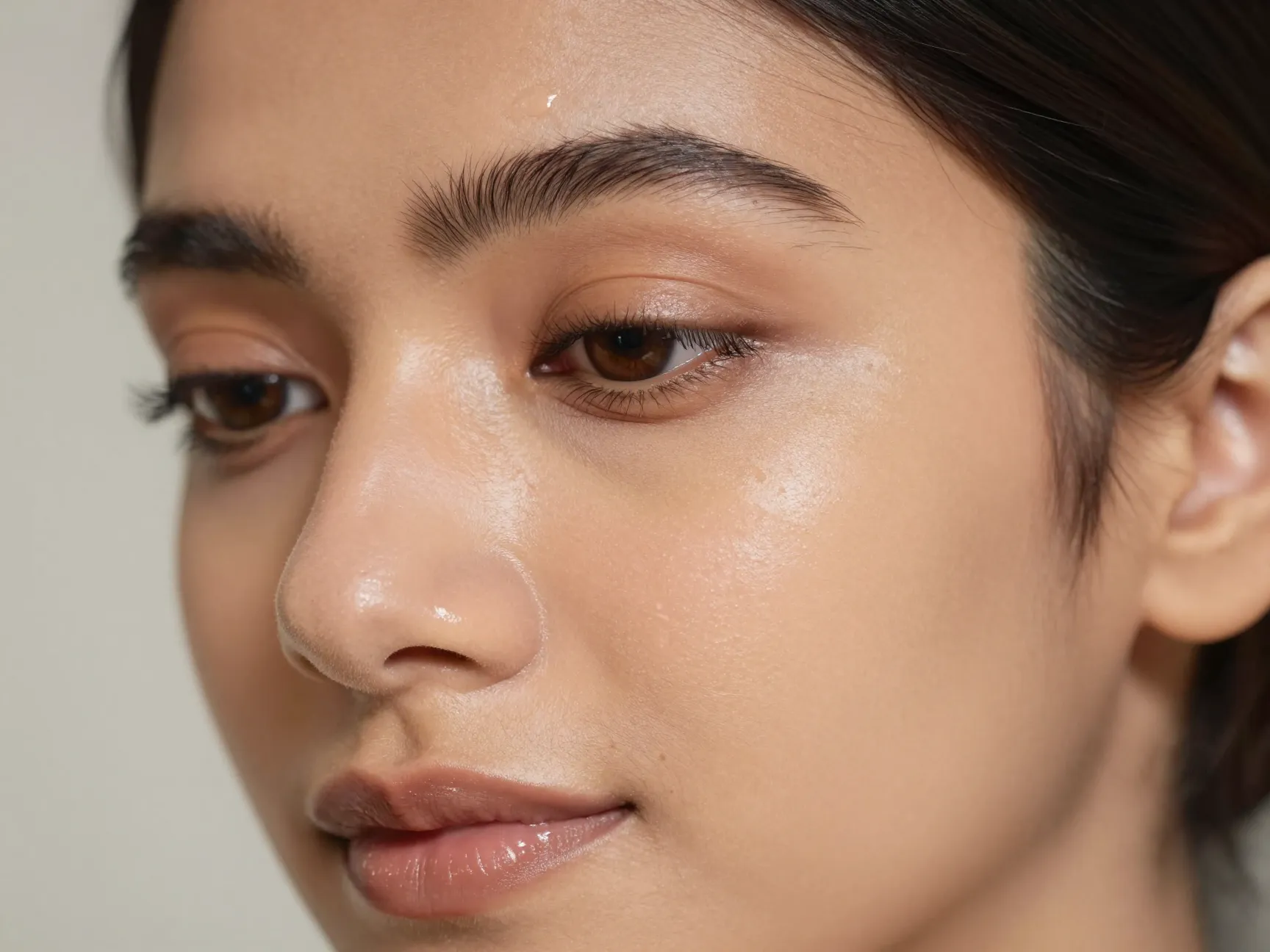
The foundation of any traditional Hindu bridal look — quite literally — is radiant, glowing skin. In 2026, the trend has firmly moved away from heavy, matte, full-coverage bases that can look mask-like in photos. Instead, modern traditional brides are choosing foundations that allow their natural skin luminosity to shine through [4].
What this looks like in practice:
| Skin Base Style | Best For | Finish |
|---|---|---|
| Dewy buildable foundation | All skin types | Natural glow |
| Satin finish foundation | Oily/combination skin | Semi-matte radiance |
| Tinted moisturizer + setting powder | Minimal coverage brides | Skin-like finish |
| HD foundation | Photography-heavy events | Flawless but breathable |
The key is skin preparation. Brides who invest in a consistent skincare routine in the months before their wedding — focusing on hydration, brightening, and barrier repair — find that their makeup sits better, lasts longer, and photographs more beautifully.
Pro tip: Ask your makeup artist to use a hydrating primer before foundation. This creates a smooth canvas while keeping that sought-after dewy finish intact throughout the day.
Glowing skin also complements the richness of traditional bridal jewelry and attire. When your skin radiates health, heavy gold necklaces and silk sarees look even more magnificent.
2. Soft Sculpting Instead of Harsh Contouring
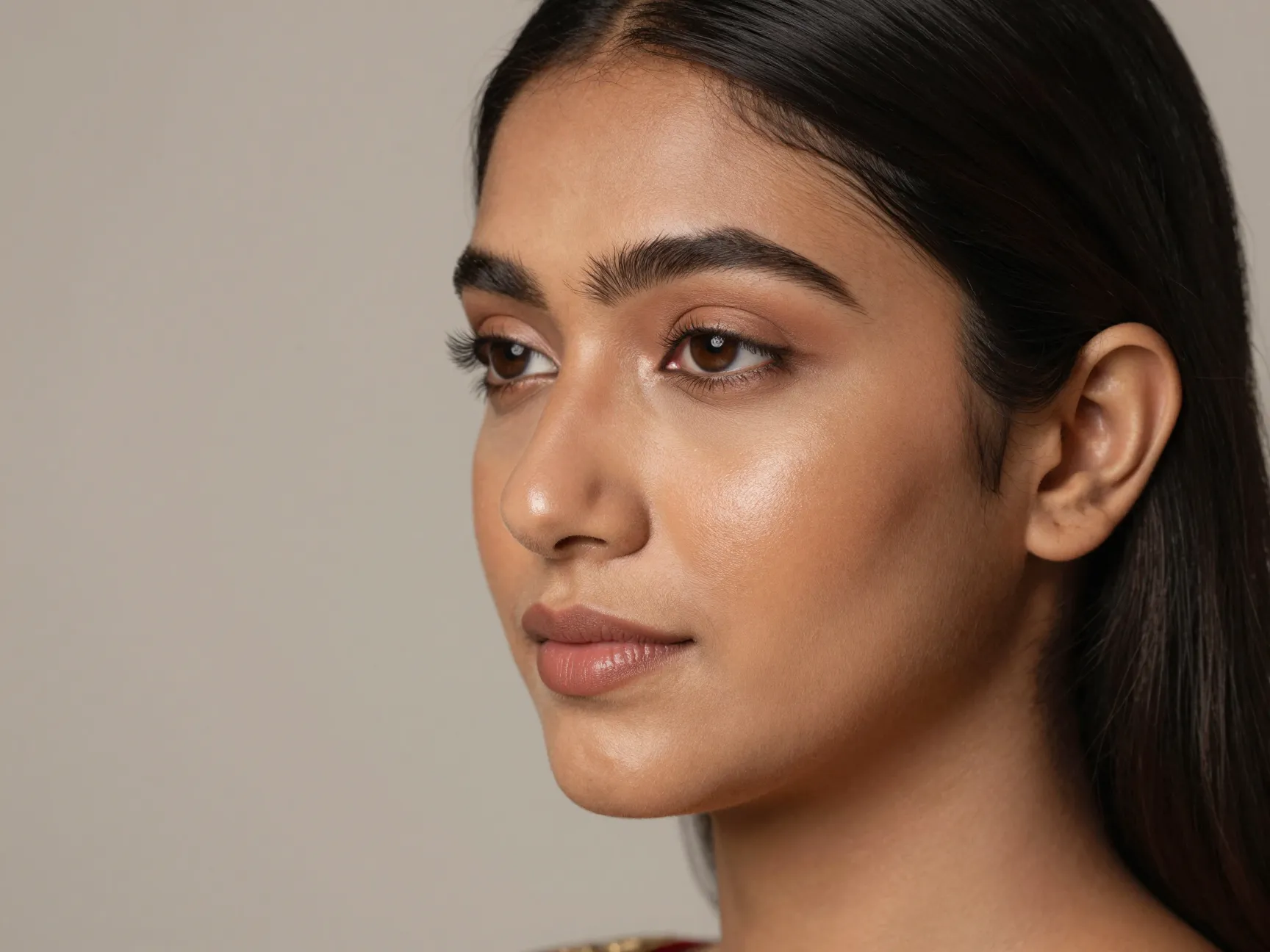
One of the most significant shifts in traditional Hindu bridal makeup trends for 2026 is the move from dramatic contouring to soft sculpting [4]. Heavy contouring — using deep brown shades to carve out cheekbones and nose — can look unnatural in person and even harsher under the bright lights of a wedding mandap.
Soft sculpting uses:
- Warm bronzers blended seamlessly into the hairline and hollows of the cheeks
- Subtle highlighter on the high points of the face (cheekbones, brow bone, cupid’s bow)
- Cream-based products that melt into the skin for a more natural dimension
This approach honors the traditional ideal of a bride who looks like herself — just elevated. It also ensures the face reads as three-dimensional in photographs without appearing overdone in real life.
“The best bridal makeup makes people say ‘you look beautiful,’ not ‘you look like you’re wearing a lot of makeup.'”
For brides with deeper skin tones — common across South Asian communities — soft sculpting with warm terracotta and bronze tones is particularly flattering, adding warmth rather than creating artificial shadows.
3. Bold Kohl and Dramatic Eye Definition
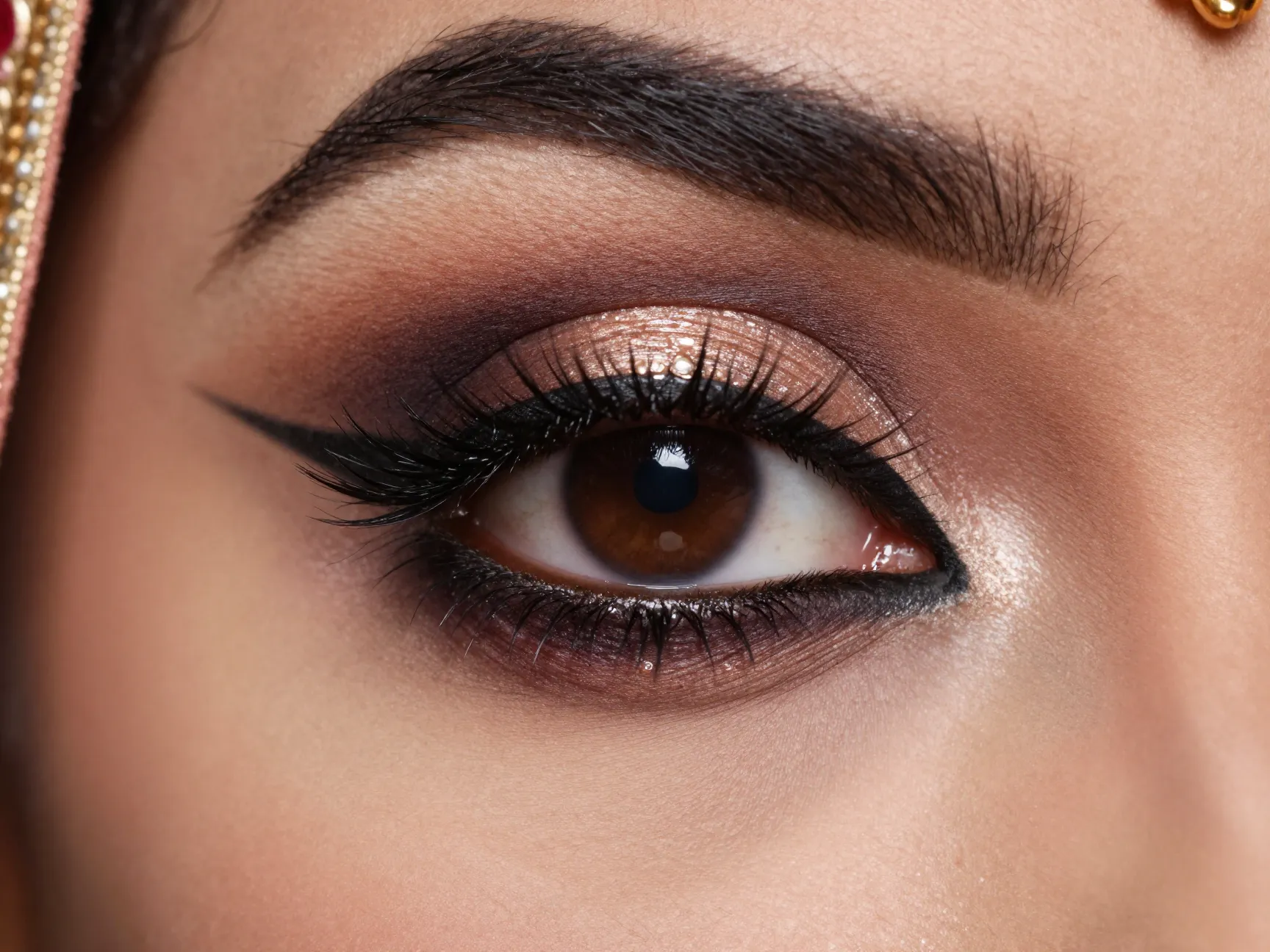
Ask any bridal makeup artist about the single most important element of a traditional Hindu bridal look, and most will point to the eyes. Bold kohl and dramatic eye definition are absolutely central to this aesthetic, particularly in Bengali bridal traditions where the eyes are considered the focal point of the entire look [2].
Kohl (kajal) has been used in South Asian beauty rituals for thousands of years. Beyond its aesthetic power, it carries cultural and even protective significance in many Hindu communities.
Key techniques for traditional bridal eye makeup:
- Tight-lining the upper and lower waterline with deep black kohl for intensity
- Winged liner extending beyond the outer corner of the eye
- Intricate eyelid designs — particularly in Bengali bridal makeup, where delicate patterns are sometimes drawn on the eyelid itself [2]
- Layered eyeshadow building from a light base to deep, jewel-toned shades in the crease
- Dramatic lower lash line definition using smudged kohl or dark eyeshadow
The result is an eye that commands attention — large, defined, and deeply expressive. This is especially important because traditional bridal attire (heavy silk, gold embroidery, elaborate jewelry) requires equally strong makeup to create visual balance.
Best kohl products for longevity: Look for waterproof kajal formulas that can withstand tears (happy ones!), humidity, and a full day of ceremonies.
4. The Iconic Red Bindi
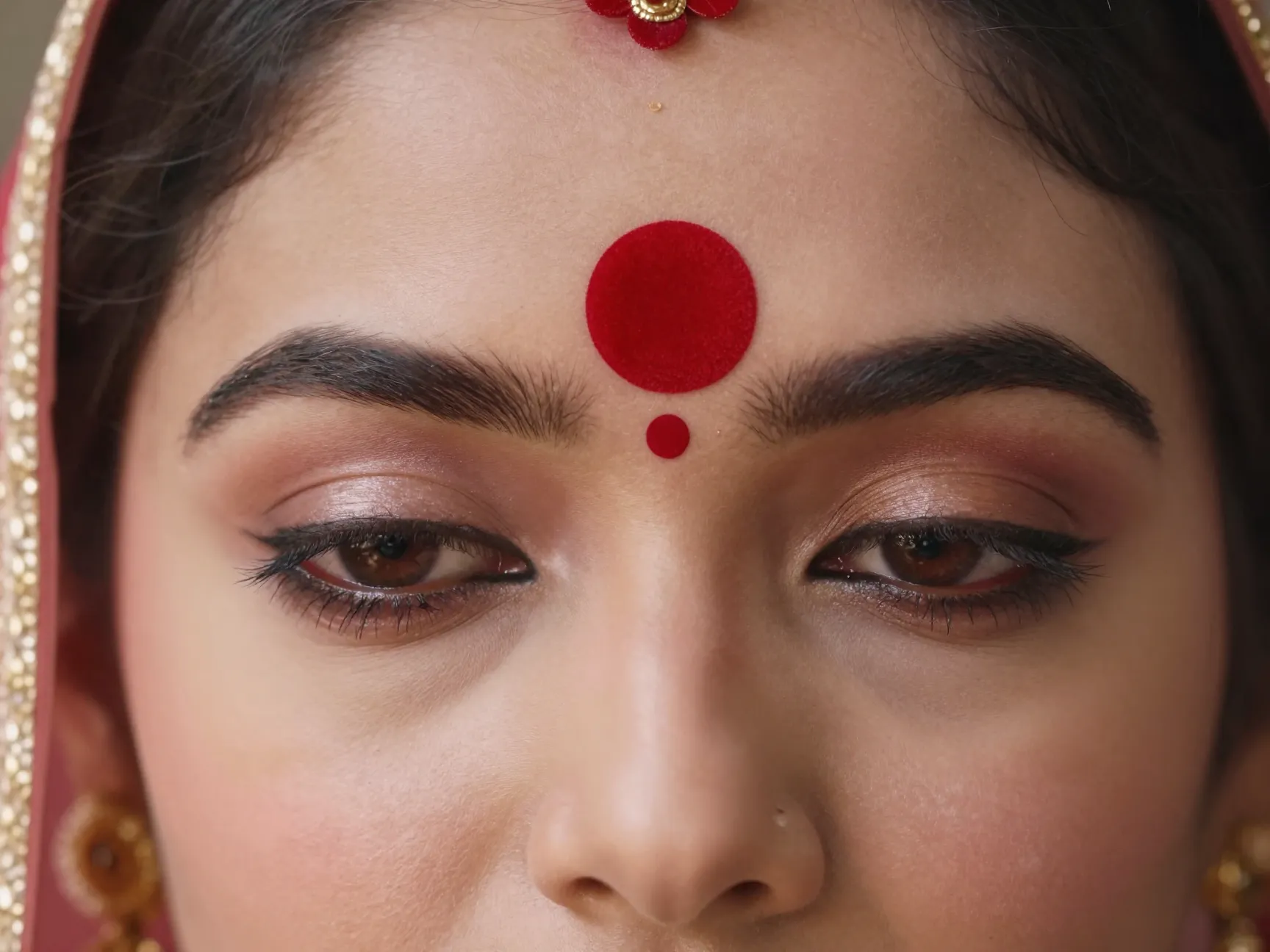
Few elements of traditional Hindu bridal makeup carry as much symbolic weight as the red bindi 🔴. Placed at the center of the forehead, between the eyebrows (the location of the ajna chakra), the bindi is one of the most recognizable markers of a Hindu bride [2].
What the red bindi represents:
- Auspiciousness and good fortune for the new marriage
- Protection — the bindi is said to guard the bride’s energy
- Marital status — a red bindi signals that a woman is a bride or married
- Regional identity — the size, shape, and style of the bindi vary significantly across Indian states
| Region | Bindi Style |
|---|---|
| Bengali | Large, round, deep red |
| South Indian | Round with decorative border, sometimes jeweled |
| Rajasthani | Ornate, often paired with maang tikka |
| Maharashtrian | Traditional round, sometimes with nath (nose ring) |
| Punjabi | Smaller, jeweled bindi |
In 2026, brides are also experimenting with embellished bindis — small crystals or gold detailing around the traditional red center — that photograph beautifully while honoring the classic form.
Application tip: Apply the bindi after all other makeup is complete. Use a small amount of eyelash glue or the bindi’s own adhesive for all-day hold.
5. Vibrant, Jewel-Toned Color Palettes
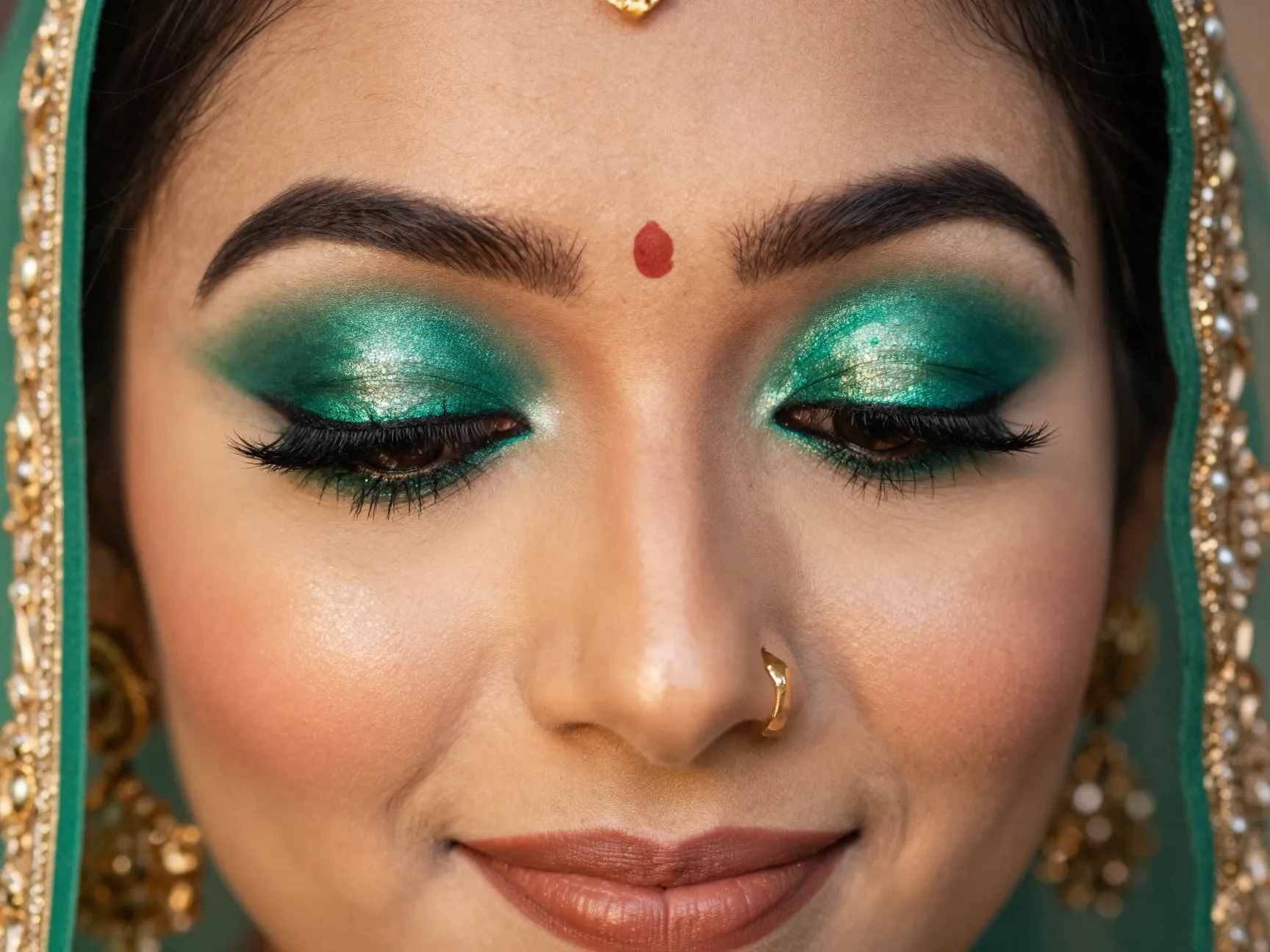
One of the most visually striking aspects of traditional Hindu bridal makeup — particularly in South Indian bridal traditions — is the use of vibrant, jewel-toned color palettes [2]. Unlike Western bridal makeup that often defaults to neutral, understated shades, traditional Hindu bridal looks embrace color as an expression of joy, celebration, and cultural pride.
Popular jewel tones in traditional Hindu bridal makeup:
- 💜 Deep plum and purple — dramatic and regal
- 💚 Emerald and forest green — especially popular with red and gold sarees
- 🔵 Sapphire blue — striking against golden skin tones
- 🟠 Burnt orange and terracotta — warm and earthy, perfect for autumn weddings
- ❤️ Deep burgundy and wine — classic and timeless
The key to using vibrant colors successfully is coordination with the bridal outfit. A skilled makeup artist will pull specific shades from the saree or lehenga and echo them in the eyeshadow or lip color, creating a cohesive visual story from head to toe.
Color matching guide:
| Outfit Color | Complementary Eye Palette | Lip Color |
|---|---|---|
| Red/Maroon | Gold, bronze, deep brown | Berry or nude |
| Pink/Magenta | Rose gold, plum | Deep pink or coral |
| Green | Bronze, terracotta | Nude or warm red |
| Blue/Navy | Silver, smoky grey | Berry or deep red |
| Yellow/Gold | Copper, rust, brown | Peach or coral |
6. Intricate Temple Designs on the Forehead
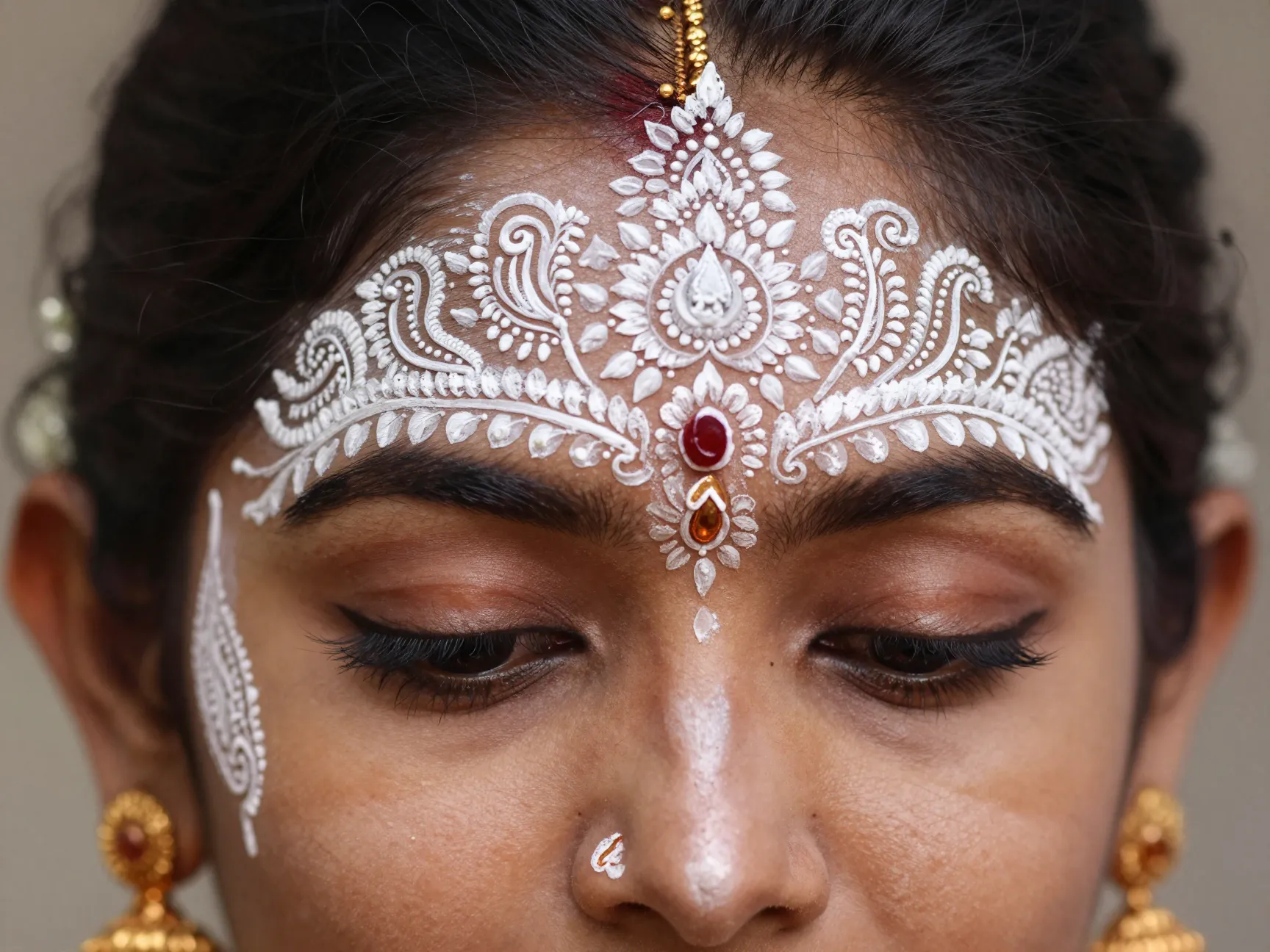
One of the most distinctive and breathtaking elements of South Indian traditional Hindu bridal makeup is the use of intricate temple designs on the forehead [2]. These designs — often rendered in white or gold — draw inspiration from the elaborate carvings found on South Indian temple architecture.
These forehead designs may include:
- Floral motifs extending from the bindi outward
- Paisley and mango patterns following the hairline
- Geometric borders framing the face
- Gold leaf or kumkum detailing for added richness
In Tamil Nadu, Karnataka, and Kerala bridal traditions, these designs are often applied using a fine brush with white or gold makeup, or with traditional materials like sandal paste or kumkum powder.
“Temple forehead designs transform the bride’s face into a living canvas — connecting her to centuries of artistic and spiritual tradition.”
In 2026, many brides are also incorporating temporary tattoo-style forehead art that mimics traditional designs with incredible precision and lasts throughout the wedding day without smudging.
For brides outside South India: Elements of forehead artistry can be adapted — a delicate gold design extending from the bindi, or a small floral motif at the hairline, can add a traditional touch to any regional bridal look.
7. Monochromatic Color Harmony Across Face
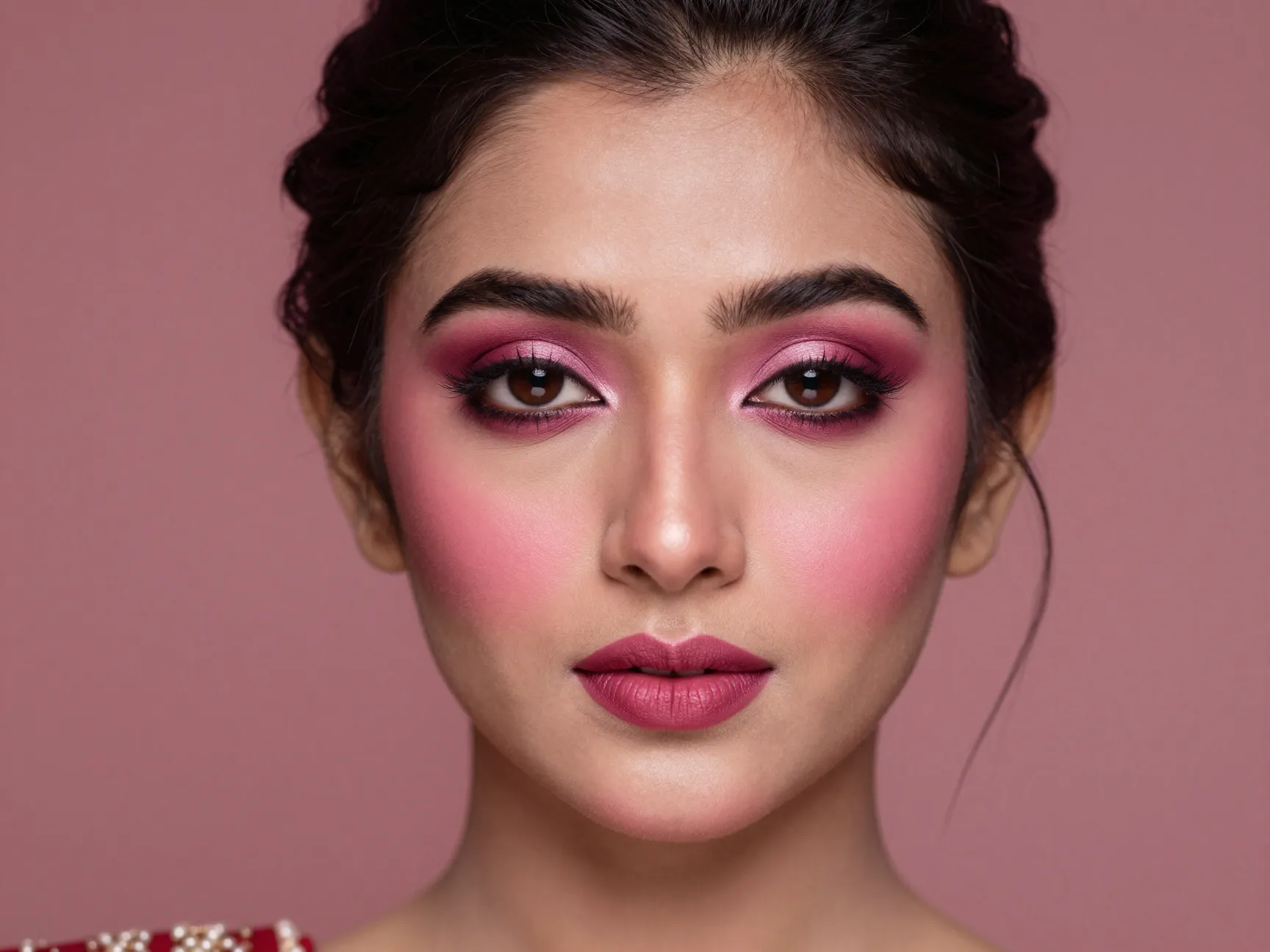
A powerful technique that has gained significant traction in traditional Hindu bridal makeup is monochromatic color harmony — using shades from the same color family across the eyes, cheeks, and lips [5]. This approach creates a look that feels cohesive, intentional, and deeply polished.
How monochromatic bridal makeup works:
- Choose a hero color (for example, rose, terracotta, or mauve)
- Apply a deeper version of that color on the eyes (crease, liner)
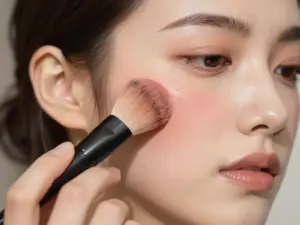
- Use a mid-tone version on the cheeks (blush)
- Finish with a coordinating lip color in the same family
Example monochromatic palettes for Hindu brides:
| Color Family | Eyes | Cheeks | Lips |
|---|---|---|---|
| Rose/Pink | Deep rose eyeshadow, pink liner | Soft rose blush | Rose-stained lip |
| Terracotta | Burnt orange crease, rust liner | Warm peach blush | Terracotta lip |
| Berry/Plum | Plum eyeshadow, wine liner | Dusty rose blush | Berry lip |
| Bronze/Gold | Copper eyeshadow, bronze liner | Warm bronzer | Nude-peach lip |
This technique is particularly effective for traditional Hindu bridal looks because it allows vibrant colors to feel harmonious rather than overwhelming. It also photographs exceptionally well — the face reads as one unified composition rather than competing focal points.
Artist tip: Monochromatic looks are also more forgiving to execute, making them a great choice for brides who want a DIY element in their makeup preparation.
8. Rose-Stained or Coordinated Lip Color
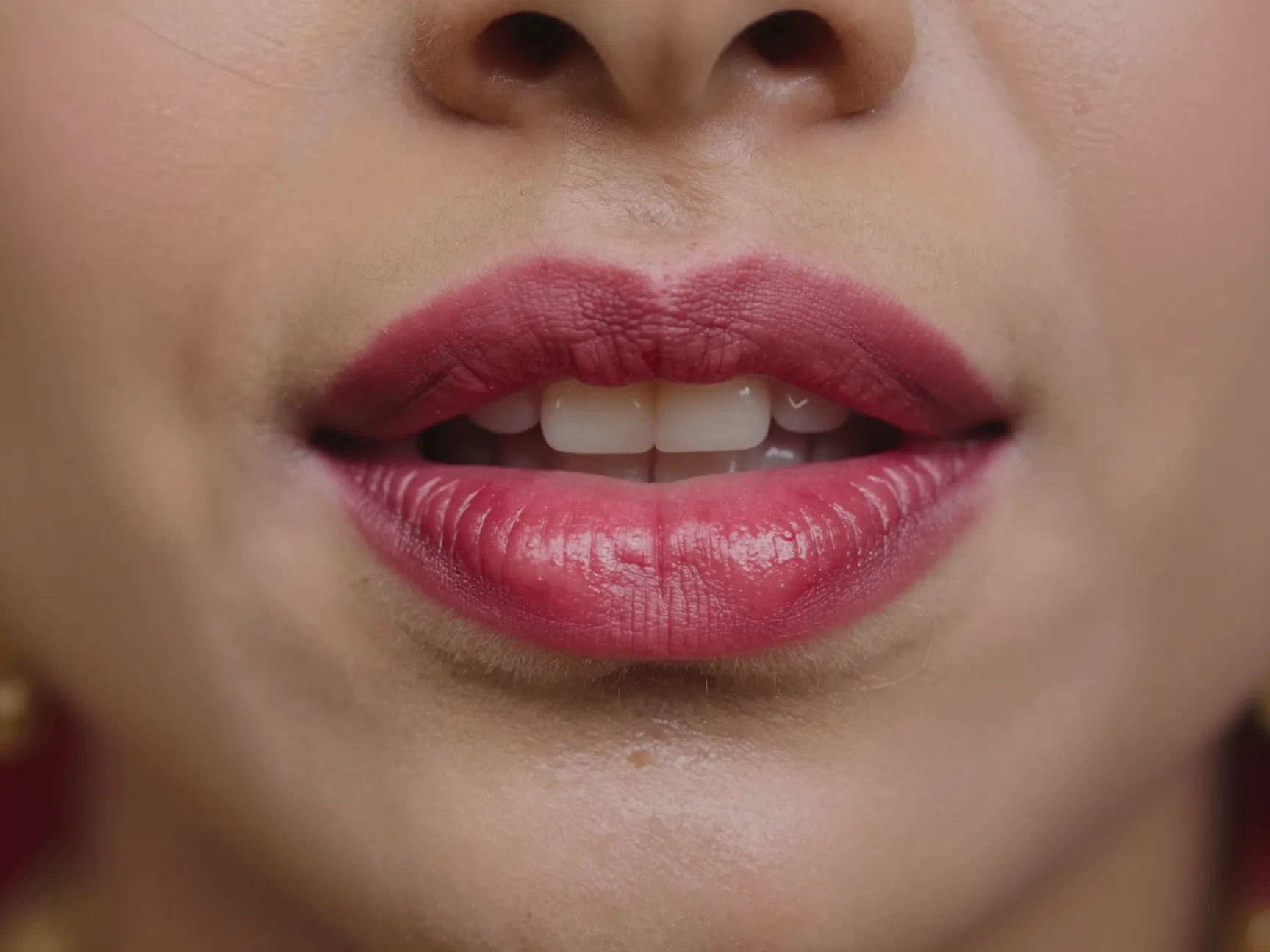
The lips are the final signature of any traditional Hindu bridal makeup look, and in 2026, the trend is moving toward rose-stained lips and carefully coordinated lip colors that complement — rather than compete with — the rest of the face [1].
The evolution of bridal lip trends:
Traditionally, Hindu brides wore deep reds and maroons on the lips — bold, auspicious colors that matched the bridal saree. These classics remain beloved and powerful. However, modern traditional brides are increasingly choosing:
- Rose-stained lips — a sheer, buildable wash of pink-red that looks natural yet intentional
- Berry and wine shades — rich but not overpowering
- Nude-with-a-hint-of-rose — for brides who want the eyes to be the star
- Coordinated shades that pick up a specific color from the outfit
Lip longevity tips for brides:
- Exfoliate lips the night before with a sugar scrub
- Apply a lip liner all over the lip before lipstick for extended wear
- Use a long-wear liquid lipstick as the base, then layer a gloss or cream on top
- Blot and re-apply once before the ceremony for a fresh finish
“The right lip color is the one that makes you feel like the most beautiful version of yourself — whether that’s a classic deep red or a modern rose stain.”
For brides choosing a monochromatic look (Element 7), the lip color selection becomes even more intentional — it is the final piece that ties the entire face together [5].
Regional Variations: How the 8 Elements Show Up Differently
One of the most beautiful aspects of traditional Hindu bridal makeup is how these 8 essential elements manifest differently across India’s diverse regions:
| Region | Key Emphasis |
|---|---|
| Bengali | Bold kohl with intricate eyelid designs, large red bindi, red and white alta on hands |
| South Indian | Temple forehead designs, vibrant jewel tones, heavy eye definition |
| Rajasthani | Vibrant colors, ornate bindi, dramatic kohl |
| Maharashtrian | Classic red lips, nath (nose ring), traditional green and gold palette |
| Punjabi | Glowing skin, bold eyes, jeweled bindi, warm color palette |
| Gujarati | Bright colors, intricate jewelry, soft sculpting |
Understanding your regional tradition helps you prioritize which of the 8 Essential Elements of Traditional Hindu Bridal Makeup to emphasize most strongly.
Choosing the Right Makeup Artist for a Traditional Hindu Bridal Look
Finding a makeup artist who truly understands traditional Hindu bridal aesthetics is as important as knowing the elements themselves. Here is what to look for:
- Portfolio diversity — do they have experience with your specific regional tradition?
- Product knowledge — do they use long-wearing, photography-friendly products?
- Cultural understanding — do they understand the why behind each element, not just the how?
- Trial session — always book a trial at least 4–6 weeks before the wedding [4]
- Communication — do they listen to your preferences and incorporate your vision?
In 2026, many brides are also requesting sustainable and cruelty-free products for their bridal makeup — a growing priority that many top artists are now accommodating [6].
Conclusion: Your Traditional Hindu Bridal Makeup Journey Starts Here
Understanding the 8 Essential Elements of Traditional Hindu Bridal Makeup — radiant skin, soft sculpting, bold kohl, the red bindi, vibrant color palettes, temple forehead designs, monochromatic harmony, and coordinated lips — gives you a powerful foundation for planning your bridal look.
These elements are not rigid rules. They are a rich vocabulary that you can use to tell your own story — honoring your heritage, expressing your personality, and stepping into your wedding day feeling radiant and confident.
Your actionable next steps:
- Research your regional tradition to understand which elements are most significant for your background.
- Save inspiration images that reflect the elements you love most.
- Book a consultation with a traditional Hindu bridal makeup specialist at least 3–4 months before your wedding.
- Schedule a trial session to test your chosen look under wedding-day conditions.
- Invest in skincare now — the best bridal makeup starts with healthy, glowing skin.
- Communicate openly with your artist about which of the 8 elements are non-negotiable for you and which you want to modernize.
Your wedding day makeup is a bridge between tradition and who you are today. When you understand the 8 Essential Elements of Traditional Hindu Bridal Makeup, you have everything you need to cross that bridge beautifully. 🌸
References
[1] The Ultimate Guide To Indian Pakistani Bridal Makeup Trends 2026 – https://annieshah.com/blogs/weddings/the-ultimate-guide-to-indian-pakistani-bridal-makeup-trends-2026
[2] Top 10 Amazing Indian Bridal Makeup Tips – https://ibacosmetics.com/blogs/iba-blogs/top-10-amazing-indian-bridal-makeup-tips
[3] Trending Bridal Looks North India 2026 – https://lyrabeauty.in/trending-bridal-looks-north-india-2026/
[4] Top 10 Indian Bridal Makeup Tips 2026 – https://www.khushibeautycentre.com/blogs/khushibeauty-diary/top-10-indian-bridal-makeup-tips-2026
[5] Top 10 Bridal Makeup Trends In India – https://www.aartigaikwadmakeupartist.com/top-10-bridal-makeup-trends-in-india/
[6] Bridal Makeup Trends 2026 Asian Brides Most Requested Looks – https://theweddingnotebook.com/inspire/fashion-and-beauty/bridal-makeup-trends-2026-asian-brides-most-requested-looks/